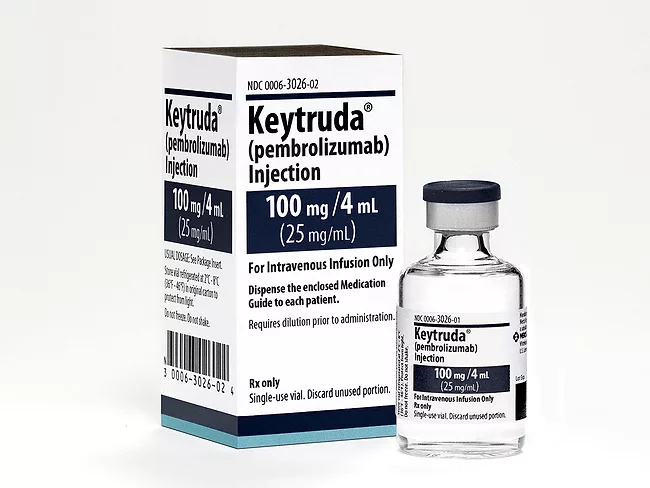
In the final part of its three-day meeting on accelerated approvals granted to anti-PD-1/PD-L1 antibodies, the FDA’s Oncologic Drugs Advisory Committee (ODAC) voted unanimously to continue the accelerated approval for Merck & Co. Inc.’s Keytruda (pembrolizumab) as a therapy for patients with advanced hepatocellular carcinoma (HCC) who have been previously treated with sorafenib (Nexavar, Bayer AG).
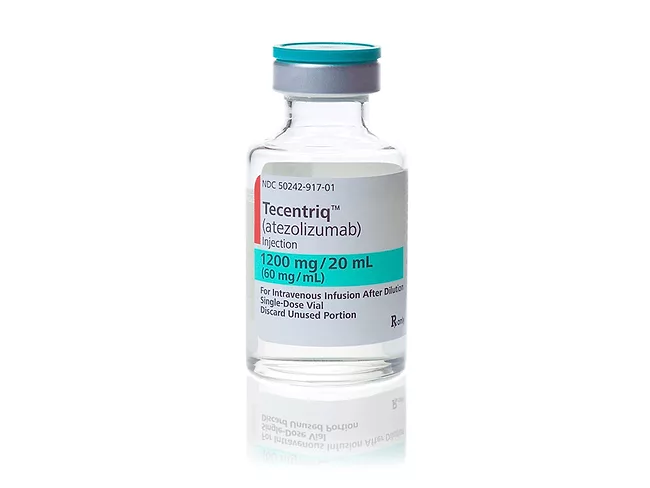
If the FDA follows the advice of its Oncologic Drugs Advisory Committee (ODAC), both Keytruda and Tecentriq will remain on the U.S. market, for the time being, with accelerated approval as first-line treatments for certain patients with advanced or metastatic urothelial carcinoma. The committee voted 5-3 April 28 to recommend continuing accelerated approval for Merck & Co. Inc.’s Keytruda (pembrolizumab) and 10-1 for maintaining the accelerated approval of the Roche Group’s Tecentriq (atezolizumab) until the final data come in from a confirmatory trial that’s expected to be completed next year.
In a virtual meeting fraught with technical difficulties, the FDA’s Oncologic Drugs Advisory Committee (ODAC) voted 7-2 April 27 that the accelerated approval for Tecentriq (atezolizumab) in combination with nab-paclitaxel as a treatment for unresectable locally advanced or metastatic triple-negative breast cancer (mTNBC) in adults with PD-L1+ tumors should continue as additional trials are conducted or completed.
As part of a U.S. FDA evaluation of confirmatory trials for anti-PD-1/PD-L1 antibodies, the agency’s Oncologic Drugs Advisory Committee (ODAC) is being asked this week to consider whether three blockbuster biologics should continue to be available for certain cancer indications for which they received accelerated approval. At question is whether the data from the confirmatory trials for the Roche Group’s Tecentriq (atezolizumab), Merck & Co. Inc.’s Keytruda (pembrolizumab) and Bristol Myers Squibb Co.’s Opdivo (nivolumab) has proved sufficient benefit in particular indications and, if not, whether alternative or ongoing trials could do so.
With the December PDUFA date already blown, Pfizer Inc. is headed into a day-and-a-half FDA advisory committee meeting this week to make the case for 2.5-mg tanezumab, a potential first-in-class treatment in the U.S., partnered with Eli Lilly and Co. Inc., for chronic pain due to moderate to severe osteoarthritis.
Oncology drugs that have racked up a number of indications through accelerated approvals are losing some of those indications as the result of an FDA industrywide evaluation of confirmatory trials that didn’t back up the approvals.
As expected, the FDA’s Vaccines and Related Biological Products Advisory Committee (VRBPAC) looked favorably upon the latest COVID-19 entry: Ad26.COV2.S, a one-shot product that emerged from the same Johnson & Johnson (J&J) platform, AdVac, that let the firm devise an Ebola vaccine cleared in Europe last year.
Briefing documents released by the FDA related to the Vaccines and Related Products Advisory Committee meeting slated for Friday suggest that the COVID-19 vaccine from Johnson & Johnson (J&J) will sail smoothly to an emergency use authorization.
As expected, the FDA's Vaccines and Related Biological Products Advisory Committee voted near-unanimously on Dec. 17, with one abstention, that available evidence shows the benefits of Moderna Inc.'s COVID-19 vaccine, mRNA-1273, outweigh its risks for people 18 and older. The vote bolsters the likelihood that the regulator will grant the vaccine an emergency use authorization (EUA), which could come as soon as Friday. Not the same as an approval, the authorization would allow for the vaccine's use for the prevention of COVID-19 in the U.S. even as further trials and regulatory evaluation remains underway ahead of a company BLA submission.