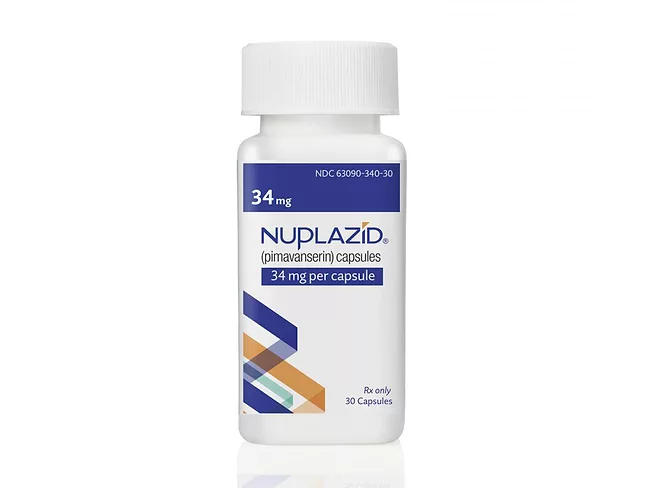
The U.S. FDA’s Psychopharmacologic Drugs Advisory Committee took up the complicated matter of Acadia Pharmaceuticals Inc.’s sNDA for Nuplazid (pimavanserin) to treat hallucinations and delusions associated with Alzheimer’s disease psychosis (ADP).
After a two-day session of the FDA’s Vaccines and Related Biologic Products Advisory Committee, the U.S. is within days of a long-awaited milestone of having not just one but at least two vaccines available for nearly every American. The VRBPAC voted unanimously, 21-0, June 15 to support amending the emergency use authorizations for both the Moderna Inc. and Pfizer Inc.-Biontech SE COVID-19 mRNA vaccines to allow their use in children 6 months and older.
The FDA’s Psychopharmacologic Drugs Advisory Committee posted briefing documents related to the June 17 meeting, set to consider Acadia Pharmaceuticals Inc.’s sNDA for Nuplazid (pimavanserin) to treat hallucinations and delusions associated with Alzheimer’s disease psychosis (ADP). Although shares of the San Diego-based firm (NASDAQ:ACAD) stayed in the black, closing at $18.77, up $2.52, or 15.5%, the briefing docs did not bring uniformly good news, echoing some of the concerns spelled out in an earlier complete response letter.
Up to now, the Pfizer Inc.-Biontech SE COVID-19 vaccine has had a lock on the U.S. pediatric market, for ages 5 to 17, but that could change as early as next week.
After surprising Wall Street by unanimously voting in favor of the gene therapy elivaldogene autotemcel (eli-cel) for early active cerebral adrenoleukodystrophy from Bluebird Bio Inc., the FDA’s Cellular, Tissue and Gene Therapies Advisory Committee met again June 10, this time to examine the risk-benefit profile of the company’s betibeglogene autotemcel (beti-cel) for people with transfusion-dependent beta-thalassemia.
The Cellular, Tissue and Gene Therapies Advisory Committee scrutinized Bluebird Bio Inc.’s gene therapy elivaldogene autotemcel (eli-cel) for early active cerebral adrenoleukodystrophy (CALD) in patients without a matched sibling donor.
More than two years into the COVID-19 pandemic and nearly 18 months since a vaccine was first available for adults, the U.S. is on the cusp of having vaccines available to the youngest Americans.
Given the safety and efficacy data presented June 7 for Novavax Inc.’s COVID-19 vaccine, NVX-CoV2373, it came as no surprise when the U.S. FDA’s Vaccines and Related Biologic Products Advisory Committee voted 21-0, with one abstention, to support an emergency use authorization for the vaccine, which is already approved and being used in many other countries, including the EU and Canada.
Just in case the U.S. FDA didn’t get the message from its advisory committee about drug applications based solely on clinical trial data from China, a trio of U.S. lawmakers wrote to FDA Commissioner Robert Califf to voice their concerns about the “current ‘East to West’ movement of clinical data” to support the approval of me-too drugs.
Just in case the U.S. FDA didn’t get the message from its advisory committee about drug applications based solely on clinical trial data from China, a trio of U.S. lawmakers wrote to FDA Commissioner Robert Califf to voice their concerns about the “current ‘East to West’ movement of clinical data” to support the approval of me-too drugs.