After nearly 10 years in clinical development and just a few months after an EMA rejection, Ipsen SA will be making its case June 28 before a U.S. FDA advisory committee for its ultra-rare bone disease drug, palovarotene.
Eisai Co. Ltd. and Biogen Inc.’s Leqembi (lecanemab) gained the support of the U.S. FDA’s Peripheral and Central Nervous System Drugs Advisory Committee (adcom) in a 6-0 vote on June 9, as panel members unanimously agreed that the results of the phase III Clarity trial verified the clinical benefit in the treatment of Alzheimer’s disease. The FDA does not have to follow the adcom’s recommendation, but it often does. The PDUFA date for the supplemental NDA is July 6.
The U.S. FDA’s Antimicrobial Drugs Advisory Committee voted unanimously, 21-0, June 8 in support of Astrazeneca plc’s nirsevimab as a one-dose prophylactic for infants born during or entering their first respiratory syncytial virus (RSV) season.
Having already notched approvals in the EU and U.K., Astrazeneca plc hopes to prime the pump for a U.S. approval of nirsevimab as a respiratory syncytial virus (RSV) prophylactic for infants when it makes its case June 8 before the FDA’s Antimicrobial Drugs Advisory Committee.
Trouble presaged by U.S. FDA concerns over potential drug-induced liver injury (DILI) caused by obeticholic acid (OCA) 25 mg came to pass during the Gastrointestinal Drugs Advisory Committee meeting May 19 on Intercept Pharmaceuticals Inc.’s accelerated approval effort with the compound.
The U.S. FDA’s release of its briefing document for the upcoming advisory committee meeting on obeticholic acid 25 mg as a fatty liver disease treatment sent Intercept Pharmaceuticals Inc. on a downwards spiral May 17. Soon after the document was released, Intercept stock (NASDAQ:ICPT) dropped as low as $11.41 – down almost 30% from its May 16 close of $16.21. As the day wore on, it regained some of that lost value in heated trading that was more than eight times the company’s average daily volume of 782,285. The rebound helped Intercept close the day at $13.83, down about 15%.
The debate over Sarepta Therapeutics Inc.’s gene transfer therapy, SRP-9001 (delandistrogene moxeparvovec), in Duchenne muscular dystrophy (DMD) proved as thorny as expected during a closely watched meeting of the U.S. FDA’s Cellular, Tissue and Gene Therapies Advisory Committee. Panelists voted on a single question: “Do the overall considerations of benefit and risk, taking into account the existing uncertainties, support accelerated approval of SRP-9001, using as a surrogate endpoint expression of Sarepta’s microdystrophin at week 12 after administration, for the treatment of ambulatory patients with DMD with a confirmed mutation in the DMD gene?” Balloting turned out 8 yes, 6 no.
How grave they might be remains unknown, but regulatory questions have surfaced in briefing documents related to the soon-to-happen panel meeting on Sarepta Therapeutics Inc.’s gene transfer therapy delandistrogene moxeparvovec in Duchenne muscular dystrophy (DMD). The U.S. FDA’s Cellular, Tissue and Gene Therapies Advisory Committee will meet May 12 to discuss the compound, also known as SRP-9001.
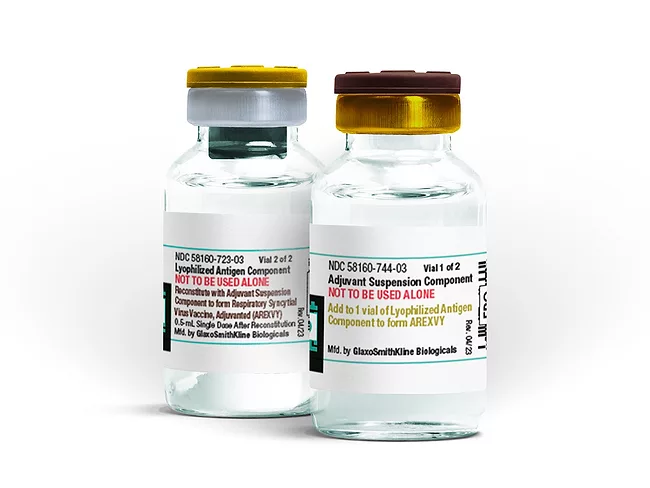
The U.S. FDA has approved the country’s first-ever respiratory syncytial virus (RSV) vaccine, Arexvy, from GSK plc. The adjuvanted vaccine is also the first for older adults anywhere on the planet. GSK now has a head start to vaccinate the U.S. market, but other big companies, such as Sanofi SA and especially Pfizer Inc., are in late-stage development and will pose strong challenges in the coming year. Pfizer’s PF-0692831/RSVpreF, an RSV vaccine for treating lower respiratory tract disease caused by RSV, has a priority BLA with a May 31 PDUFA date.
The U.S. FDA’s Oncologic Drugs Advisory Committee has recommended by a wide majority that the PARP inhibitor Lynparza (olaparib) in a combination therapy for treating prostate cancer should be restricted to only patients whose tumors have a BRCA mutation.