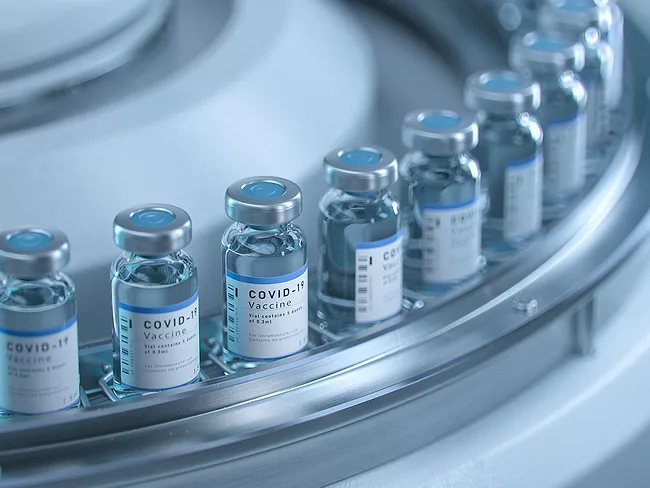
Restricting the recommended use of COVID-19 vaccines in the U.S. wasn’t enough. Now the Children’s Health Defense (CHD) is trying to get the FDA to revoke the BLAs for all versions of the Moderna Inc. and Pfizer Inc.-Biontech SE COVID-19 vaccines.
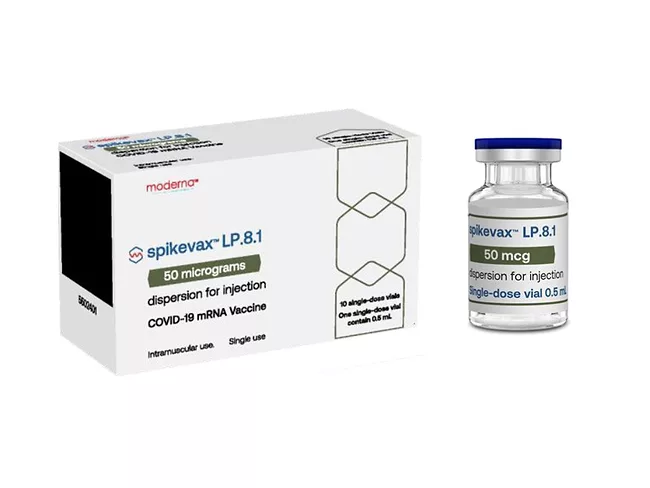
South Korea’s Ministry of Food and Drug Safety approved Moderna Inc.’s Spikevax LP.8.1 vaccine as an updated shot for COVID-19 targeting the LP.8.1 variant, according to Moderna Korea’s announcement Sept. 1. The regulatory clearance comes days after the U.S. FDA accepted, on Aug. 27, Moderna’s supplemental BLAs for two of its COVID-19 vaccines, Spikevax and Mnexspike.
The U.S. FDA’s January 2025 draft guidance for test validation in public health emergencies drew only six responses, but pointed responses they were, indeed. As an example, the Association for Molecular Pathology (AMP) said the draft’s recommendation for the use of 30 positive and 30 negative (30/30) samples for validation of lab-developed tests is likely to hamper test availability in an emergent situation, a time when samples are likely to be difficult to obtain.
The U.S. FDA’s Accreditation Scheme for Conformity Assessment (ASCA) program has its benefits, but industry had some sharp words for the agency in commenting on the 2024 ASCA draft guidance. The Advanced Medical Technology Association stated that FDA reviewers asked for full conformity test results for roughly 5% of premarket applications, a rate seen as excessive given the program’s design.
About two months after Astrazeneca plc said its application for sipavibart (AZD-3152) had been accepted by the EMA for pre-exposure prophylaxis (PrEP) against COVID-19 in immunocompromised people, Invivyd Inc. unveiled positive 180-day exploratory efficacy data from the company’s ongoing Canopy phase III trial with Pemgarda (pemivibart) in the same indication – and made known less happy news from regulators on the other side of the pond.
The World Health Organization has had its collective eye on mpox for some time now, but announced August 14 that the prevalence of the disease in Africa raises the epidemic to a public health emergency of international concern, a change in policy driven by the emergence of a novel strain of the pathogen.
The U.S. FDA issued a May 9 warning letter to Cue Health Inc., of San Diego, following what may have been a routine inspection, but the inspection disclosed that the company had made changes to a COVID test that was granted market access via the emergency use authorization program.
The U.S. FDA granted emergency use authorization (EUA) on March 22 for Waltham, Mass.-based Invivyd Inc.’s half-life extended monoclonal antibody (MAb) VYD-222 – making it available to prevent COVID-19 in immunocompromised adults and adolescents – but its use comes with a boxed warning for anaphylaxis.
The U.S. FDA has redrafted an existing guidance for third-party reviews of 510(k) submissions to include submissions under the emergency use authorization (EUA) program, which generally speaking should be good news. The problem with the draft is that these third parties will have to interact frequently and substantively with the FDA in EUA reviews, and the lack of prescribed timelines in the FDA draft suggests that while the use of third parties may help the agency manage any future EUA workloads, the total turnaround time for these applications might not be significantly better than was seen during the COVID-19 pandemic.
The U.S. FDA is keen on developing policies to guide testing regimes for future pandemics based on the experience with COVID-19, and the FDA’s Tim Stenzel said on a Sept. 8 advisory hearing that automated reporting of at-home tests would clarify questions such as the spread of the pathogen and how well the tests are performing. Stenzel, who is the director of the Office of In Vitro Diagnostics and Radiological Health at the FDA, said the U.S. government agencies have made a number of grants for development of automated reporting mechanisms for at-home tests, signaling an interest on the FDA’s part that automated reporting capabilities will be a priority when the next pandemic strikes.