Cleerly Inc. sees a bright future ahead after boosting its fundraising to date nearly five-fold with a $192 million series C. The new infusion brought the total invested in the company to $248 million, a solid endorsement of a company that hopes to transform cardiology with precision-based diagnostics that move away from indirect indicators to accurate measurements.
Orchestra Biomed Inc. struck a deal with Medtronic plc to develop a cardiac neuromodulation therapy as a potential integrated hypertension treatment for cardiac pacemaker patients. Medtronic also joined a $110 million series D round, led by RTW Investments, to invest in the biomedical company as it announced plans to list on the Nasdaq.
Volpara Health Technologies Ltd. joined forces with Microsoft Corp. to accelerate the research and development of software that uses mammograms to identify potential cardiovascular issues.
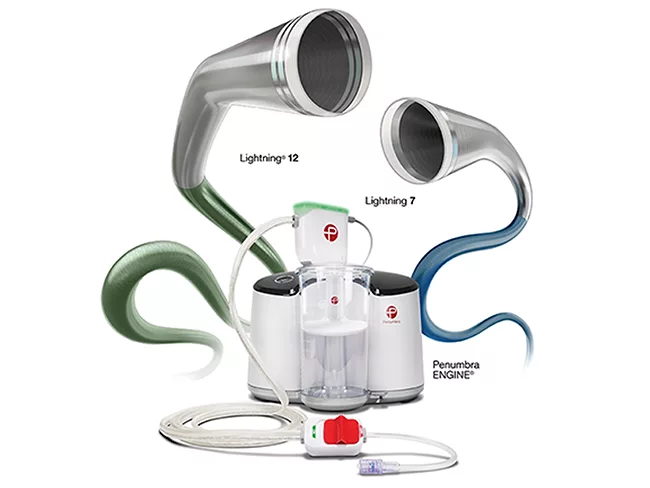
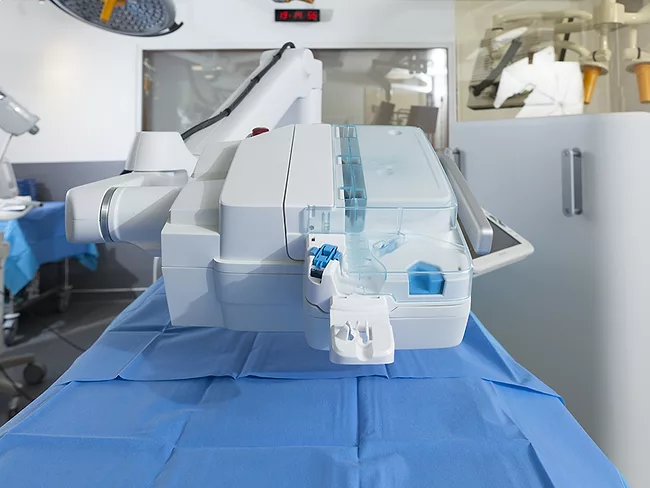
Penumbra Inc. presented new data at the LINC Symposium in Leipzig, Germany, evaluating its Indigo aspiration system for submassive pulmonary embolism (PE). The subgroup analysis evaluated performance outcomes of patients with main pulmonary artery (PA) emboli vs. discrete unilateral or bilateral PA emboli without main PA involvement. Data from the study suggests the system can be used effectively for both proximal and distal aspiration thrombectomy in the pulmonary arteries.
Idorsia Ltd. looks on course to produce another marketed drug after supportive phase III results for its hypertension drug, aprocitentan. The company’s first U.S. FDA-approved drug, Quviviq (daridorexant), was launched in April and another product, Pivlaz (clazosentan), was approved and launched in April for cerebral vasospasm in Japan.
Abbott Laboratories Inc. presented one-year outcomes from its PORTICO NG study assessing the latest-generation transcatheter aortic valve implantation (TAVI) system, Navitor in patients with severe aortic stenosis. The valve, which includes a new active sealing cuff, builds on the company’s Portico transcatheter heart valve platform.
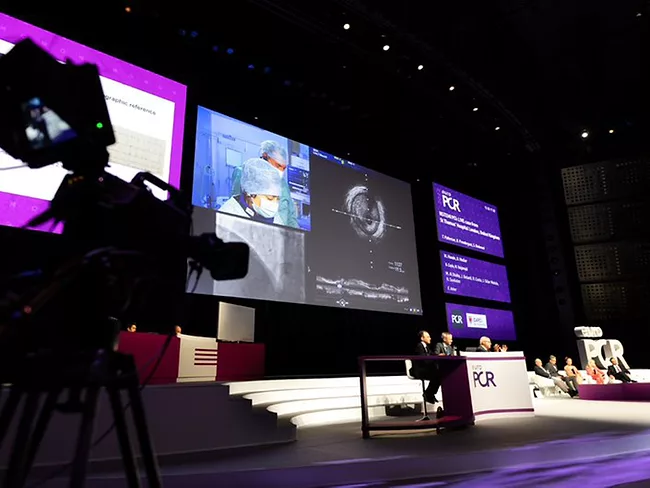
Abbott Laboratories Inc. reported 30-day results from its Triclip Bright Study at the EuroPCR meeting in Paris on May 19. The real-world outcomes showed that the company’s tricuspid repair systems Triclip and Triclip G4 transcatheter edge-to-edge repair (TEER) significantly reduced tricuspid regurgitation (TR) and substantially improved the quality of life across a wide range of anatomically diverse patients.
Jenavalve Technology Inc. presented first real-world data for a study evaluating the safety and efficacy of its Jenavalve Trilogy transcatheter aortic valve implantation (TAVI) system for the treatment of severe aortic regurgitation (AR). The data, presented at the EuroPCR meeting on May 18, met the primary safety and efficacy endpoints with no major adverse events and no moderate or severe AR at discharge.
Robocath SAS presented results from the R-Evolution European clinical study assessing the safety and efficacy of its R-One robot for coronary angioplasty procedures. The study, which included 62 patients across six European centers, met all three primary endpoints, showing 100% clinical success, >95% technical success, and 84.5% average reduction in physician radiation exposure.
Keros Therapeutics Inc. announced preliminary results from a phase I trial of its engineered ligand trap KER-012 that gave its team confidence to proceed with larger studies in pulmonary arterial hypertension (PAH) and potentially some bone diseases. But company shares (NASDAQ:KROS) fell 16.6% to $38.50 May 18, following the announcement, perhaps over concerns about trial subjects that emerged in a company-hosted investor call.