Avertix Medical Inc. signed a definitive merger agreement with Bios Acquisition Corp., a special purpose acquisition company (SPAC), in a deal that will take the company public on the Nasdaq. The deal will establish the combined entity, which will continue under the Avertix name and trade as AVRT, with an estimated enterprise value of $195 million. The transaction is expected to close in the second half of the year.
Acotec Scientific Holdings Ltd. received Chinese marketing approval for its microcatheter Vericor-14 to assist in percutaneous coronary interventions and percutaneous peripheral interventions, taking a step forward in a competitive market that is poised to grow eightfold by the end of the decade.
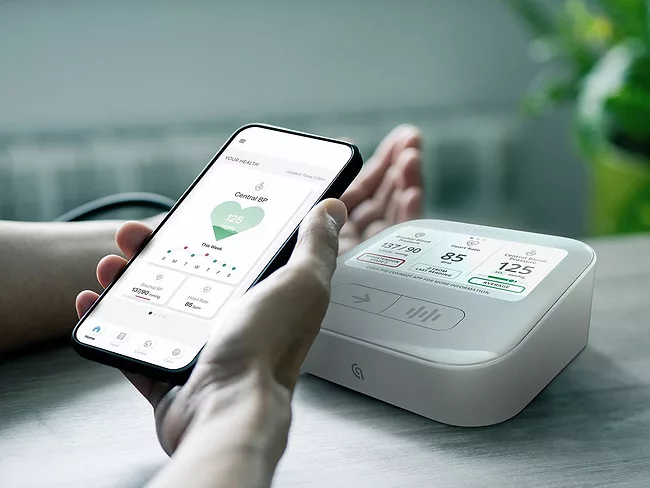
Cardiex Ltd. won U.S. FDA clearance for its Conneqt Pulse vascular biometric monitor. According to the digital health and wearables company, the device is the first in the world to provide measurements of both brachial blood pressure in the arm and central blood pressure in the heart and aorta, as well as arterial waveform analysis and other clinically relevant vascular biomarkers, outside the hospital, research institutions or clinical trial sites.
Ultromics Ltd. has been granted a U.S. FDA breakthrough device designation for its artificial intelligence (AI)-enhanced platform to aid early diagnosis of cardiac amyloidosis. Echogo Amyloidosis uses AI to analyze echocardiograms and detect the presence of cardiac amyloidosis, using a single commonly acquired ultrasound view of the heart. The platform was developed with the support of Janssen Biotech Inc., part of the Janssen Pharmaceutical Companies, a unit of Johnson & Johnson.
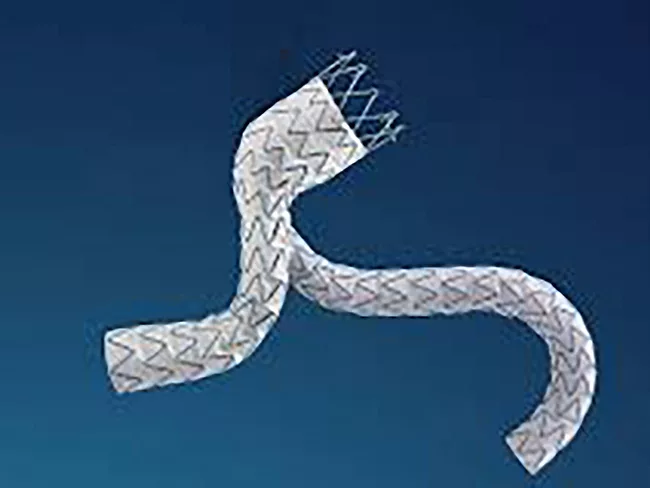
The 10-year update to Medtronic plc’s ENGAGE registry for its Endurant abdominal aortic aneurysm (AAA) stent graft system demonstrated high degrees of protection from aneurysm and sac regression in a real-world setting. The results were presented at the 2023 Charing Cross Symposium in London on April 26.
Meio Medical Inc.’s Titian, a surgical robot for navigation in cardiac electrophysiology, has been included in a Green Pathway for approval of medical devices in China, meaning it could get to market faster. Inclusion in the Green Pathway gives the medical device priority for reviewing and shortens the average registration time. Currently, Meio Medical is running a trial of Titian in multiple hospitals in China.
The U.S. FDA has finalized a guidance for class II devices for treatment of peripheral artery disease that excludes drug-coated balloons (DCBs), which are regulated as class III devices. One of the issues the med-tech industry may have with the guidance is that it fails to acknowledge that a device accessory is in some instances exempt from the requirements of the 510(k) program even though the agency has a policy specific to that consideration.
Heartflow Inc. is feeling the love of investors again as it closed a $215 series F financing round led by Bain Capital Life Sciences. The round marks a return to the equity markets after several years away; the company closed its series E in 2017 and a $65 million venture round in 2019. In early 2022, Heartflow scrapped its plans to go public through a special purchase acquisition company (SPAC) merger with Longview Acquisition, citing what both companies called “current unfavorable market conditions.” Longview had offered $690 million in July 2021, in a deal that implied an enterprise value of $2.4 billion at the time.
Affluent Medical SA reported initial success from the first minimally invasive transcatheter implantation of its biomimetic Epygon heart valve. This was placed in a 62-year-old female suffering from a severe form of mitral regurgitation, considered untreatable via traditional heart surgery due to multiple risk factors. This first-in-human trial was performed at the Molinette Hospital, part of the City of Turin University Hospitals of Health and Science.
The U.S. FDA reported yet another recall of intra-aortic balloon pumps made by Datascope Corp., an unfortunate development for patients in need of these devices that are still on the FDA’s list of devices that are in short supply. While no injuries or deaths have been reported in connection with the coiled connector cables that prompted the recall, the need to replace these cables could further crimp units needed to sustain patients during cardiac surgery procedures.