BioWorld. Link to homepage.

Clarivate
  • BioWorld
  • BioWorld Science
  • BioWorld Asia
  • Data Snapshots
    • Biopharma
    • Medical technology
    • Infographics: Dynamic digital data analysis
    • Index insights
    • NME Digest
  • Special reports
    • Infographics: Dynamic digital data analysis
    • BCI
    • Ebola outbreak
    • Hantavirus
    • Trump administration impacts
    • Med-tech outlook 2026
    • Under threat: mRNA vaccine research
    • BioWorld at 35
    • Biopharma M&A scorecard
    • Bioworld 2025 review
    • BioWorld MedTech 2025 review
    • BioWorld Science 2025 review
    • Women's health
    • China's GLP-1 landscape
    • PFA re-energizes afib market
    • China CAR T
    • Alzheimer's disease
    • Coronavirus
    • More reports can be found here

BioWorld. Link to homepage.

  • Sign In
  • Sign Out
  • My Account
Subscribe
BioWorld - Friday, July 3, 2026
Home » risk factors

Articles Tagged with ''risk factors''

Biomarkers

CR1 variants tied to focal segmental glomerulosclerosis, study shows

March 25, 2025
Focal segmental glomerulosclerosis (FSGS) is a kidney disease that leads to renal failure, and it affects individuals from different ancestries, the highest prevalence being among African and African American populations. DNA samples from 726 patients with FSGS were obtained and DNA sequencing was performed in the search of mutations tied to FSGS compared to a large pool of control populations.
Read More
Biomarkers

New findings relate MAD1L1 gene with mosaic variegated aneuploidy syndrome

March 21, 2025
Mosaic variegated aneuploidy syndrome (MVAS) is an autosomal recessive disorder characterized by mosaic aneuploidy. Its clinical manifestations include growth and developmental delay, congenital malformations and increased cancer risk. Genetic variants involved in MVAS affect the chromosomal segregation during mitosis, where individuals often show mosaicism and chromosomal instability.
Read More
Biomarkers

CROCCP2 gene behind COPD pathogenesis, study unveils

May 30, 2024
Alternative splicing is known to play an important role in tissue development. Scientists at Brigham and Women’s Hospital have looked into the association between a chronic obstructive pulmonary disease (COPD) genetic variant and cell-specific splicing of putative ciliary rootlet coiled-coil protein-like 1 protein (CROCCP2).
Read More
Illustration of DNA strand next to lungs
Biomarkers

LRRK2 genetic mutations tied to ARDS

May 29, 2024
Acute respiratory distress syndrome (ARDS) is a multifactorial disease, the pathogenesis of which involves environmental exposure and genetic predisposition.
Read More
Biomarkers

Study unveils PCDHA9 as a marker of amyotrophic lateral sclerosis

March 25, 2024
Amyotrophic lateral sclerosis (ALS) is a devastating neurodegenerative disease for which there is a 10% rate of familial cases, with the rest being sporadic cases. Both genetic and environmental factors contribute to the etiology of ALS, and more than 120 genes have been reported to be tied to the disease, but few with strong association. Thus, identifying additional genes contributing to ALS will help shed light on the disease and its related therapies.
Read More
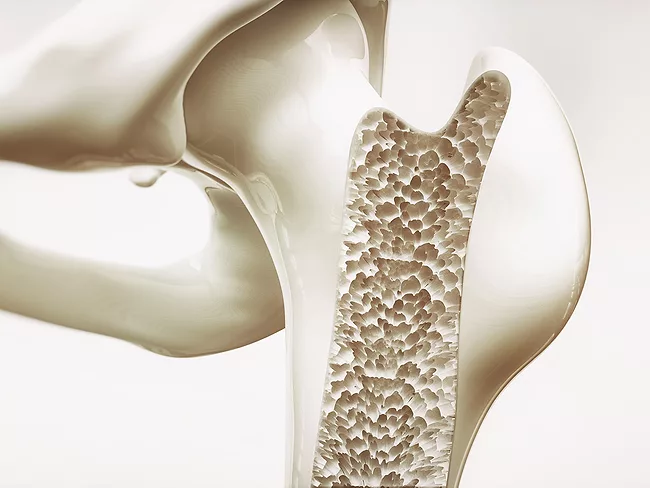
3D rendering showing osteoporosis in the femur
Biomarkers

New SNP in PAPSS2 gene tied to higher osteoporosis risk

Feb. 15, 2024
Genome sequencing has identified several single-nucleotide polymorphisms (SNPs) tied to osteoporosis, but most of them are located in noncoding regions. Investigators identified a SNP which impacted the YY2-PAPSS2 axis and risk of osteoporosis; the PAPSS2 gene encodes bifunctional 3’-phosphoadenosine 5’-phosphosulfate synthase 2.
Read More
Illustration of ear next to DNA double helix
Biomarkers

USH1C identified as new genetic variant behind progressive hearing loss

Feb. 9, 2024
Harmonin is a key factor in the maintenance of mechanosensory function in hair cells in the ear, and it is encoded by the USH1C gene.
Read More
DNA illustration
Biomarkers

Novel mutation in VPS33B gene behind bleeding of unknown cause

Feb. 8, 2024
Bleeding of unknown cause (BUC) is a diagnosis of exclusion, and it is common for these patients to have congenital platelet function disorders. Whole-exome sequencing may help reach a more accurate diagnosis in these cases.
Read More
Biomarkers

Novel susceptibility loci revealed for systemic sclerosis

Feb. 2, 2024
Japanese researchers have presented data from the biggest Asian genome-wide association study (GWAS) regarding susceptibility loci for systemic sclerosis (SSc), comprising a total of 1,428 cases and 112,599 controls and with an imputation reference panel containing more than 3,000 Japanese whole-genome sequencing data.
Read More
Infection

Genetic risk factors for long COVID point to multiple organ systems, druggable targets

July 20, 2023
By Nuala Moran
The most in-depth study to date of the genetic risk factors for long COVID has identified 73 genes that are highly associated with severe or fatigue-dominant forms of the disease. Many of these genes also are known to be associated with other disorders, including myalgic encephalomyelitis/chronic fatigue syndrome (ME/CFS) and neurodegenerative, autoimmune, cardiovascular and metabolic diseases.

Read More
Previous 1 2 Next

Popular Stories

  • Today's news in brief

    BioWorld
    BioWorld briefs for July 2, 2026.
  • News in brief

    BioWorld Asia
    BioWorld Asia briefs for June 30, 2026
  • Illustration demonstrating gut-brain axis

    CINP 2026: Gut microbiota could predict antidepressant response

    BioWorld
    The gut microbiota may be altered in people with depression as a result of treatment. These microorganisms reorganize differently in individuals who respond to...
  • Brain made of chip and circuits

    Ascending BCI systems deepen national security, ethical concerns

    BioWorld
    Ready or not, the future has arrived. Novel AI and brain-computer interface (BCI) systems are no longer confined to the realm of science fiction. As an...
  • Black wavy lines forming an abstract sound wave.png

    Deep brain stimulation from the shallows: tomorrow’s BCI technology?

    BioWorld
    Deep brain stimulation (DBS) through implanted electrodes has enabled fundamentally new ways of treating certain disorders. More than 100,000 severely ill...
  • BioWorld
    • Today's news
    • Analysis and data insight
    • Clinical
    • Data Snapshots
    • Deals and M&A
    • Financings
    • Medical technology
    • Newco news
    • Opinion
    • Regulatory
  • BioWorld Science
    • Today's news
    • Biomarkers
    • Cancer
    • Conferences
    • Endocrine/metabolic
    • Immune
    • Infection
    • Neurology/psychiatric
    • NME Digest
    • Patents
  • BioWorld Asia
    • Today's news
    • Analysis and data insight
    • Australia
    • China
    • Clinical
    • Deals and M&A
    • Financings
    • Newco news
    • Regulatory
    • Science
  • More
    • About
    • Advertise with BioWorld
    • Archives
    • Article reprints and permissions
    • Contact us
    • Cookie policy
    • Copyright notice
    • Data methodology
    • Infographics: Dynamic digital data analysis
    • Index insights
    • Podcasts
    • Privacy policy
    • Share your news with BioWorld
    • Staff
    • Terms of use
    • Topic alerts
Follow Us

Copyright ©2026. All Rights Reserved. Design, CMS, Hosting & Web Development :: ePublishing