The EMA has given initial endorsement to a new approach to early toxicity testing in which live animals will be replaced by virtual counterparts. The virtual control groups will be derived from data generated in animals that have been used as controls in previous studies. The historical database has been brought together in an EU-funded project to which 20 pharma and crop sciences companies contributed. While limited in scope, this is the first time the EMA has formally endorsed the use of a new approach methodology (NAM) to generate data that could eventually be included in an application for marketing approval.
In what the U.S. FDA has dubbed a milestone move toward fewer animal studies in drug development, the agency published a draft guidance to help sponsors validate new approach methodologies that can bring safe, effective drugs to market sooner based on human-centric data rather than starting off with nonclinical animal pharmacology and toxicology data.
In what the U.S. FDA has dubbed a milestone move toward fewer animal studies in drug development, the agency published a draft guidance to help sponsors validate new approach methodologies that can bring safe, effective drugs to market sooner based on human-centric data rather than starting off with nonclinical animal pharmacology and toxicology data.
The concept of the 3 Rs – reducing, refining and replacing animal research – has been championed since the 1950s, when William Russel and Rex Burch argued in their book “The Principles of Humane Experimental Technique” that the 3 Rs could simultaneously improve the treatment of research animals and advance the quality of scientific and medical research and testing. Current standard practices of animal research undeniably cause animal suffering at the same time that they have prioritized replicability over translatability.
The concept of the 3 Rs – reducing, refining and replacing animal research – has been championed since the 1950s, when William Russel and Rex Burch argued in their book “The Principles of Humane Experimental Technique” that the 3 Rs could simultaneously improve the treatment of research animals and advance the quality of scientific and medical research and testing. Current standard practices of animal research undeniably cause animal suffering at the same time that they have prioritized replicability over translatability.
On Dec. 2, 2025, the FDA released draft guidance that could reduce the use of nonhuman primates (NHPs) in preclinical testing of monoclonal antibodies. According to the guidance, which the FDA released for the purpose of soliciting comments, “In general, studies longer than 3 months in nonrodent species (e.g., NHPs, dogs, and mini-pigs) are not warranted to evaluate toxicities … when data from 3-month studies are supplemented with a weight-of-evidence (WoE) risk assessment.”
About five months after the U.S. FDA disclosed its roadmap to move away from animal testing in favor of new approaches for biopharma drug development, the U.S. National Institutes of Health (NIH) said it is awarding $87 million in contracts over three years to launch the Standardized Organoid Modeling Center.
About five months after the U.S. FDA disclosed its roadmap to move away from animal testing in favor of new approaches for biopharma drug development, the U.S. National Institutes of Health (NIH) said it is awarding $87 million in contracts over three years to launch the Standardized Organoid Modeling Center.
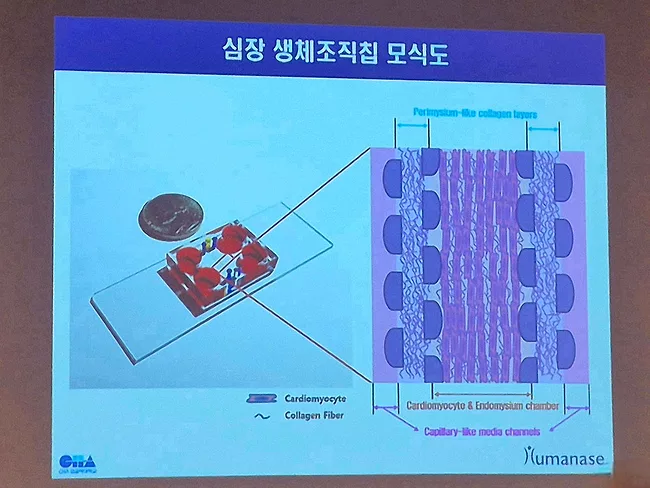
The U.S. FDA’s decision to phase out animal testing for INDs is driving a new market of alternative, nonanimal testing technologies like organoids and organs-on-a-chip, speakers at Bio Korea 2025 said.
The U.S. FDA’s decision to phase out animal testing for INDs is driving a new market of alternative, nonanimal testing technologies like organoids and organs-on-a-chip, speakers at Bio Korea 2025 said.