Pfizer Inc. CEO Albert Bourla has been talking for the past few weeks about creating a vaccine to control the omicron variant. Now the company, with partner Biontech SE, has initiated a clinical study of its new candidate by testing it in healthy adults. Bourla has said the company can adapt its vaccine to new variants in under three months and could have one ready to go in March if necessary.
Administering multiple booster doses against COVID-19 is not sustainable in the longer term, international drug regulators said during a meeting of the International Coalition of Medicines Regulatory Authorities, held Jan. 12. Regulators argued that a long-term strategy should involve vaccines capable of tackling several variants at once, not just omicron, and that tweaking existing vaccines and comparing them with first-generation vaccines using clinical studies is the way forward, according to a report from the meeting.
Fresh data about vaccines by Valneva SE and the Gamaleya Research Institute show strength against COVID-19’s omicron variant. The new results helped continue a worldwide race to create, approve and distribute vaccines to fight the pandemic.
Where’s the plan? That was the underlying question Jan. 11 as Biden administration health officials faced frustration and tough questions from both Democrats and Republicans on the Senate Health, Education, Labor and Pensions (HELP) Committee about how the U.S. government is responding to the surge of COVID-19 infections caused by the omicron variant.
Over the course of the past two years, two presidential administrations and the U.S. Congress have set considerable sums of money aside for testing for the COVID-19 pandemic, but reports of shortages of tests have prompted a response from Capitol Hill.
Preliminary data from a phase IIIb study of Johnson & Johnson’s Ad26.COV2.S COVID-19 vaccine showed a homologous booster dose was 85% effective against hospitalization in participants from South Africa.
The run on at-home COVID-19 tests may be for naught. The FDA warned that the popular rapid antigen tests recommended to keep New Year’s Eve revelers, relatives visiting elderly grandparents and workers exposed to the coronavirus from spreading COVID-19 are less likely to detect the Omicron variant than earlier strains of the virus. “Early data suggest that antigen tests do detect the Omicron variant but may have reduced sensitivity,” the agency said in an update on Dec. 29. Despite the higher rate of false negatives, the FDA said individuals should continue to use the tests. Those experiencing symptoms or with a high likelihood of infection based on exposure should follow-up with a molecular test if their antigen test returns a negative result.
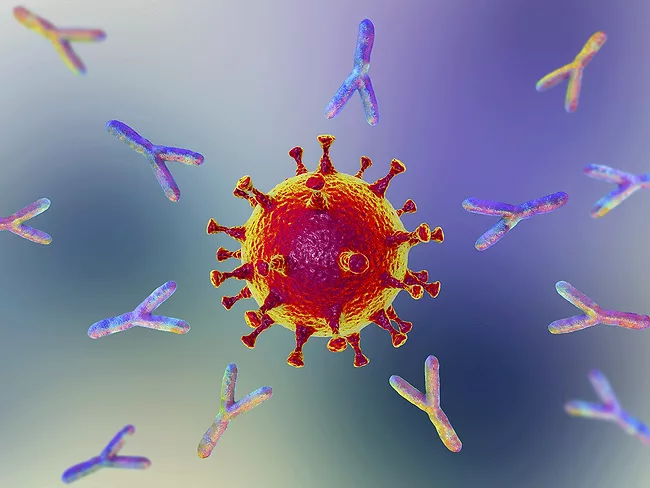
LONDON – A suite of papers rushed through peer review and published in Nature late on Dec. 23, 2021 contain data indicating approved monoclonal antibody drugs designed to neutralize SARS-COV-2 have substantially weaker activity against the Omicron variant.
LONDON – The latest cut of data from a study tracking the COVID-19 pandemic in near real time in Scotland indicates the Omicron variant of SARS-CoV-2 is two-thirds less likely to result in hospitalization than the Delta variant.
Astrazeneca plc has confirmed it is working with Oxford University to produce a vaccine against the Omicron variant of the SARS-CoV-2 virus. The Cambridge, U.K.-based pharma was one of the first to get a COVID-19 vaccine okayed by regulators, after acquiring rights to the shot from Vaccitech plc, a spin-out from Oxford University’s Jenner Institute specialist vaccine unit.