Truleaf Medical Ltd., a subsidiary of Israel-based Allmed Solutions, is ready to begin human trials of its Rosedoc platform to replace the heart’s leaky mitral valve using cardiac catheterization.
Volta Medical SAS reported raising $39 million in a series B round to roll out its VX1 software mapping system in Europe and the U.S. This artificial intelligence (AI) algorithm is compatible with most readily available multi-polar catheters and technology used in operating rooms and cath labs in the treatment of complex cardiac arrhythmia.
Women’s health startup May Health SAS has completed treatment of the first five participants in a U.S. feasibility study of its investigational Ovarian Rebalancing technique, a one-time, ultrasound-guided, transvaginal ablation procedure for women with polycystic ovary syndrome (PCOS). The novel treatment is designed to jumpstart the ovaries into releasing mature eggs in normal monthly cycles in women with PCOS-associated infertility.
Even though Cytokinetics Inc. received applause for testing its heart failure drug, omecamtiv mecarbil, in the second largest global heart disease clinical trial ever, the drug didn’t get a standing ovation from the U.S. FDA’s Cardiovascular and Renal Drugs Advisory Committee (CRDAC) Dec. 13.
What could be Cytokinetics Inc.’s first approved drug will take center stage Dec. 13 at a meeting of the U.S. FDA’s Cardiovascular and Renal Drugs Advisory Committee. But judging from the FDA’s briefing document for the meeting, the spotlight on the heart failure drug, omecamtiv mecarbil, could be harsh.
Results from the largest trial yet in transcatheter valve replacement continues to demonstrate strong results for Edwards Lifesciences Corp.’s Evoque system. A late-breaking presentation at the PCR London Valves 2022 meeting provided one-year follow-up results from the Triscend study showing better than 90% survival and 99% freedom from heart failure hospitalization. Further, 97.6% of patients maintained mild or trace tricuspid regurgitation.
Cerenovus Inc. reported primary results from the real-world EXCELLENT Registry showing positive outcomes with its Embotrap revascularization devices in the removal of stroke-inducing blood clots. Patients enrolled in the registry were treated with either the Embotrap II or Embotrap III devices as a first line therapy to treat ischemic stroke.
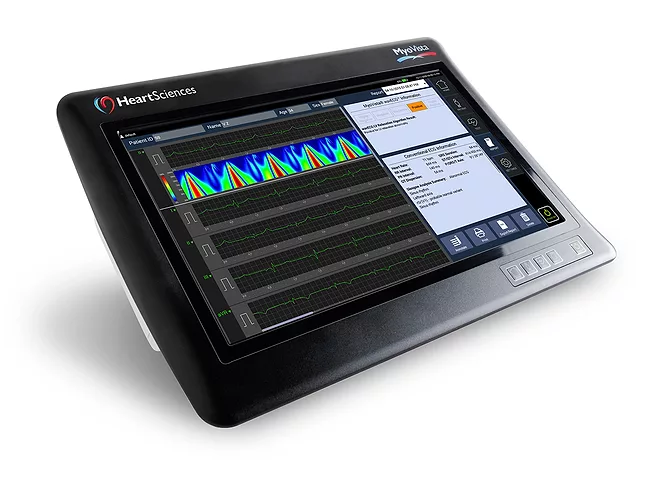
Heart Test Laboratories Inc., doing business as Heartsciences, said an independent study shows its Myovista electrocardiogram (ECG) machine learning model could be a cost-effective way to predict and stratify cardiac risk.
Medtronic plc reported six-month results from the full cohort of its Spyral HTN-ON MED study, showing a statistically significant reduction in office-based blood pressure, a key secondary endpoint. However, the trial missed its primary efficacy endpoint of a reduction in 24-hour systolic blood pressure, compared with a sham procedure.
Synaptive Medical Inc. and Panaxium SAS have inked a deal to bring high-resolution, real-time, artificial intelligence (AI)-assisted cortical mapping to neurosurgeons. Under the collaboration, Synaptive’s Modus V robotic exoscope technology will be integrated with Panaxium’s ultra-flexible iontronic electrocorticography (ECoG) platform.