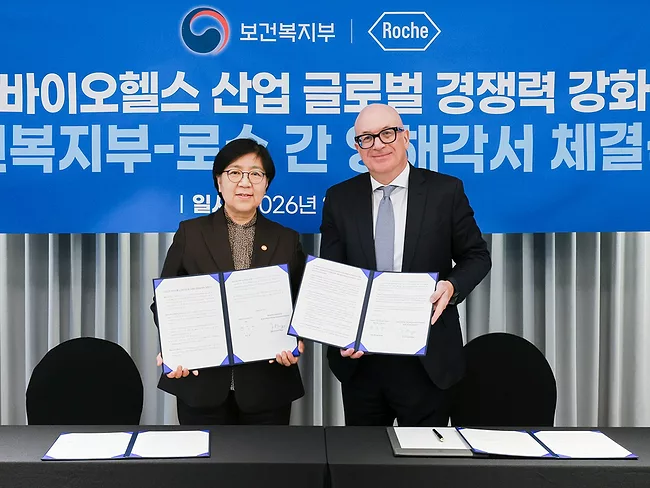
Roche Holding AG pledged to invest ₩710 billion (US$484.6 million) in South Korea over the next five years, positioning the country as a major global hub for clinical trials. The near $500 million agreement inked with the Korean government will bring Roche’s clinical trials for common or incurable diseases and innovative biopharmaceutical products to the country.
Roche Holding AG pledged to invest ₩710 billion (US$484.6 million) in South Korea over the next five years, positioning the country as a major global hub for clinical trials. The near $500 million agreement inked with the Korean government will bring Roche’s clinical trials for common or incurable diseases and innovative biopharmaceutical products to the country.
Citing an increase in safety events and evidence of futility, the U.S. NIH stopped an investigational low-dose rivaroxaban arm of its Comparison of Anticoagulation and Antiplatelet Therapies for Intracranial Vascular Atherostenosis (CAPTIVA) trial.
One of the problems of doing business in the EU is that each member nation has its own more or less unique requirements for clinical trial registration, but the Medical Device Coordination Group may have a solution in the form of a pilot program for harmonized clinical trial registration.
The U.K. Medicines and Healthcare Products Regulatory Agency announced a new pilot program for modifications to clinical trials that allows for automatic approvals of those changes based on the risks those changes present.
Deepqure Inc. gained clinical trial clearance from South Korea’s Ministry of Food and Drug Safety to test its Hyperqure renal denervation system for the treatment of atrial fibrillation.
PhaseV Inc. raised $50 million in a series A funding round to further develop its machine learning (ML) platform which helps companies reduce the cost and duration of clinical trials, and increase their possibility of success.
What does it mean for a confirmatory trial to be “underway”? That’s a question that’s been plaguing some drug sponsors, especially those in the ultra-rare disease space, since the U.S. Congress, in 2023, gave the FDA the authority to require that a confirmatory trial be underway at the time accelerated approval is granted.
The U.S. FDA’s draft guidance for reporting of deviations from clinical study protocols lends some insight as to the definition of a deviation, but the agency highlights some concerns about related compliance activities.
Following a bioresearch monitoring inspection, the U.S. FDA slapped Julio Flamini, a clinical investigator at the Research Center of Atlanta, with a warning letter citing a “significant” protocol violation in which a 15-year-old girl was given 10 times the maximum daily dose of an unnamed study drug for a week.