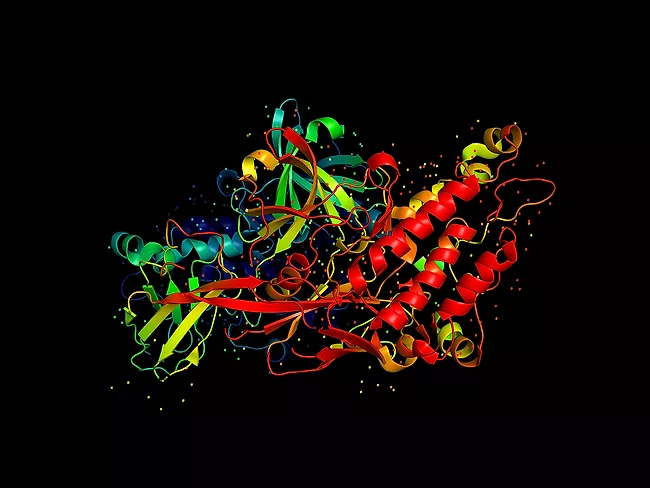
Synonymous or silent mutations do not change the sequence of the protein that they encode. With some exceptions, they do not trigger any effect. Last year, however, a study by researchers from the University of Michigan tried to refute this concept after finding that they altered the protein function. But breaking dogmas can have answers. A group of scientists from various institutions has found that this work could have a method error.
The analysis of thousands of proteins in the brain has revealed the association of astrocytes with obsessive-compulsive disorder (OCD). A proteomic study by researchers from the University of California Los Angeles (UCLA) has identified them in different cellular compartments of astrocytes and neurons. One such protein, the postsynaptic protein SAPAP3, appeared to regulate the organization of the actin cytoskeleton. Its deficit in astrocytes could cause OCD.
RNA editing in schizophrenia (SCZ)-associated genes was decreased in postmortem brains of individuals of European descent, according to a study from the University of California, Los Angeles (UCLA). The scientists obtained the RNA editome from SCZ brains to detect the sequence changes in their RNA and observed hypoediting in noncoding regions related to mitochondrial function, such as the mitofusin-1 (MFN1) gene.
Base editing (BE), a technique that modifies a single nucleotide in living cells, has been successfully tested to resolve the CD3δ mutation in severe combined immunodeficiencies (SCIDs) and produce functional T cells. For now, scientists at the University of California, Los Angeles (UCLA), completed the study on patient stem cells and artificial thymic organoids, shortening the way for future clinical trials.
Los Angeles is one of the most diverse cities in the U.S. This diversity is evident at University of California, Los Angeles (UCLA), a university that attracts students (37,000) and workers (22,090) from 118 countries. It is enough to go for a walk on campus or its surroundings to believe that one is at a United Nations convention. Researchers at the UCLA ATLAS Community Health Initiative has been capturing that diversity in a genomic biobank whose data will help to understand, anonymously, the genetic basis of certain diseases. With them, scientists will be able to design the best treatments for these patients.
Social scientists are well aware of the consequences of what’s called assortative mating, that is, the fact that marriages tend to occur between people who are similar in things such as interests, social status, education and wealth. Biologists, on the other hand, have tended to ignore it. “When studying the genetic underpinnings of correlated traits, “for mathematical convenience, we’ve assumed basically for forever that mating is random,” Richard Border told BioWorld. “Which it isn’t.”
One way psychiatric disorders differ from neurological disorders is by the absence of anatomically defined neuropathology. “Alzheimer's disease, Parkinson's disease or stroke have a very clear picture of what cells are changing and how they're changing. The specific changes are very clear under a microscope, but in psychiatric diseases one hasn't been able to see that,” Daniel Geschwind told BioWorld.
One way psychiatric disorders differ from neurological disorders is by the absence of anatomically defined neuropathology. “Alzheimer's disease, Parkinson's disease or stroke have a very clear picture of what cells are changing and how they're changing. The specific changes are very clear under a microscope, but in psychiatric diseases one hasn't been able to see that,” Daniel Geschwind told BioWorld.