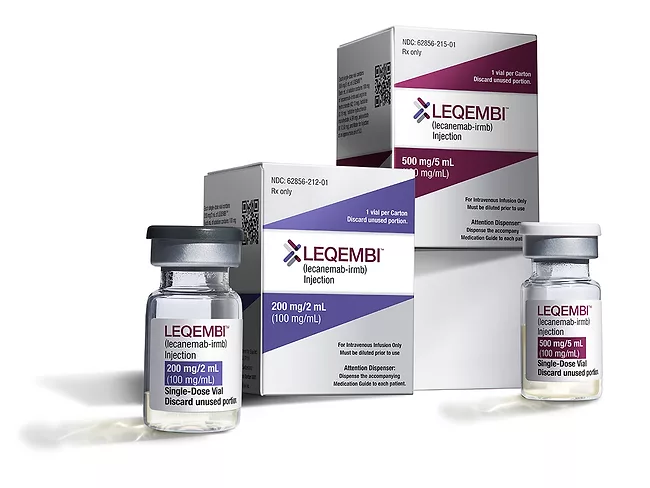
The U.K. has become the first country in Europe to approve Leqembi (lecanemab), but as the breakthrough decision was announced, the health technology assessment body NICE said the benefits are too small to justify the cost of providing the Alzheimer’s disease therapy on the National Health Service (NHS).
Big pharma continues to invest heavily into molecular glue degraders. The latest deal has Eisai Co. Ltd. striking up a research collaboration that could bring Seed Therapeutics Inc. up to $1.5 billion in up-front and milestone payments. The two said they plan to discover, develop and commercialize MGDs for several undisclosed neurodegeneration and oncology targets.
Big pharma continues to invest heavily into molecular glue degraders. The latest deal has Eisai Co. Ltd. striking up a research collaboration that could bring Seed Therapeutics Inc. up to $1.5 billion in up-front and milestone payments. The two said they plan to discover, develop and commercialize MGDs for several undisclosed neurodegeneration and oncology targets.
Ensho Therapeutics Inc. launched in July after licensing a pipeline of four oral α4β7 inhibitors for inflammatory and gastrointestinal disorders, including inflammatory bowel disease (IBD), from EA Pharma Co. Ltd. “Millions of people worldwide are living with IBD,” Ensho founder, president and executive chair Neena Bitritto-Garg recently told BioWorld, “and while there are a number of approved medications to address the symptoms of IBD, it remains a difficult-to-treat disease with high relapse rates for a considerable proportion of patients.”
Ensho Therapeutics Inc. launched in July after licensing a pipeline of four oral α4β7 inhibitors for inflammatory and gastrointestinal disorders, including inflammatory bowel disease (IBD), from EA Pharma Co. Ltd. “Millions of people worldwide are living with IBD,” Ensho founder, president and executive chair Neena Bitritto-Garg recently told BioWorld, “and while there are a number of approved medications to address the symptoms of IBD, it remains a difficult-to-treat disease with high relapse rates for a considerable proportion of patients.”
The EMA’s Committee for Medicinal Products for Human Use (CHMP) recommended approval of 14 drugs and the extension of the label of 11 others at its July meeting, but, inevitably, it was the decision to turn down the Alzheimer’s disease therapy Leqembi (lecanemab) that stirred the greatest reaction.
Ensho Therapeutics Inc. launched in July after licensing a pipeline of four oral α4β7 inhibitors for inflammatory and gastrointestinal disorders, including inflammatory bowel disease (IBD), from EA Pharma Co. Ltd. “Millions of people worldwide are living with IBD,” Ensho founder, president and executive chair Neena Bitritto-Garg recently told BioWorld, “and while there are a number of approved medications to address the symptoms of IBD, it remains a difficult-to-treat disease with high relapse rates for a considerable proportion of patients.”
Biogen Inc. and partner Eisai Co. Ltd. said the EMA’s Committee for Medicinal Products for Human Use has adopted a negative opinion on the marketing bid for lecanemab in early Alzheimer’s disease (AD) and mild AD. The humanized anti-soluble aggregated amyloid-beta monoclonal antibody is approved in the U.S., Japan, China, South Korea, Hong Kong and Israel, and is being sold in the U.S., where it’s branded Leqembi, as well as Japan and China. Eisai, of Tokyo, will ask the CHMP to re-examine the matter.
At a time when much of the biopharma space can’t seem to get enough of antibody-drug conjugates (ADC), Bristol Myers Squibb Co. is backing away from a potential $3 billion-plus collaboration with Eisai Co. Ltd., handing back full rights to the latter’s folate receptor alpha-targeting ADC, farletuzumab ecteribulin (FZEC), citing a portfolio reprioritization.
At a time when much of the biopharma space can’t seem to get enough of antibody-drug conjugates (ADC), Bristol Myers Squibb Co. is backing away from a potential $3 billion-plus collaboration with Eisai Co. Ltd., handing back full rights to the latter’s folate receptor alpha-targeting ADC, farletuzumab ecteribulin (FZEC), citing a portfolio reprioritization. Global rights to FZEC now reside with Tokyo-based Eisai, which said it intends to accelerate work on the candidate, which is in three clinical studies, including two phase II trials in gynecological cancers and non-small-cell lung cancer.