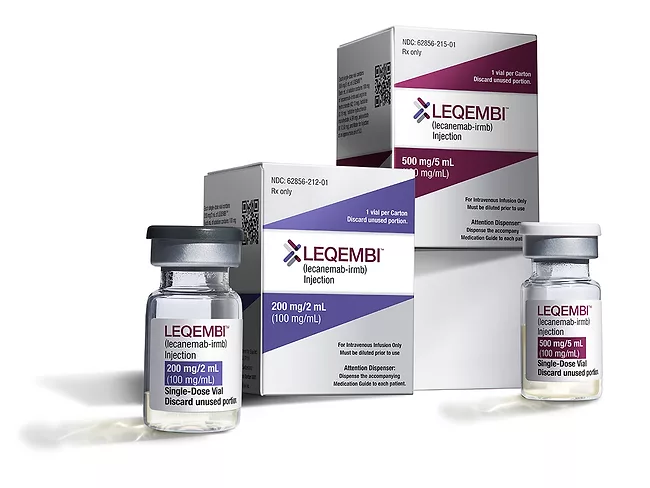
Europe may still await its first disease-modifying Alzheimer’s drug after the EMA postponed its decision on Leqembi (lecanemab, Biogen Inc./Eisai Co. Ltd) on March 22, but leading members of the World Dementia Council were in an optimistic mood when they convened in London four days later.
The EMA’s Committee for Medicinal Products for Human Use (CHMP) adopted a positive opinion recommending approval of Pfizer Inc.’s Emblaveo (aztreonam-avibactam), an antibiotic combination that would offer a new option to patients with serious bacterial infections caused by multidrug-resistant gram-negative bacteria.
The EMA’s Committee for Medicinal Products for Human Use (CHMP) adopted a positive opinion recommending approval of Pfizer Inc.’s Emblaveo (aztreonam-avibactam), an antibiotic combination that would offer a new option to patients with serious bacterial infections caused by multidrug-resistant gram-negative bacteria. If approved, Emblaveo would be among the first beta-lactam/beta-lactamase inhibitor combos cleared for use in Europe.
A first-quarter 2024 launch for Alzheimer’s drug donanemab appears to be off the table as Eli Lilly and Co. disclosed a last-minute decision by the U.S. FDA to convene an advisory committee to review data from the phase III Trailblazer-ALZ 2 trial.
South Korea’s MFDS gave regulatory clearance to SK Inc. C&C’s artificial intelligence (AI) solution to diagnose cerebral infarction called Medical Insight+ Brain Infarct on Feb. 22, as a class III device.
Eisai Co. Ltd. and Oita University in Oita Prefecture, Japan, developed a first-of-its-kind machine learning model to predict amyloid beta accumulation in the brain using a wristband sensor. The model, which collects biological and lifestyle data from daily life, is expected to enable screening for brain amyloid beta accumulation to identify those at risk for Alzheimer's disease, particularly because amyloid beta begins to accumulate in the brain about 20 years before the onset of the disease.
Eisai Co. Ltd. and Oita University in Oita Prefecture, Japan, developed a first-of-its-kind machine learning model to predict amyloid beta accumulation in the brain using a wristband sensor. The model, which collects biological and lifestyle data from daily life, is expected to enable screening for brain amyloid beta accumulation to identify those at risk for Alzheimer's disease, particularly because amyloid beta begins to accumulate in the brain about 20 years before the onset of the disease.
In July, Leqembi (lecanemab, Biogen Inc./Eisai Co. Ltd.) became the first amyloid-targeting drug to win traditional approval from the U.S. FDA, after getting accelerated approval in January based on the surrogate endpoint of plaque removal.
As pricing negotiations for Biogen Inc./Eisai Co. Ltd.’s newly approved Leqembi (lecanemab) for Alzheimer’s disease get underway at Japan’s Central Social Insurance Medical Council (Chuikyo), industry watchers see opportunity for potential drug price reform.
Thanks to a raft of new approvals by Japan’s Ministry of Health, Labor and Welfare (MHLW), patients in Japan will soon have access to Biogen Inc./Eisai Co. Ltd.’s Leqembi (lecanemab), an amyloid-beta binder, for slowing progression of mild cognitive impairment and mild dementia due to Alzheimer's disease.