BioWorld. Link to homepage.

Clarivate
  • BioWorld
  • BioWorld Science
  • BioWorld Asia
  • Data Snapshots
    • Biopharma
    • Medical technology
    • Infographics: Dynamic digital data analysis
    • Index insights
    • NME Digest
  • Special reports
    • Infographics: Dynamic digital data analysis
    • Trump administration impacts
    • Med-tech outlook 2026
    • Under threat: mRNA vaccine research
    • BioWorld at 35
    • Biopharma M&A scorecard
    • Bioworld 2025 review
    • BioWorld MedTech 2025 review
    • BioWorld Science 2025 review
    • Women's health
    • China's GLP-1 landscape
    • PFA re-energizes afib market
    • China CAR T
    • Alzheimer's disease
    • Coronavirus
    • More reports can be found here

BioWorld. Link to homepage.

  • Sign In
  • Sign Out
  • My Account
Subscribe
BioWorld - Saturday, April 18, 2026
Home » Chinese Academy of Sciences

Articles Tagged with ''Chinese Academy of Sciences''

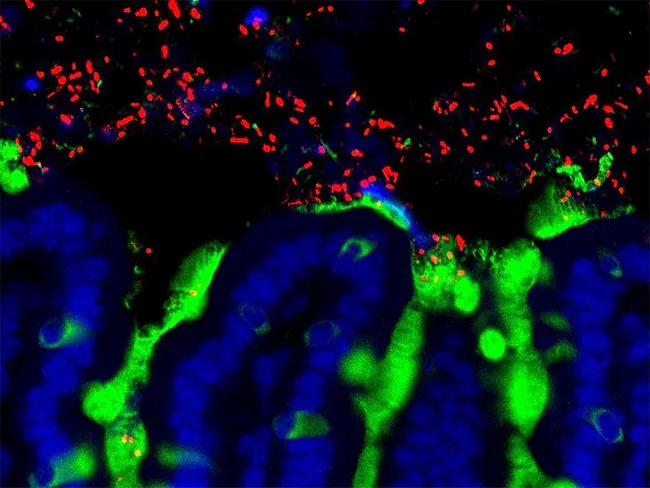
Bacteria in mouse small intestine
Immune

Gut dopamine receptors drive multiple sclerosis sex differences

Nov. 23, 2023
By Mar de Miguel
Some autoimmune diseases are different in women and men. A group of researchers from the Chinese Academy of Sciences (CAS) has found a strong female bias in the response of a neurotransmitter receptor that is involved in many neurological processes. Their study identified the hyperactivity of the dopamine D2 receptor (DRD2) in the intestine and associated it with the progression of multiple sclerosis (MS) in female mice.
Read More
Neurology/Psychiatric

Shanghai Institute of Materia Medica discovers new Nav1.8 blockers for pain

Nov. 21, 2023
Shanghai Institute of Materia Medica of the Chinese Academy of Sciences has described sodium channel protein type 10 subunit α (SCN10A; Nav1.8) blockers reported to be useful for the treatment of pain.
Read More
Images showing the green fluorescence signals in different body parts of the live-birth chimeric monkey.
Drug Design, Drug Delivery & Technologies

1st chimeric monkey born with large embryonic stem cell contribution

Nov. 14, 2023
By Anette Breindl
Investigators at the Chinese Academy of Sciences have generated a chimeric monkey by injecting an embryonic stem cell into the morula, which is an extremely early embryo consisting of 16 to 32 cells. The animal survived for only 10 days, and it is not the first live birth of a chimeric primate. But it is the first such chimera with contributions from an embryonic stem cell, and that stem cell contributed a far higher proportion of cells in the newborn than have been achieved in previous attempts at creating chimeras.
Read More
Images showing the green fluorescence signals in different body parts of the live-birth chimeric monkey.
Drug Design, Drug Delivery & Technologies

1st chimeric monkey born with large embryonic stem cell contribution

Nov. 9, 2023
By Anette Breindl
Investigators at the Chinese Academy of Sciences have generated a chimeric monkey by injecting an embryonic stem cell into the morula, which is an extremely early embryo consisting of 16 to 32 cells. The animal survived for only 10 days, and it is not the first live birth of a chimeric primate. But it is the first such chimera with contributions from an embryonic stem cell, and that stem cell contributed a far higher proportion of cells in the newborn than have been achieved in previous attempts at creating chimeras.
Read More
Scientist looking in microscope, chemical structure concept image
Cancer

IHMT-PI3K-455, a new potent and selective PI3Kγ/δ dual inhibitor with efficacy in vivo

Oct. 24, 2023
Researchers from Hefei Institutes of Physical Science Chinese Academy of Sciences and affiliated organizations have reported the discovery of IHMT-PI3K-455, a novel potent and selective PI3Kγ/δ dual inhibitor as a potential anticancer agent.
Read More
Neurology/Psychiatric

Shanghai Institute of Materia Medica patent describes Nav1.8 blockers

Oct. 9, 2023
Amide compounds acting as sodium channel protein type 10 subunit α (SCN10A; Nav1.8) blockers reported to be useful for the treatment of pain, arthritis, pruritus, asthma, multiple sclerosis, arrhythmia, heart failure and epilepsy, among others.
Read More
Cancer

Shanghai Institute of Materia Medica divulges new c-KIT inhibitors

Oct. 4, 2023
Shanghai Institute of Materia Medica of the Chinese Academy of Sciences has synthesized mast/stem cell growth factor receptor Kit (KIT; c-KIT; CD117) inhibitors reported to be useful for the treatment of cancer, autoimmune diseases, inflammatory and neurological disorders.
Read More
Cancer

Shanghai Institute of Materia Medica divulges new NF-κB activation inhibitors

Oct. 3, 2023
Researchers at Shanghai Institute of Materia Medica of the Chinese Academy of Sciences have synthesized cucurbitacin B derivatives acting as NF-κB activation inhibitors reported to be useful for the treatment of cancer and inflammatory disorders.
Read More
Cancer

Shanghai Institute of Materia Medica presents androgen receptor-targeting compounds

Aug. 7, 2023
The Shanghai Institute of Materia Medica of the Chinese Academy of Sciences has described androgen receptor antagonists and/or androgen receptor degradation inducers reported to be useful for the treatment of gastrointestinal disorders, osteoporosis and SARS-CoV-2 infection (COVID-19), as well as breast and castration-resistant prostate cancer.
Read More
Cancer

Chinese researchers describe new ENPP1 inhibitors

Aug. 3, 2023
China Pharmaceutical University and Shanghai Institute of Materia Medica of the Chinese Academy of Sciences have patented benzimidazole compounds acting as ectonucleotide pyrophosphatase/phosphodiesterase family member 1 (ENPP1) inhibitors reported to be useful for the treatment of cancer, infections, autoimmune disease and inflammatory disorders.
Read More
Previous 1 2 3 4 5 6 7 8 Next

Popular Stories

  • Today's news in brief

    BioWorld
    BioWorld briefs for April 17, 2026.
  • News in brief

    BioWorld Asia
    BioWorld Asia briefs for April 14, 2026
  • Elderly woman holding illustration of brain with missing puzzle piece

    Meta-analysis: Anti-amyloid Alzheimer’s drugs not ‘clinically meaningful’

    BioWorld
    The ongoing controversy over the effectiveness of anti-amyloid drugs is about to get more heated, after a review of clinical trials showed statistically...
  • Man holding raised arm with illustrated overlay of nerves

    Biohaven reports details on discovery of BHV-2100

    BioWorld Science
    Transient receptor potential melastatin 3 (TRPM3) is a calcium-permeable TRP channel that is highly expressed in somatosensory neurons, including nociceptors of...
  • Cancer cell in the cross-hairs

    Selective CBL-B inhibitor with improved safety profile disclosed

    BioWorld Science
    CBL-B is a RING-type E3 ubiquitin ligase that acts as a negative regulator of T-cell activation, contributing to immune homeostasis by limiting excessive immune...
  • BioWorld
    • Today's news
    • Analysis and data insight
    • Clinical
    • Data Snapshots
    • Deals and M&A
    • Financings
    • Medical technology
    • Newco news
    • Opinion
    • Regulatory
  • BioWorld Science
    • Today's news
    • Biomarkers
    • Cancer
    • Conferences
    • Endocrine/metabolic
    • Immune
    • Infection
    • Neurology/psychiatric
    • NME Digest
    • Patents
  • BioWorld Asia
    • Today's news
    • Analysis and data insight
    • Australia
    • China
    • Clinical
    • Deals and M&A
    • Financings
    • Newco news
    • Regulatory
    • Science
  • More
    • About
    • Advertise with BioWorld
    • Archives
    • Article reprints and permissions
    • Contact us
    • Cookie policy
    • Copyright notice
    • Data methodology
    • Infographics: Dynamic digital data analysis
    • Index insights
    • Podcasts
    • Privacy policy
    • Share your news with BioWorld
    • Staff
    • Terms of use
    • Topic alerts
Follow Us

Copyright ©2026. All Rights Reserved. Design, CMS, Hosting & Web Development :: ePublishing