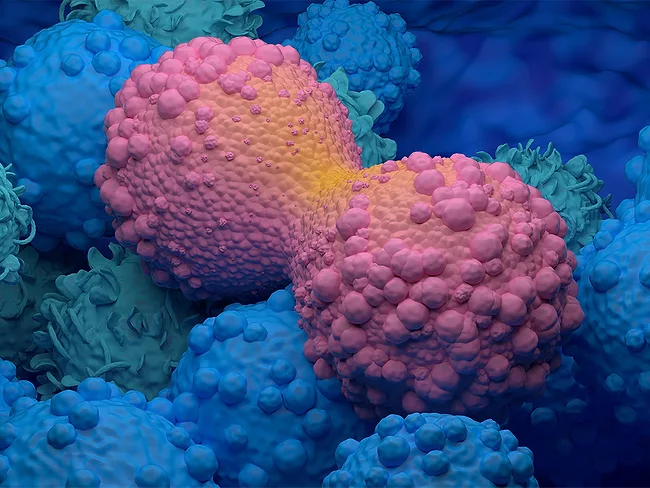
Hefei Institutes of Physical Science Chinese Academy of Sciences has synthesized phosphoglycerate kinase 1 (PGK1) inhibitors reported to be useful for the treatment of inflammatory bowel disease.
Researchers at the Chinese Academy of Sciences and collaborators have developed a new method to label and monitor dormant breast cancer cells over time, shedding light on how these cells survive chemotherapy and potentially trigger metastatic relapse in the lung. Breast cancer frequently recurs in distant metastatic sites, even after the primary tumor has fully regressed following initial therapy.
Chinese researchers are preparing the details for the publication of another scientific milestone, the creation of a chimera with a human heart and a kidney developed from human stem cells in pig embryos.
Chinese researchers are preparing the details for the publication of another scientific milestone, the creation of a chimera with a human heart and a kidney developed from human stem cells in pig embryos. These studies aim to address the shortage of immunocompatible organ donors while shedding light on some of the most fundamental questions in developmental biology.
Researchers from Chinese Academy of Sciences detailed the creation of a new dextran sulfate sodium (DSS)-based mouse model of immune checkpoint blockade (ICB) therapy-associated colitis.
Researchers from Shanghai Institute of Materia Medica of the Chinese Academy of Sciences and China Pharmaceutical University presented the discovery of novel orally bioavailable inhibitors of transient receptor potential canonical channels 4 and 5 (TRPC4/5), being developed for the treatment of depression and anxiety.
Researchers from the Shanghai Institute of Materia Medica of the Chinese Academy of Sciences and the Shanghai Institute of Organic Chemistry have divulged EGFR (L858R/T790M/C797S triple mutant) and EGFR (del19/T790M/C797S triple mutant) inhibitors reported to be useful for the treatment of cancer.
Shanghai Institute of Materia Medica of the Chinese Academy of Sciences and Zhejiang University have jointly discovered N2-3-fluoro-5-substituted phenyl-2-aminopyrimidine derivatives.
Aromatase inhibitors (AI) are among the most widely used therapies in the treatment of breast tumors expressing estrogen receptor α (ERα). Alone or in combination with other agents, they are the standard of care for hormone receptor-positive tumors.
ENPP1 contributes to establishing an immunosuppressive tumor microenvironment by blocking the cyclic GMP-AMP synthase (cGAS)-stimulator of interferon genes (STING) signaling, which is critical in antitumor immunity. The inhibition of ENPP1 is an emerging strategy under exploration for cancer immunotherapy.