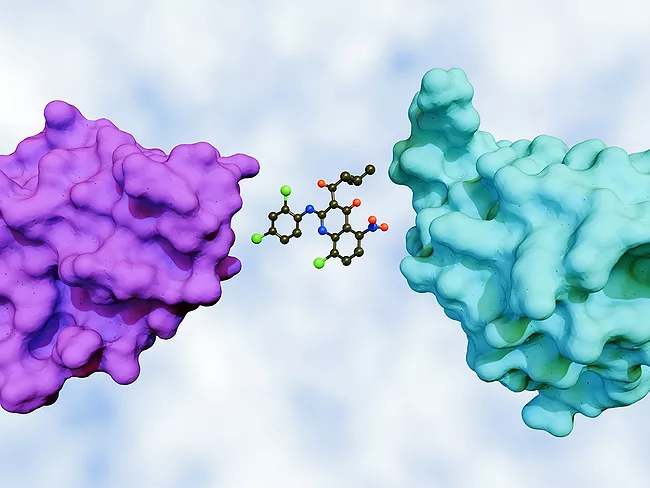
G1 to S phase transition 1 (GSPT1) is a protein involved in cell cycle progression, translation termination, and protein homeostasis, and its overexpression has been implicated in various cancers. Although GSPT1 is considered a promising therapeutic target, the lack of conventional ligand-binding pockets has historically rendered it undruggable.
Captor Therapeutics Inc. has disclosed molecular glue degraders comprising a cereblon (CRBN) binding moiety acting as serine/threonine-protein kinase Nek7 degradation inducers reported to be useful for the treatment of amyotrophic lateral sclerosis, Still’s disease, Behçet’s disease, familial Mediterranean fever, Alzheimer’s disease, pulmonary arterial hypertension and more.
Mindrank Therapeutics (Suzhou) New Drug Research & Development Co. Ltd. has divulged molecular glue degraders comprising cereblon (CRBN) ligands acting as dual eukaryotic peptide chain release factor GTP-binding subunit ERF3A (GSPT1) and casein kinase 1 isoform α (CSNK1A1) degradation inducers. They are reported to be potentially useful for the treatment of cancer, Alzheimer’s disease, inflammatory disorders, autoimmune diseases and metabolic diseases.
During the AACR-NCI-EORTC International Conference on Molecular Targets and Cancer Therapeutics, scientists from Plexium Inc. presented the identification of a new class of potent, selective, cereblon (CRBN)-based molecular glue degraders of CDK2 using its proprietary monovalent degrader platform.
Researchers at Triana Biomedicines Inc. presented the preclinical characterization of TRI-611, a CNS-penetrant molecular glue degrader targeting ALK in models of ALK fusion-positive non-small-cell lung cancer.
IKZF2, a transcription factor in the Ikaros family, plays a key role in stabilizing regulatory T (Treg) cells and promoting immune suppression within the tumor microenvironment (TME). Selective targeting of IKZF2 in intratumoral Tregs has the potential to enhance antitumor immunity and improve the efficacy of immunotherapy, while minimizing immune-related toxicities associated with systemic Treg depletion.
Monte Rosa Therapeutics Inc. has synthesized molecular glue degraders comprising a E3 ubiquitin-protein ligase binding moiety coupled to a cyclin-dependent kinase 2 (CDK2)-targeting moiety acting as cyclin-dependent kinase 2 (CDK2) degradation inducers potentially useful for the treatment of cancer.
In its second deal with Novartis AG of the past 11 months, Monte Rosa Therapeutics Inc. is getting $120 million up front to collaborate on developing molecular glue degraders to treat immune-mediated diseases. The agreement could swell to $5.7 billion for Monte Rosa.
In its second deal with Novartis AG of the past 11 months, Monte Rosa Therapeutics Inc. is getting $120 million up front to collaborate on developing molecular glue degraders to treat immune-mediated diseases. The agreement could swell to $5.7 billion for Monte Rosa.