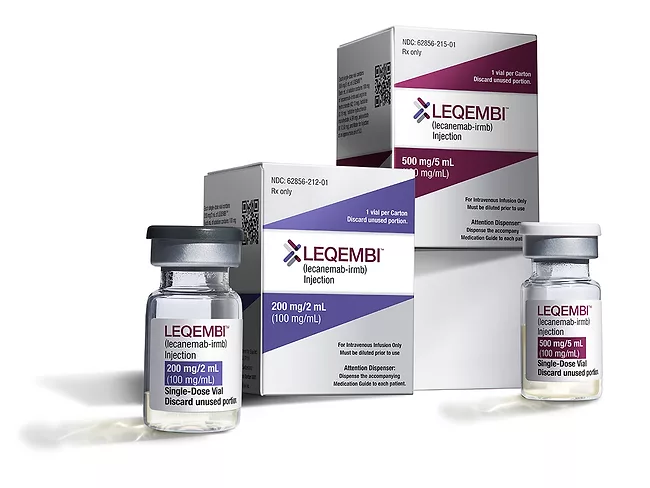
EMA approval of the Alzheimer’s disease therapy Leqembi (lecanemab) has stalled once again, after the European Commission did not as usual nod through the agency’s recommendation, but told it to examine safety data that have recently become available.
The EMA recommended the highest number of approvals in the last 15 years in 2024, giving the nod to 114 drugs. That is amongst the highest number in the 30 years of the agency’s existence, said Steffen Thirstrup, the EMA’s chief medical officer.
In a deal worth $100 million up front and up to $1.25 billion in milestone payments, Bioarctic AB licensed its pyroglutamate-amyloid-β (pyroglutamate-Aβ) antibody program to Bristol Myers Squibb Co. to advance treatments for Alzheimer’s disease.
In a deal worth $100 million up front and up to $1.25 billion in milestone payments, Bioarctic AB licensed its pyroglutamate-amyloid-β (pyroglutamate-Aβ) antibody program to Bristol Myers Squibb Co. to advance treatments for Alzheimer’s disease.
The EMA has changed its mind about an earlier decision that the risks of Leqembi (lecanemab) outweigh the benefits and is now recommending the Alzheimer’s disease drug is approved for a subgroup of patients. That follows an appeal by Eisai Co. Ltd. and a re-examination of the data, after details relating to 274 patients with two copies of the ApoE4 gene were removed from the file.
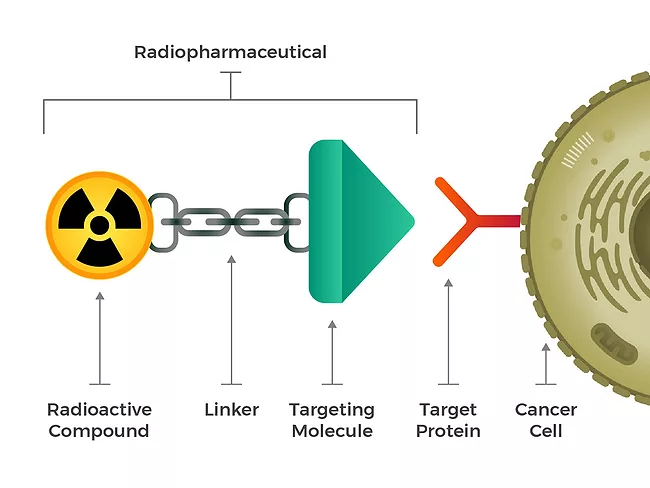
A year out from Leqembi’s approval for Alzheimer’s disease (AD), ongoing research coupled with artificial intelligence is advancing both radiopharmaceuticals and small-molecule drugs for AD diagnostics and treatment, speakers at the 2024 KoNECT-MOHW-MFDS conference said.
A year out from Leqembi’s approval for Alzheimer’s disease (AD), ongoing research coupled with artificial intelligence is advancing both radiopharmaceuticals and small-molecule drugs for AD diagnostics and treatment, speakers at the 2024 KoNECT-MOHW-MFDS conference said.
The U.K. has become the first country in Europe to approve Leqembi (lecanemab), but as the breakthrough decision was announced, the health technology assessment body NICE said the benefits are too small to justify the cost of providing the Alzheimer’s disease therapy on the National Health Service (NHS).
The EMA’s Committee for Medicinal Products for Human Use (CHMP) recommended approval of 14 drugs and the extension of the label of 11 others at its July meeting, but, inevitably, it was the decision to turn down the Alzheimer’s disease therapy Leqembi (lecanemab) that stirred the greatest reaction.
Biogen Inc. and partner Eisai Co. Ltd. said the EMA’s Committee for Medicinal Products for Human Use has adopted a negative opinion on the marketing bid for lecanemab in early Alzheimer’s disease (AD) and mild AD. The humanized anti-soluble aggregated amyloid-beta monoclonal antibody is approved in the U.S., Japan, China, South Korea, Hong Kong and Israel, and is being sold in the U.S., where it’s branded Leqembi, as well as Japan and China. Eisai, of Tokyo, will ask the CHMP to re-examine the matter.