Carrying out his campaign promises to reform government, President Donald Trump signed 46 executive orders (EOs) between Jan. 20-31 that have been published in the Federal Register. Of those, 26 were signed after noon and between all the inaugural events on Trump’s first day in office. Since then, he’s signed at least eight more orders, and the administration has issued numerous memos, several of which are intended to implement the EOs. Given the quantity, scope and content of the EOs Trump has issued over the past few weeks, it’s no surprise that they’ve generated controversy, a lot of uncertainty and at least a few court challenges.
When the U.S. CDC and FDA recently removed several webpages and datasets from their websites in compliance with a directive from the Office of Personnel Management, they broke the law and harmed public health and research, according to a lawsuit filed Feb. 4 by Doctors for America.
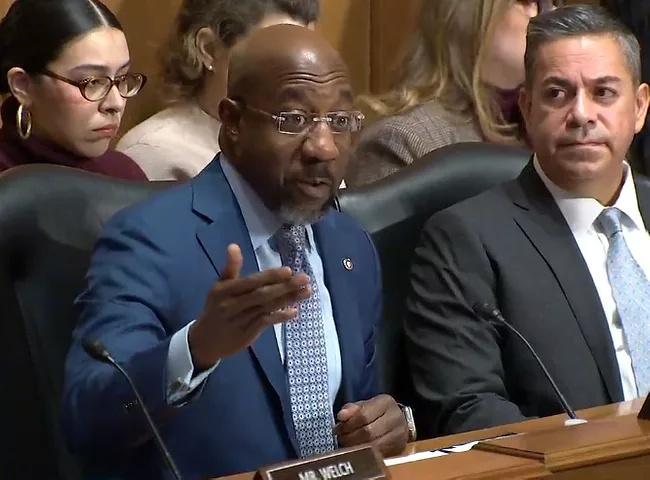
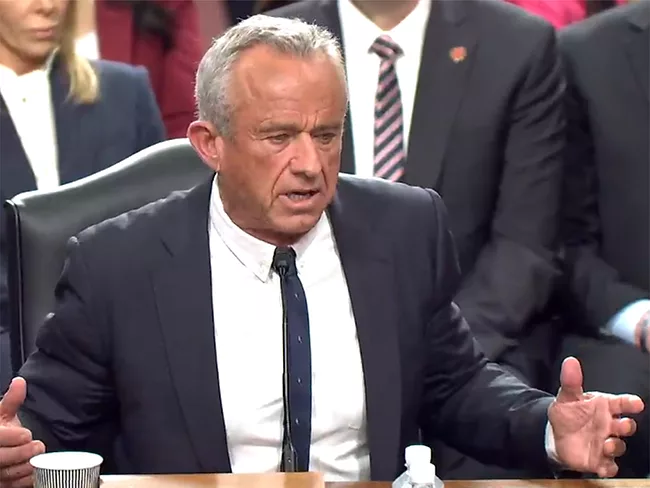
Robert F. Kennedy Jr. moved a step closer Feb. 4 to becoming the next secretary of the U.S. Department of Health and Human Services (HHS). The Senate Finance Committee voted 14-13 along party lines to send Kennedy’s nomination to the Senate floor for confirmation. While “no” votes were expected from the 13 Democrats serving on the committee, a big question mark had hung over which way Sen. Bill Cassidy, R-La., would vote, given the comments he made at two committee hearings on the nomination. In the end, Cassidy voted along with his 13 Republican colleagues, offering no comment on his vote at the meeting.
Whether Robert F. Kennedy Jr. (RFK) advances in his quest to become the top health care voice in the Trump administration could come down to one vote – that of Sen. Bill Cassidy. The Louisiana doctor is one of 14 Republican members of the Senate Finance Committee, which is scheduled to vote Feb. 4 on whether to send Kennedy’s nomination as Health and Human Services secretary to the full Senate for confirmation. If all 13 Democrats on the committee vote against it, one no vote from a Republican could stop the process.
At his confirmation hearing, Robert F. Kennedy Jr., the nominee for secretary of the U.S. Department of Health and Human Services, claimed that he is not anti-vaccine. But his record does not bear that out. Kennedy is a longstanding vaccine denier, and in 2021 was identified as one of the “Disinformation Dozen” – the 12 accounts responsible for the majority of disinformation about COVID-19 vaccines on social media platforms – by the British-American nonprofit Center for Countering Digital Hate.
In a U.S. Senate Finance Committee confirmation hearing marked by shouted protests, outbursts of applause and tense exchanges on several issues, including ones beyond the reach of the Department of Health and Human Services (HHS), Robert F. Kennedy Jr. (RFK) tried to present himself as someone who follows the science, not a conspiracy theorist or anti-vaxxer.
With key officials yet to be confirmed at the U.S. Department of Health and Human Services, the acting secretary imposed an immediate pause throughout the department on publicly issuing any document or communication without first getting it approved by a presidential appointee.
While Moderna Inc. plans to cut its expenses by $1 billion in 2025, the company has received a little breathing room by a hefty U.S. Department of Health and Human Services (HHS) grant. The Biomedical Advanced Research and Development Authority awarded Moderna roughly $590 million to support late-stage development of its mRNA-based avian-variant vaccines and to increase the number of clinical trials for another five additional subtypes of pre-pandemic influenza.
As investors and industry alike try to read the tea leaves of what the upcoming change in administrations holds for the U.S., speculation abounds about what Trump 2.0 will mean for the biopharma and med-tech spaces.
A proposed rule to implement the five-year-old Medicaid Services Investment and Accountability Act would expand the U.S. Health and Human Services’ (HHS) permissive exclusion authority to biopharma manufacturers that misclassify outpatient drugs supplied under agreements with federal health care programs.