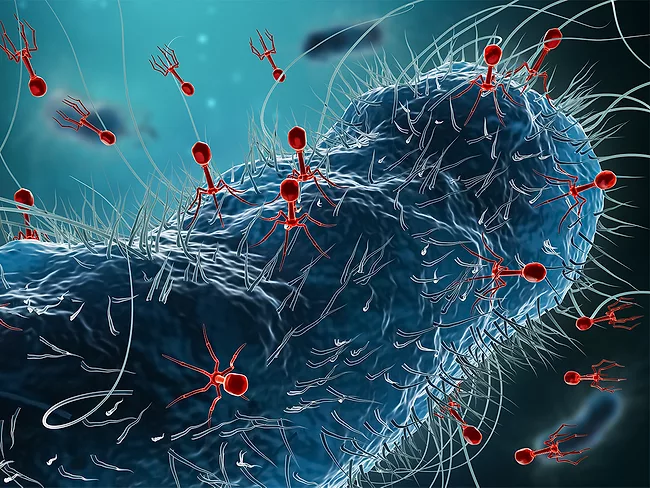
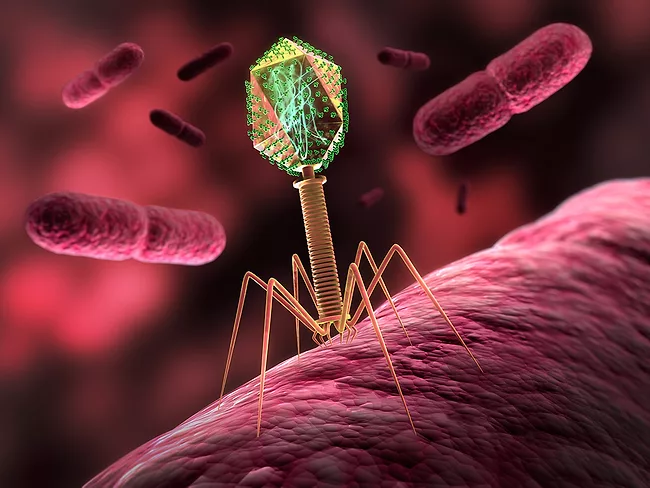
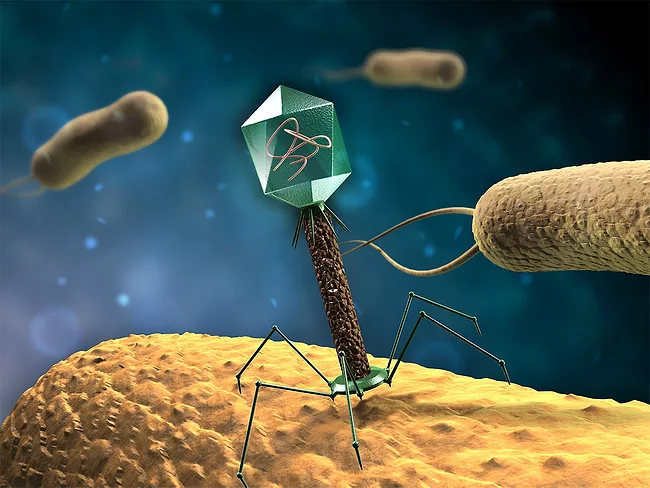
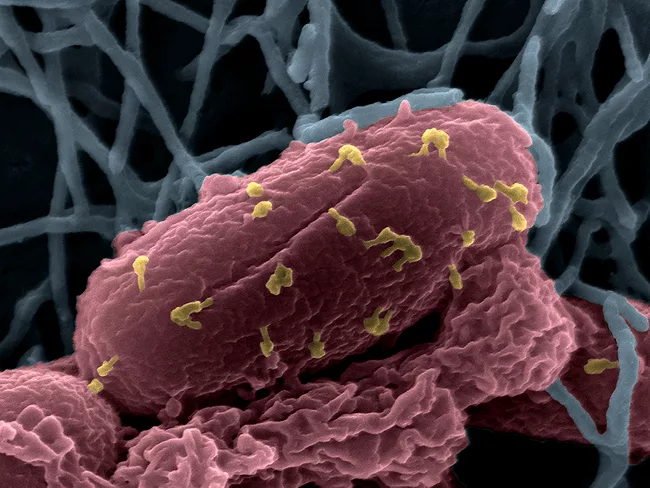
Certain chemical compounds can disable the bacterial immune systems that protect them from viruses, making the bacteria vulnerable to infection. Scientists at Indiana University have discovered a promising compound that works in different types of bacteria and could be used to develop potent and diverse phage therapies against bacterial infections, ultimately giving clinicians more options against antibiotic resistance.
Microbiotix Co. Ltd. has obtained IND approval from the Korean Ministry of Food and Drug Safety (MFDS) for MP-101, a bacteriophage therapy for patients with acute pneumonia. A phase I study in adult patients with Pseudomonas aeruginosa-induced pneumonia is expected to enroll its first patient within the year.
The U.K. Medicines and Healthcare products Regulatory Agency (MHRA) has issued its first official guidance on how to develop bacteriophages as licensed medicinal products. This covers personalized phage therapies designed for specific patients – at present the only form in which they are available – but also is relevant to the development of off-the-shelf products for treating common infections.
The spread of drug-resistant bacteria is a global health concern and could once again become a leading cause of mortality. The World Health Organization has flagged carbapenem-resistant Acinetobacter baumannii as a top priority pathogen requiring innovative therapies for its management, which has a mortality rate of 25%-60% and caused more than 100,000 deaths worldwide in 2019. Therapy based on the use of bacteriophages (phages) to fight antibiotic-resistant bacteria is one such innovative strategy.
The spread of drug-resistant bacteria is a global health concern and could once again become a leading cause of mortality. The World Health Organization has flagged carbapenem-resistant Acinetobacter baumannii (CRAB), which has a mortality rate of 25%-60%, as a top priority pathogen requiring innovative therapies for its management. Researchers from the HUN-REN Biological Research Centre in Hungary have published a paper in Cell in which they describe designing and developing phage cocktails that target the most prevalent CRAB strains within specific geographic regions by using phylogeographic analysis and mapping the pathogen’s genetic diversity.
Intron Biotechnology Inc. has entered into an official contract with the U.S. Army Combat Capabilities Development Command (DEVCOM) to develop bacteriophages for combating uropathogenic Escherichia coli (UPEC) infections. DEVCOM, a subcommand of the U.S. Army Futures Command, has been working on a project to develop products that address the risk of urinary tract infections (UTIs) among soldiers exposed to austere environments, such as when deployed or undergoing training.
A new bacteriophage-based rapid test has the potential to identify the specific pathogen causing a urinary tract infection (UTI) at the point of care, enabling targeted use of antibiotics.
The test uses naturally occurring phages identified as predators of Escherichia coli, Klebsiella and Enterococci that are genetically modified to make any bacterium they invade bioluminescent.
In a proof-of-concept study, researchers at ETH Zurich, Switzerland, were able to reliably detect the pathogenic bacteria in a urine sample in less than four hours. That compares to the 18 – 30 hours it takes to culture samples in a central lab and to identify a specific microbe using conventional diagnostics.
Snipr Biome ApS has published initial clinical data showing its Crispr-Cas modified bacteriophage product selectively kills Escherichia coli – including strains that are resistant to antibiotics – with no effect on the rest of the gut microbiome. That paves the way to test Snipr-001 in the prevention of bloodstream infections in hematological cancer patients who, as a result of increased intestinal permeability caused by chemotherapy, are at high risk of gut bacteria getting into the bloodstream.
Intron Biotechnology Inc. has announced the identification of lysogenic bacteriophages prophage and jamphage in the pancreatic cancer-related microbiome. This identification was achieved as part of the ongoing Phageriarus development project that is focused on acquiring bacteriophage-derived proteins that can serve as immune regulators, with the ultimate goal of developing phage-based immunotherapeutics for immune disorders and cancer.
An international study led by scientists at the University of Exeter in the U.K. suggests how to combine antibiotic and bacteriophage therapy optimally, in order to reduce antibiotic use and potentially prevent multidrug resistance in bacteria.