As new treatment options are being continually investigated and trialed against Parkinson’s disease, the possibilities offered by deep brain stimulation (DBS) risk being overlooked. Though not a cure, the therapy could vastly improve the quality of life for patients with the disease.
Abbott Laboratories received U.S. FDA approval for its Liberta RC deep brain stimulation (DBS) system for use in movement disorders, less than two weeks after the agency gave its nod to Medtronic’s Percept RC DBS system. The news come on the heels of Abbott’s release of strong fourth quarter results on Wednesday.
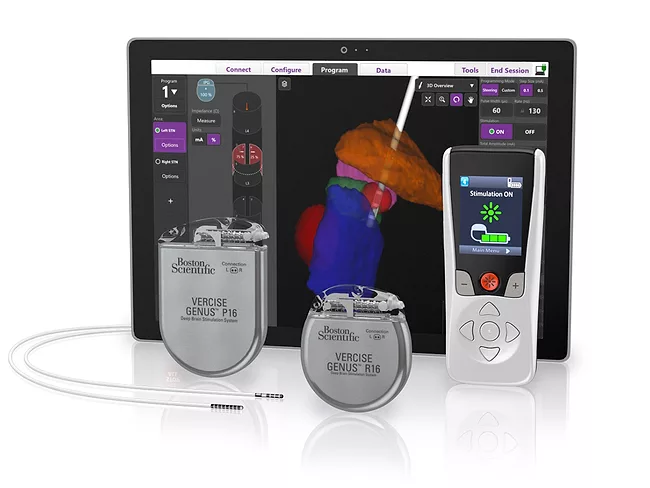
Medtronic plc received the greenlight from the U.S. FDA for its latest deep brain stimulation system, the Percept RC. The rechargeable neurostimulator includes the company’s sensing technology which captures data from brain signals and allows for more personalized therapy.
Medtronic plc received CE mark for its Percept RC neurostimulator for deep brain stimulation, which the company hopes will transform brain modulation and empower patients in the E.U. with neurological indications. The device is designed to capture and record brain signals and provide clinicians with insights to enable them to adapt and personalize therapy for patients.
Researchers from the University of Pittsburgh seek patent protection for a method of treating motor disorders by applying an electrical stimulus to neurons in the thalamus. The invention is based on their discovery that deep brain stimulation of specific lateral areas in the thalamus leads to improvements in motor outputs of voluntary movements affected by motor disorders.
Electrical stimulation of the spinal cord has restored the ability to walk normally to a patient whose chronic Parkinson’s disease (PD) had led to severe motor deficits, researchers reported in the Nov. 6, 2023, online issue of Nature Medicine.
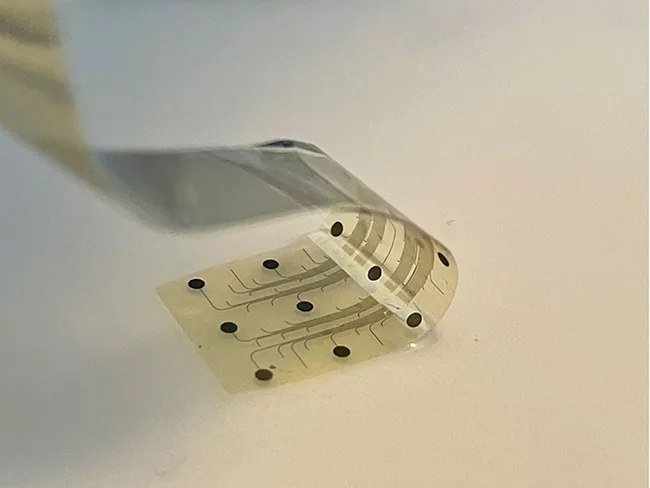
Inbrain Neuroelectronics SL was granted a breakthrough device designation from the U.S. FDA for its graphene-based neural platform as an adjunctive therapy for treating Parkinson’s disease. The platform, called intelligent network modulation system, harnesses the power of graphene and artificial intelligence to deliver highly focused, adaptive neuroelectronic therapy that re-balances pathological neural networks, easing the symptoms of Parkinson’s.
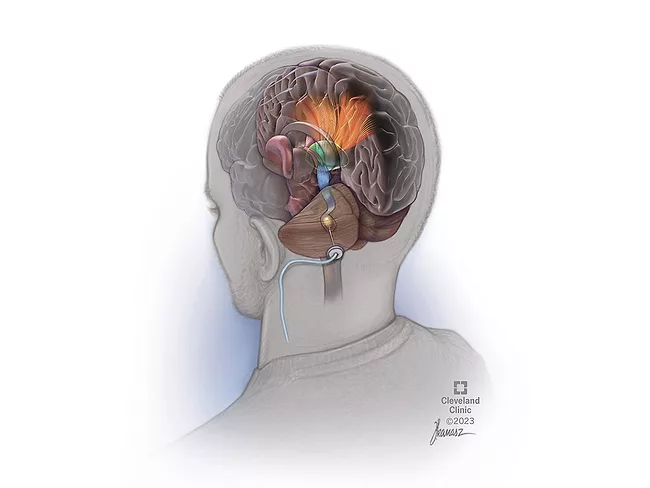
A first-in-human clinical trial conducted by researchers at the Cleveland Clinic demonstrated that deep brain stimulation (DBS) applied to the dentate nucleus region of the cerebellum could help patients recover function in their upper extremities up to three years after a stroke. Results of the study were published in Nature Medicine.