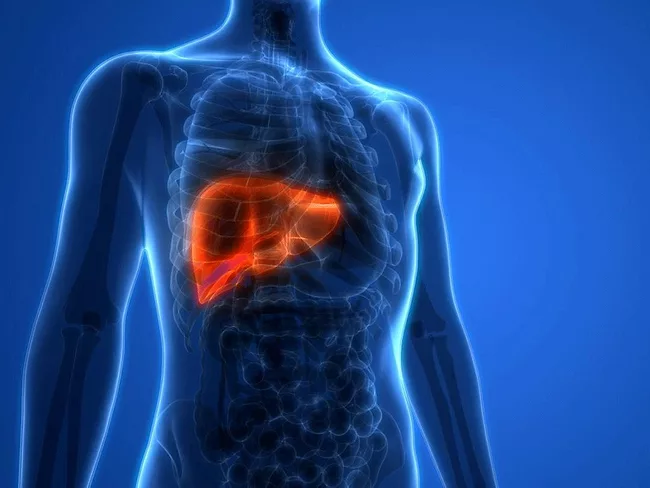
Metabolic dysfunction-associated steatotic liver disease (MASLD) now affects over a third of adults worldwide. Its progressive form, metabolic dysfunction-associated steatohepatitis (MASH), is a leading driver of cirrhosis, cancer and liver transplants while often coexisting with diabetes, obesity and cardiovascular disease.
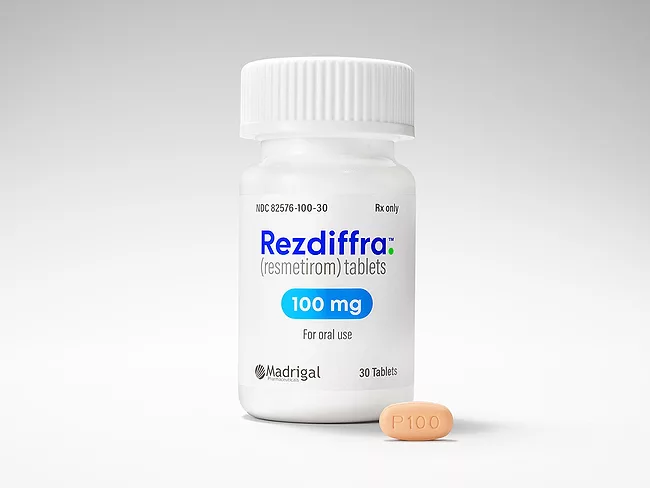
With the U.S. FDA clearance of the sNDA for Wegovy (semaglutide) from Novo Nordisk A/S to treat noncirrhotic metabolic dysfunction-associated steatohepatitis (MASH), Wall Street speculation deepened as to the consequences for Madrigal Pharmaceuticals Inc.’s Rezdiffra (resmetirom), a thyroid hormone receptor-beta (THR-beta) agonist that won the MASH go-ahead last year.
The fibroblast growth factor 21 (FGF21) analogue space took another turn as Novo Nordisk A/S said during its second-quarter financial update that work with zalfermin (NNC0194-0499) will be discontinued. A phase II study testing the compound in combination with glucagon-like peptide-1 therapy failed to hit the primary endpoint related to liver fibrosis in metabolic dysfunction-associated steatohepatitis (MASH), without MASH worsening.
Madrigal Pharmaceuticals Inc.’s long-awaited business development pact became reality by way of an exclusive global license agreement that could be worth more than $2 billion with CSPC Pharmaceutical Group Ltd., of Shijiazhuang, China, for SYH-2086. The candidate is a preclinical oral, small-molecule glucagon-like peptide-1 (GLP-1) receptor agonist and orforglipron derivative.
Madrigal Pharmaceuticals Inc.’s long-awaited business development pact became reality by way of an exclusive global license agreement that could be worth more than $2 billion with CSPC Pharmaceutical Group Ltd., of Shijiazhuang, China, for SYH-2086. The candidate is a preclinical oral, small-molecule glucagon-like peptide-1 (GLP-1) receptor agonist and orforglipron derivative.
Madrigal Pharmaceuticals Inc.’s long-awaited business development pact became reality by way of an exclusive global license agreement that could be worth more than $2 billion with CSPC Pharmaceutical Group Ltd., of Shijiazhuang, China, for SYH-2086. The candidate is a preclinical oral, small-molecule glucagon-like peptide-1 (GLP-1) receptor agonist and orforglipron derivative.
Madrigal Pharmaceuticals Inc. and CSPC Pharmaceutical Group Ltd. have entered into an exclusive global license agreement for CSPC’s SYH-2086, a preclinical oral small-molecule glucagon-like peptide-1 (GLP-1) receptor agonist and orforglipron derivative. The agreement supports Madrigal’s pipeline strategy to develop combination treatments for metabolic dysfunction-associated steatohepatitis (MASH).
Metabolic dysfunction-associated steatohepatitis (MASH) is a progressive liver disease that has limited available therapies. Shanghai Minwei Biotechnology Co. Ltd. has developed and presented data for MWN-105, a GLP-1/GIP/FGF21 triple agonist aimed at controlling metabolic dysfunction and fibrosis during MASH.
Top-line results from Altimmune Inc.’s phase IIb Impact study of pemvidutide in treating metabolic dysfunction-associated steatohepatitis showed the peptide-based GLP-1/glucagon dual receptor agonist hit one primary endpoint while not hitting statistical significance in another.
One year after the FDA’s nod, the EMA is following on and recommending conditional approval of Madrigal Pharmaceuticals Inc.’s Rezdiffra (resmetirom) as the first drug in Europe for treating noncirrhotic metabolic dysfunction-associated steatohepatitis.