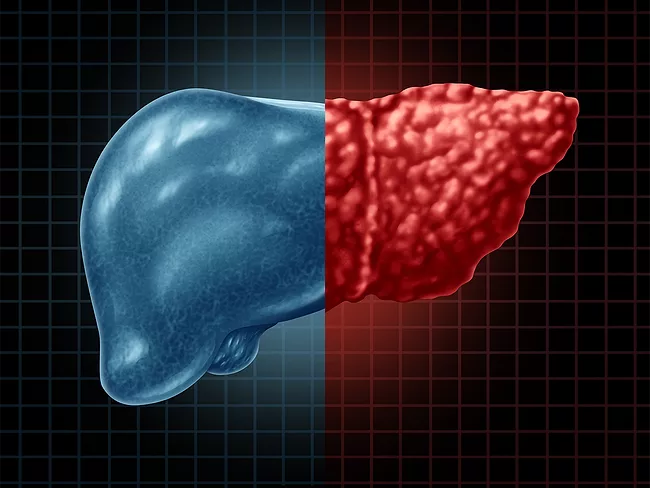
More than two years after the U.S. FDA shocked Intercept Pharmaceuticals Inc. with its rejection of obeticholic acid to treat fibrosis due to nonalcoholic steatohepatitis (NASH), the company has announced data it said will form the basis of a NDA refile in the disease for which there is no approved therapy.
Intent on expanding both the reach and approved uses of its farnesoid X receptor agonist, Ocaliva (obeticholic acid), Intercept Pharmaceuticals Inc. is selling both its ex-U.S. operations and rights to the primary biliary cholangitis drug to U.K.-based Advanz Pharma Corp. Ltd. for $405 million up front. The deal, including an additional $45 million earnout tied to EU regulatory advances, represents an important step toward strengthening Intercept's balance sheet and options, said CEO and President Jerry Durso.
Missing the primary endpoint in a phase IIb study of aldafermin for treating nonalcoholic steatohepatitis (NASH) has caused NGM Biopharmaceuticals Inc. to halt the program’s development while rattling the company’s share value. But the failure didn’t stop there as other NASH therapy developers felt the reverberations. South Francisco-based NGM’s stock (NASDAQ:NGM) took a battering May 24 as shares closed down 40.77% at $16.81 each. Others in the NASH space rocked by NGM’s negative data on the day included San Francisco-based 89bio Inc., which is prepping BIO89-100, a glycopegylated FGF21 analogue for a phase IIb NASH study. 89bio’s stock (NASDAQ:ETNB) plunged 14.24% to close at $19.40 per share.
As the nonalcoholic steatohepatitis (NASH) space continues to bustle, Wall Street watches, scanning the horizon for promising new approaches while handicapping the odds for proven approaches.
Toss a complete response letter (CRL) onto two missed PDUFA dates and a few adcoms that were discussed but never actualized to get an idea of where Intercept Pharmaceuticals Inc. now stands with its NDA for obeticholic acid (OCA) to treat fibrosis due to nonalcoholic steatohepatitis (NASH).
In a step toward what may become the new normal, at least for now, the Pediatric Oncology Subcommittee of the FDA’s Oncologic Drugs Advisory Committee is meeting virtually Wednesday and Thursday to review pediatric development plans for four cancer drugs.