Immortality and eternal youth have been the stuff of myths and legends from ancient times on. Now, in the 21st century, real studies of current medicine could be applied to repair tissues and organs damaged by age. During the 11th Aging Research & Drug Discovery (ARDD) Meeting held at the University of Copenhagen at the end of August, scientists explained the molecular keys of rejuvenation, as many artists imagined in the past.
Immortality and eternal youth have been the stuff of myths and legends from ancient times on. Now, in the 21st century, real studies of current medicine could be applied to repair tissues and organs damaged by age. During the 11th Aging Research & Drug Discovery (ARDD) Meeting held at the University of Copenhagen at the end of August, scientists explained the molecular keys of rejuvenation, as many artists imagined in the past.
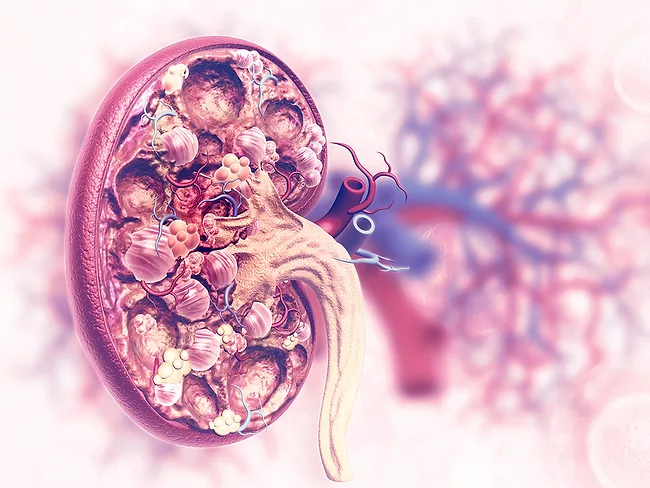
An antibody that binds to the latent form of transforming growth factor-β1 (TGF-β1) prevented its release into the extracellular matrix and reduced the progression of fibrosis in the kidney. TGF-β is synthesized and secreted into the extracellular matrix in a latent inactive form associated with the latency peptide.
A common molecular pathway associated with lung fibrosis may also hold the key to pulmonary vascular repair. A group of scientists at the University of Pennsylvania (Penn) found that when a viral infection damaged these vessels, the injury could be restored by activating the transforming growth factor-β receptor 2 (TGF-βR2) in endothelial cells, which led to cell proliferation.
Researchers from Sirnaomics Inc. presented preclinical evaluation of novel intravenous polypeptide nanoparticle designed to simultaneously deliver two siRNAs, silencing TGF-β and COX-2.
A new study has shown that a uterine bacterium is one cause of endometriosis and that preventing the infection could prevent development of the pathology, in which tissue similar to the lining of the uterus grows in the abdominal cavity.
Based on an analysis of critical transcription factors, researchers have stratified rheumatoid arthritis (RA) into two subtypes where gene expression was driven by RAR-α or TGF-β, respectively. The findings, published in Nature Communications on Oct. 20, 2022, by researchers from the University of California, San Diego, give new insights into factors that affect the treatment response in RA, and could point to novel treatment strategies.
Agomab Therapeutics NV raised $40.5 million in a series B extension led by Pfizer Inc., which has also come on board as an adviser on the development of AGMB-129, Agomab’s candidate therapy for fibrostenotic Crohn’s disease. The new cash raises the series B total to $114 million.
Scientists at the University of Melbourne and collaborators performed an in-depth metabolic characterization of precursors of exhausted (Tpex) cells in chronic lymphocytic choriomeningitis virus infection. Their results showed that Tpex metabolic attributes strongly contrast with those of exhausted effector (Tex) cells in the same environment.
Keros Therapeutics Inc. CEO Jasbir Seehra told BioWorld that he plans to use at his new company lessons learned as co-founder of Acceleron Pharma Inc., where work with receptors in the TGF-beta superfamily “taught me the potential of the biology and those molecules, but also the limitations” with regard to safety that need to be surmounted.