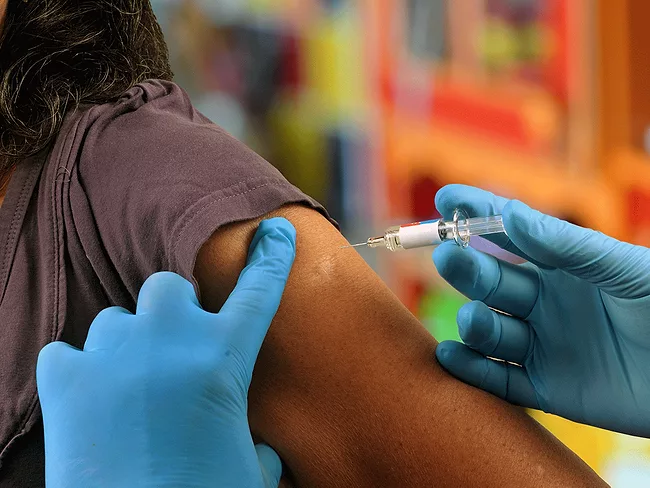
Pfizer Inc. said that, in children aged 5 through 11, the COVID-19 vaccine it co-developed with Biontech SE showed 90.7% efficacy against all variants of concern following two doses. The data were included in briefing documents filed ahead of a full discussion at the FDA’s Vaccines and Related Biological Products advisory committee meeting set for Oct. 26.
Despite some concerns from a few members, the Advisory Committee on Immunization Practices unanimously approved recommendations to the CDC that boosters be made available to those wanting them. The advisory committee recommended that a single COVID-19 vaccine booster dose be given six months or more after completing an mRNA primary series in the same risk group for whom the CDC recommended a booster dose of Pfizer Inc-Biontech SA’s vaccine. The CDC presented data to the committee that the single mRNA COVID-19 vaccine dose be given to those age 65 and older, for those at least 18 years old and reside in long-term-care settings, and also for those ages 50 to 60 with certain underlying medical conditions.
As largely expected, the FDA on Oct. 20 authorized the use of booster doses for COVID-19 vaccines from Moderna Inc. and Johnson & Johnson, in line with last week’s Vaccines and Related Biological Products Advisory Committee (VRBPAC) meetings. It also cleared the way for “mix-and-match” boosters, allowing eligible people to receive boosters from any of the FDA-approved vaccines, regardless of which vaccine they received originally.
With only three bispecific antibodies on the market, potential for the technology remains largely untapped. Johnson & Johnson’s Janssen Biotech Inc. is trying to change that. In a new deal with U.K.-based F-star Therapeutics Inc., it’s seeking develop a new generation of bispecifics for undisclosed targets.
LONDON – The EMA recommended approval of Apellis Pharmaceuticals Inc.’s C3 complement inhibitor, Aspaveli (pegcetacoplan), to treat paroxysmal nocturnal hemoglobinuria, but has diverged from the FDA, excluding treatment-naïve patients adding its use should be restricted to those who have failed to respond to C5 inhibitor drugs.
Should Johnson & Johnson’s (J&J) COVID-19 vaccine be a two-dose series? While not directly asked, that question almost lurks between the lines of the FDA’s briefing document for the Oct. 15 meeting of its Vaccines and Related Biological Products Advisory Committee. The document referred to J&J’s proposed second dose as a “booster,” but the FDA isn’t asking the committee the questions it posed for the Moderna Inc. and Pfizer Inc.-Biontech SE boosters. Instead, it is inviting VRBPAC to advise on whether the second J&J dose should be administered two months or six months following the first shot.
Although the need for COVID-19 boosters remains a tense debate among policymakers and scientific experts worldwide, the U.S. FDA is basing its Oct. 14-15 Vaccines and Related Biologics Products Advisory Committee meeting on the premise that vaccine boosters are needed.
FDA preemption of state liability law has proven controversial on a number of occasions, a fact of life resurrected by a case arising out of the Supreme Court of the State of Mississippi. The court declared that the FDA must invoke the rulemaking process for its regulation of medical product labels.
LONDON – The EMA set out the reasons for why it is diverging from the FDA on booster doses of Pfizer Inc.’s/Biontech SE’s COVID-19 vaccine, despite having reviewed the same data.
Software-as-a-medical device (SaMD) came into its own during the pandemic as digital health applications enabled patients to receive care from home through telemedicine, apps and remote patient monitoring. At the 2021 Medtech Conference, a panel of regulators, advocates and digital health executives discussed how the last 18 months may permanently change the regulation of these devices, the steps manufacturers can take to secure the footholds they gained, and how the U.S. CMS can enable digital health to achieve its promise.