For the second time this year, the U.S. CDC’s Advisory Committee on Immunization Practices (ACIP) canceled a scheduled meeting due to a federal judge’s stay that keeps the panel from meeting with its current membership. Typically, ACIP meets three times a year – in February, June and October. The 2026 June meeting was slated for June 23-25. Whether the adcom meets in October will be up to the courts and how far Health and Human Services Secretary Robert Kennedy digs in his heels to maintain a hand-picked committee tilted toward his view of vaccines.
Nearly a year after Health and Human Services Secretary Robert Kennedy announced the U.S. was cutting off funding for Gavi, a global vaccine alliance, Secretary of State Marco Rubio said his department is reengaging with the organization in light of the ongoing Ebola outbreak in central Africa. In testifying before a June 2 Senate Foreign Relations Committee hearing, Rubio said the State Department made the decision to reengage a few weeks earlier with Gavi. He provided no detail of what that engagement looks like.
Acknowledging that the spread of the Andes virus and the resulting disease, hantavirus pulmonary syndrome, “constitutes a credible risk of a future public health emergency,” U.S. Health and Human Services Secretary Robert Kennedy is issuing a declaration to provide liability protection for manufacturers, distributors and providers using favipiravir as a medical countermeasure (MCM) against the virus.
It’s back to the drawing board for the U.S. CDC’s Advisory Committee on Immunization Practices (ACIP). After a year of Health and Human Services Secretary Robert Kennedy gutting the panel and restocking it mostly with people who share his views on vaccines, the CDC published a notice in the May 19 Federal Register saying it’s withdrawing the amended ACIP charter renewal issued April 6 and is instead “re-establishing” the committee.
On the heels of the ouster of Marty Makary as the U.S. FDA commissioner and the serial leadership vacancies at the CDC and the FDA’s drugs and biologics centers, the government’s adherence to science took another blow May 16 when Sen. Bill Cassidy, R-La., lost the Louisiana primary, ending his bid for re-election.
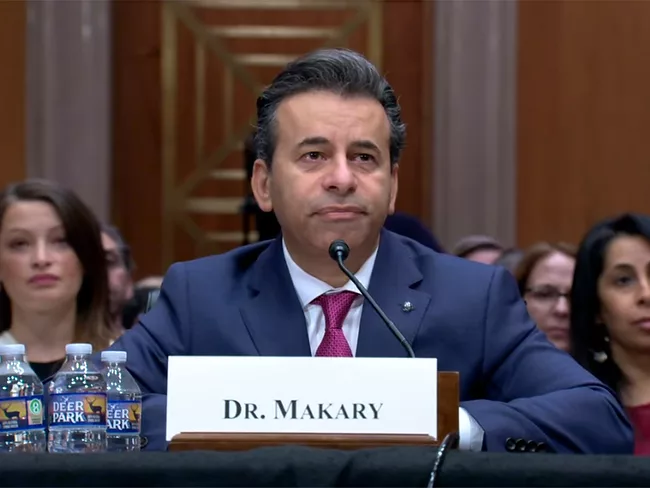
U.S. President Donald Trump ended days of rumors and speculation when he confirmed May 12 that Marty Makary is resigning as FDA commissioner. Speaking with reporters before heading off to China for a two-day summit, Trump wouldn’t comment on whether he or someone else asked Makary to step down. However, while calling Makary a “wonderful man” and a “great guy, who’s a friend of mine,” the president acknowledged that “he was having some difficulty” at the FDA.
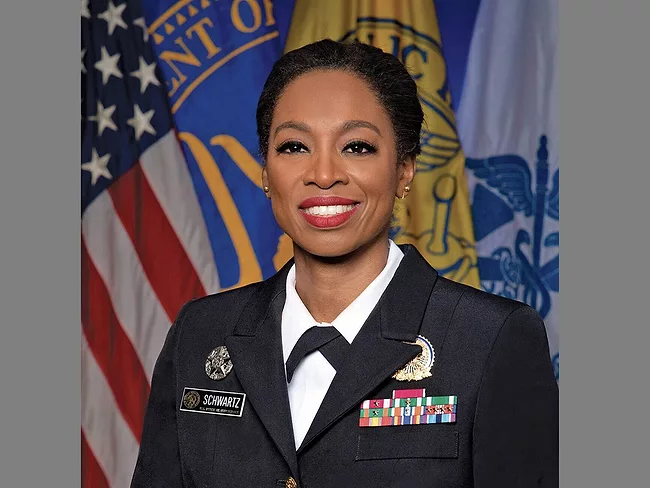
As U.S. President Donald Trump’s third nominee for CDC director, Erica Schwartz will soon find out if three times really is a charm. Trump announced the nomination on social media April 16, touting Schwartz’s credentials for the job. Calling her “incredibly talented,” Trump cited her “distinguished career” as a military doctor, in the Navy and Coast Guard, and her service as deputy surgeon general during his first term in office.
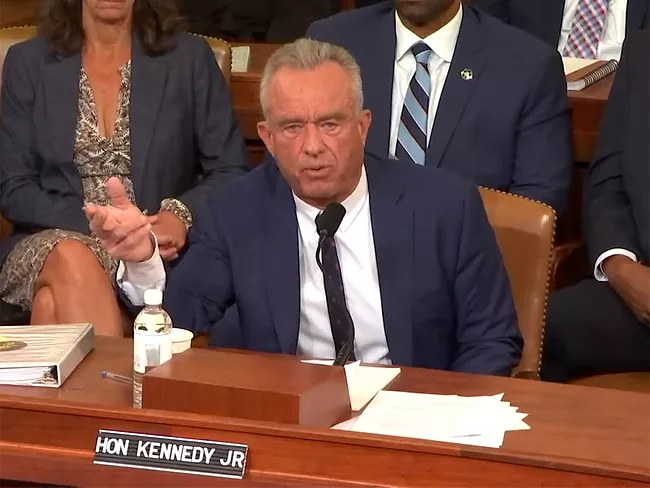
U.S. Health and Human Services (HHS) Secretary Robert Kennedy made his first stop April 16 on a congressional tour in support of President Donald Trump’s proposed fiscal 2027 budget, which would reduce discretional spending for HHS and its agencies by about 12%.
Amending his previous two-year-renewal of the standard charter for the U.S. CDC’s Advisory Committee on Immunization Practices (ACIP), Health and Human Services Secretary Robert Kennedy made monitoring adverse vaccine events a primary function of the committee and expanded its liaison membership to include organizations that have challenged vaccine safety.>
Don’t like a court order? Sidestep it. That seems to be the idea behind U.S. Health and Human Services Secretary Robert Kennedy’s latest changes to his renewal of the charter for the CDC’s Advisory Committee on Immunization Practices (ACIP).