Bayer AG and Merck & Co. Inc. took Wall Street by surprise in November with their phase III success testing vericiguat in heart failure (HF), such that the guanylate cyclase stimulator’s odds not only have improved significantly but also in a different way than imagined before.
BOGOTA, Colombia – A two-year-old shortage of measles, mumps and rubella (MMR) vaccine in Mexico has become more serious, with 2020 starting out with renewed complaints of even lower availability of the vaccine all over the country.
In a deal with just $50 million up front but the potential to reach $2.5 billion, Tokyo’s Taiho Pharmaceutical Co. Ltd. and Astex Pharmaceuticals Inc., of Cambridge, U.K., are joining Merck & Co. Inc. in an exclusive worldwide research collaboration and license agreement to develop small-molecule inhibitors against several cancer targets, including the KRAS oncogene.
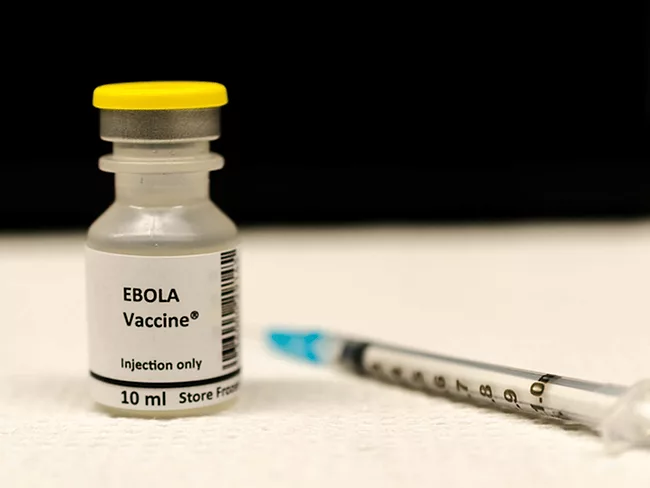
While Ebola virus disease in the U.S. is a rare occurrence, the FDA approval of Merck & Co. Inc.’s Ervebo, the agency’s first for preventing Ebola Zaire virus in people age 18 and older, will have a ripple effect across the world, especially Africa where its effects have been devastating for decades. Stockpiling such a vaccine is crucial to world safety as Ebola has long been a potential bioterrorism threat, especially after 9/11. In the world of theoretical biological warfare, where the virus could be weaponized and disseminated by aerosol, Ebola virus is considered the most dangerous, with fatality rates estimated between 25% to 90%.
Arqule Inc. CEO Paolo Pucci said the firm was “limited in what we can comment [on] for the time being” in connection with Merck & Co. Inc.’s deal to pay about $2.7 billion in cash for the company. “There is no better model for bringing a drug faster into the hands of patients and caregivers than the example of Keytruda. I will leave it at that.” Merck’s Keytruda (pembrolizumab), a human PD-1-blocking antibody was first approved in September 2014 for advanced melanoma. The label has been widely expanded since.
The U.S. FDA has granted investigational device exemption approval for the use of Personal Genome Diagnostics Inc.’s (PGDx) elio tissue complete assay in a Merck & Co. Inc. trial of a Keytruda (pembrolizumab)-based combination therapy. Specifically, the assay will be used during the trial to analyze genomic markers to direct patient enrollment and stratification.
The U.S. FDA has granted investigational device exemption approval for the use of Personal Genome Diagnostics Inc.’s (PGDx) elio tissue complete assay in a Merck & Co. Inc. trial of a Keytruda (pembrolizumab)-based combination therapy.
Merck & Co. Inc. acquired Calporta Therapeutics Inc. for an up-front payment and milestone payments that could total $576 million. Calporta is a build-to-buy spinout of La Jolla, Calif.-based COI Pharmaceuticals Inc. Calporta develops selective small-molecule agonists to TRPML1, foremost in the mammalian mucolipin TRP channel subfamily.
DUBLIN – Merck & Co. Inc. is in line to obtain conditional marketing authorization from the European Union for its live attenuated vaccine for preventing Ebola virus infection, V920 Ebola Zaire vaccine (rVSVDG-ZEBOV-GP live), following a positive recommendation for approval from the EMA's Committee for Human Medicinal Products (CHMP) at its October meeting last week. Formal approval should follow within 67 days, after which the Kenilworth, N.J.-based pharma would market the vaccine as Ervebo.
WASHINGTON – Hot on the heels of July's FDA approval of Recarbrio (imipenem, cilastatin and relebactam) in complicated urinary tract infections (cUTIs), Merck & Co. Inc. rolled out pivotal phase III data at the Infectious Disease Society of America's IDWeek 2019 that could support expanding its label to another high-need group, people with hospital-acquired or ventilator-associated bacterial pneumonia (HABP/VABP).