Performing experiments and potentially manufacturing products in space offers some unique advantages in a near-zero gravity environment. Space changes buoyancy, hydrostatic pressure and convective heat flow. Researchers are studying how those changes affect cells, but also looking to take advantage of the changes to create products in manufacturing processes that wouldn’t be possible on earth.
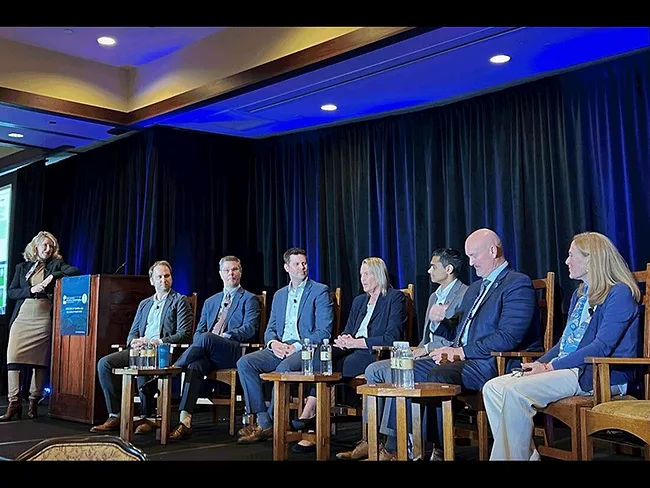
During two different panels at Biocom California’s Global Life Science Partnering & Investor Conference, executives from a variety of pharmaceutical companies laid out their wants and needs in the current market environment. Large drug companies have relied on biotech companies to build out their pipelines for many years, but the level of outside inventions has been increasing over the last few years.
Performing experiments and potentially manufacturing products in space offers some unique advantages in a near-zero gravity environment. Space changes buoyancy, hydrostatic pressure and convective heat flow. Researchers are studying how those changes affect cells, but also looking to take advantage of the changes to create products in manufacturing processes that wouldn’t be possible on earth.
Performing experiments and potentially manufacturing products in space offers some unique advantages in a near-zero gravity environment. Space changes buoyancy, hydrostatic pressure and convective heat flow. Researchers are studying how those changes affect cells, but also looking to take advantage of the changes to create products in manufacturing processes that wouldn’t be possible on earth.
Dxcover Ltd. raised $9.25 million (£7.5 million) in a series A fundraising round and received a grant of $2.7 million (£2.2 million) from the European Innovation Council to support development of the company’s liquid biopsy platform for the detection of multiple early-stage cancers. Existing investors Eos Advisory LLP, Mercia Asset Management plc, Scottish Enterprise, University of Strathclyde, SIS Ventures and Norcliffe Capital led the round, which was also joined by Mark Banforth of Thairm Bio.
It’s the season for reevaluation as companies weed out programs that don’t offer much promise. At the head of the line is Sanofi SA’s once-potential myasthenia gravis blockbuster tolebrutinib. A partial clinical hold on the phase III study is part of the reasoning for stopping its development. But so is competition, the company said. Other companies eliminating development programs include Roche Holding AG, Gilead Sciences Inc., AB Science SA and Merck & Co. Inc.
A lot of biosimilar sponsors and wannabes will be watching as the Humira biosimilar competition unfolds in the U.S. While the competition started Jan. 31 with the launch of Amgen Inc.’s Amjevita, the true test of the strength of the competition will come in five months when other adalimumab biosimilars, including Boehringer Ingelheim GmbH’s interchangeable, hit the market.
A Jan. 27 settlement the U.S. SEC reached with a former vice president at a biotech company serves as a reminder that insider trading rules applies to suppliers as well as the companies involved in an M&A.
Taking aim at big pharma’s current penchant for acquisition over in-house innovation, Sen. Elizabeth Warren (D-Mass.) is asking the Federal Trade Commission (FTC) to consider the impact a biopharma merger, whether it’s proposed or a done deal, may have on future innovation.