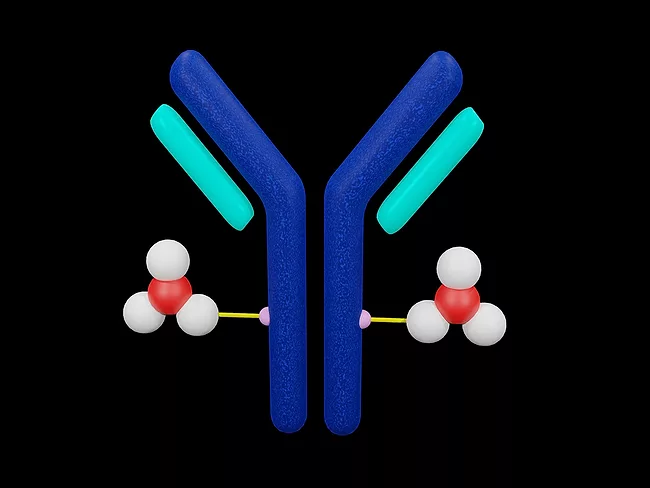
An advantage of antibody-drug conjugates (ADCs) is that they allow targeted delivery of cytotoxic agents into tumors, thus improving the therapeutic index. Pfizer Inc. has developed a new ADC, PF-08046033, that contains auristatin S (AurS) as the cytotoxic payload and targets transmembrane glycoprotein NMB (GPNMB).
Neomorph Inc.’s NEO-811 is a molecular glue degrader designed to induce targeted degradation of ARNT and suppress this signaling pathway implicated in clear cell renal cell carcinoma (ccRCC). Targeting ARNT offers a complementary strategy to broadly disrupt oncogenic HIF signaling in ccRCC.
Minimal residual disease (MRD) has become a central concept in modern oncology, reshaping how clinicians evaluate response, relapse risk and treatment precision. As increasingly sensitive technologies reveal traces of cancer that persist after therapy, MRD is emerging as both a biological challenge and a clinical opportunity, especially as new data illuminate its complexity across hematologic and solid tumors. This topic was addressed at the 2026 American Association for Cancer Research (AACR) annual meeting.
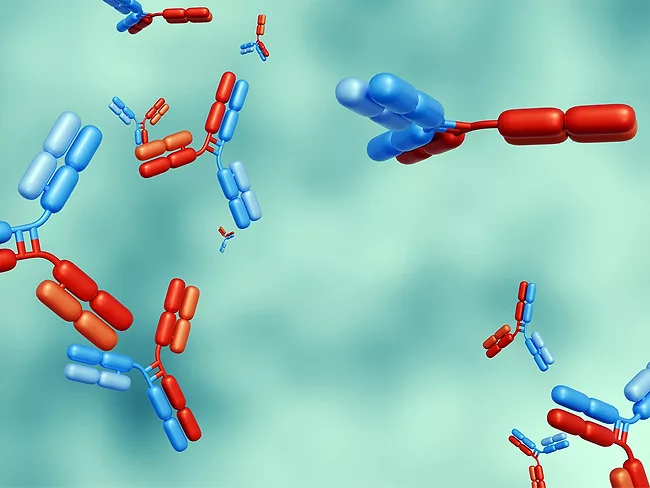
Incyte Corp. has developed and presented data for their CD70xCD3 bispecific antibody INCA-036873, which was designed to activate T cells and kill tumoral cells expressing CD70.
DNA polymerase θ (POLθ) plays a central role in microhomology-mediated end joining (MMEJ), an error-prone DSB repair pathway. Under normal conditions, MMEJ acts as a backup repair mechanism. However, in HRR-deficient tumors, reliance on POLlθ-driven MMEJ is markedly increased, making POLθ essential for cancer cell survival. Researchers from Astrazeneca plc reported the discovery and characterization of AZD-4956, a POLθ inhibitor that can be used in combination with PARP inhibitors and other DNA-damaging agents.
New Approach Methodologies (NAMs) for drug development are transforming biomedical research by replacing or complementing animal models. More than 90% of experimental compounds fail in clinical trials, underscoring the need for strategies that better capture human biology. Many of these techniques were showcased at the 2026 American Association for Cancer Research (AACR) annual meeting.
Akeso Pharmaceuticals Inc. has raised the bar for next-generation immuno-oncology, reporting more than 23 months median overall survival in pancreatic cancer with its PD-1/CTLA-4 bispecific antibody cadonilimab, as emerging competitors begin to post earlier signals across solid tumors at the American Association for Cancer Research annual meeting in San Diego April 17 to 22.
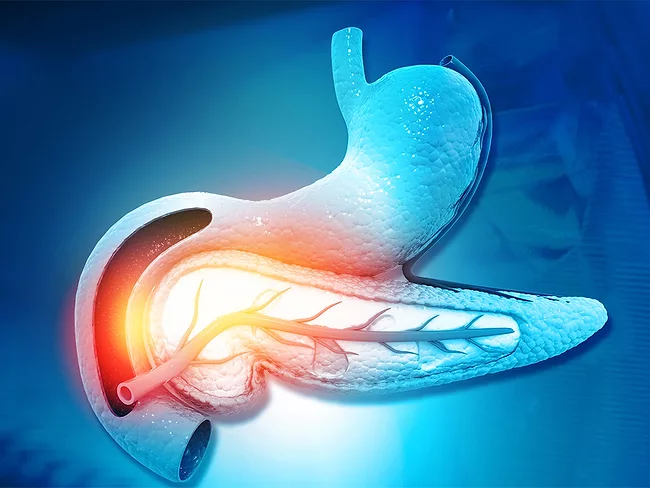
Netris Pharma SA has delivered positive phase Ib data showing its first-in-class netrin-1 inhibitor NP-137 alleviates resistance to chemotherapy in pancreatic cancer. This could represent an important advance in treating these tumors, which are notoriously resistant to chemotherapy.
And the positive news continues to flow for Revolution Medicines Inc. On the heels of a successful phase III trial for RAS inhibitor daraxonrasib in previously treated patients with metastatic pancreatic ductal adenocarcinoma (PDAC) – not to mention the firm pricing the largest follow-on offering in biopharma history – Revolution presented updated phase I/II data at the American Association for Cancer Research (AACR) meeting detailing impressive findings in first-line PDAC patients.
Cymirafen is a novel antibody-drug conjugate (ADC) from the University of California that targets leucine-rich repeat-containing G-protein coupled receptor 4 (LGR4)/LGR5/LGR6 and is composed of a potent cytotoxic payload, monomethyl auristatin E (MMAE), plus an Fc domain fused to the receptor binding domain of RSPO1.