More than a decade after the Biologics Price Competition and Innovation Act became law and nearly six years after the first biosimilar launched in the U.S., the country’s first potential interchangeable is on deck awaiting an FDA decision.
In a deal that could bring Arvinas Inc. a potential $2.4 billion, the company will collaborate with Pfizer Inc. to develop and commercialize an oral estrogen receptor protein degrader. In addition to a potential $400 million in approval milestones and a possible $1 billion in commercial milestones, Arvinas will be paid $650 million up front by Pfizer, which will also make an equity investment of $350 million in Arvinas while receiving about 3.5 million newly issued Arvinas common stock shares. With the deal, Pfizer will have a 7% equity share in Arvinas. The two plan to equally divide development and commercialization costs as well as any profits.
The lack of data surrounding the efficacy of Chinese COVID-19 vaccines against the Delta variant has had many questioning them, especially after a recent study showed that one of those vaccines, Sinovac Biotech Ltd.’s Coronavac, was less effective than Pfizer Inc. and Biontech SE’s Comirnaty in Chile.
Hoping to get Germany to drop its opposition to a proposed World Trade Organization (WTO) waiver of intellectual property (IP) rights, several U.S. lawmakers have asked to meet with German Chancellor Angela Merkel when she’s in Washington for a July 15 summit with President Joe Biden.
U.S. Rep. Carolyn Maloney (D-N.Y.) came out swinging against the biopharma industry’s innovation talking point July 8 when she released a House Oversight Committee staff report on U.S. drug prices and the games drug manufacturers play to delay competition.
As life begins to return to a semblance of normal in many parts of the world, COVAX cautioned countries July 1 against adopting policies that favor specific COVID-19 vaccines.
PERTH, Australia – Australia will be phasing out the Astrazeneca COVID-19 vaccine by October and will rely on Pfizer Inc./Biontech SE and Moderna Inc. vaccines to ramp up lagging vaccination rates.
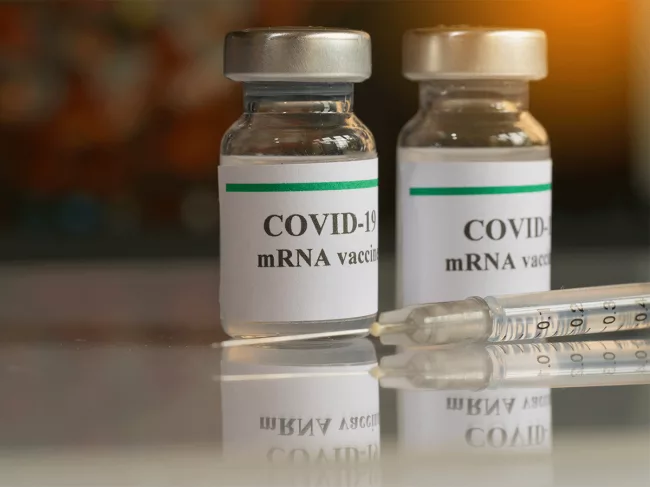
A new study from researchers at the Washington University School of Medicine In St. Louis demonstrated evidence of a long-lasting immune response, possibly one that could last for years, from receiving Pfizer Inc.’s mRNA COVID-19 vaccine.
LONDON – New data have arrived to allay concerns about shortages of COVID-19 vaccines disrupting dosing schedules, and also answering the question of whether third – booster – doses will restore waning immunity and be effective against viral variants.
PERTH, Australia – Australia will be phasing out the Astrazeneca COVID-19 vaccine by October and will rely on Pfizer Inc./Biontech SE and Moderna Inc. vaccines to ramp up lagging vaccination rates.