Many industry watchers are looking to 2023’s Humira biosimilar launch in the U.S. as a portent of the future of biosimilars. While it should help raise awareness of biosimilars in general and produce savings in the immunology sector, its distinctness could make it an outlier in the world of current and future biosimilar competition.
Even though the EU had approved more than a dozen biosimilars by 2012, the follow-on biologics were still in their embryonic stage around the world when BioWorld published The Biosimilars Game: A Scorecard for Opportunities, Threats and Critical Strategies in early 2013. Now, nearly a decade later, the global biosimilar landscape has matured with many more biosimilars approved across the globe, but the uptake, and thus the savings, is not what some policy makers and people in industry had hoped for or expected.
Long considered a make-or-break market for novel drugs and biologics and a success story for generics, the U.S. has been more challenging for biosimilars than many experts initially expected. U.S. biosimilar “uptake has been good, but not great,” Steven Lucio, senior principal for pharmacy solutions at Vizient Inc., told BioWorld. That could change next year when at least seven biosimilars referencing Abbvie Inc.’s immunosuppressive drug, Humira (adalimumab), are expected to launch in the U.S.
Samsung Biologics Co. Ltd. has agreed to buy out Biogen Inc.’s stake in the joint venture Samsung Bioepis Co. Ltd. for $2.3 billion. Biogen will receive $1 billion in cash at closing and $1.25 billion in deferred payments of $812.5 million due at the first anniversary and $437.5 million due at the second anniversary of the closing of the transaction. Biogen is also expected to receive up to $50 million upon achievement of certain commercial milestones.
Samsung Biologics Co. Ltd. has agreed to buy out Biogen Inc.’s stake in the joint venture Samsung Bioepis Co. Ltd. for $2.3 billion. Biogen will receive $1 billion in cash at closing and $1.25 billion in deferred payments of $812.5 million due at the first anniversary and $437.5 million due at the second anniversary of the closing of the transaction. Biogen is also expected to receive up to $50 million upon achievement of certain commercial milestones.
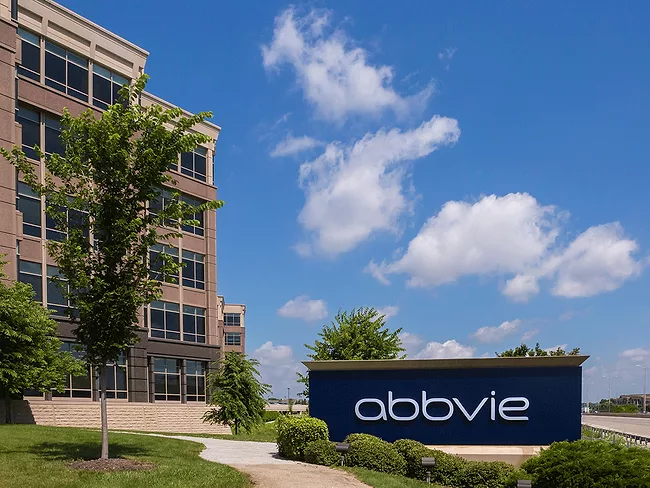
With licensed Humira (adalimumab) biosimilar competition a little more than a year away in the U.S., Abbvie Inc. is trying to fend off competitors that have not signed an agreement with the North Chicago-based company.
Biogen Inc. and Samsung Bioepis Co. Ltd. gained FDA clearance for Byooviz (ranibizumab-nuna), a biosimilar that references the VEGF therapy Lucentis (ranibizumab) from Roche Holding AG, as a treatment for wet age-related macular degeneration, macular edema following retinal vein occlusion and myopic choroidal neovascularization. Byooviz is the first ophthalmology biosimilar to win the go-ahead in the U.S., and was approved in the EU on Aug. 18, 2021, followed by the U.K. on Aug. 31, 2021.
Samsung Bioepis Co. Ltd. has emerged as the first company to obtain marketing authorization from the EMA for a biosimilar of Lucentis (ranibizumab), a significant development for the Korean biosimilar specialist. The approval comes less than two months after the company received a positive opinion from the EMA’s CHMP for Byooviz (ranibizumab), formerly called SB-11.
Samsung Bioepis Co. Ltd. has emerged as the first company to obtain marketing authorization from the EMA for a biosimilar of Lucentis (ranibizumab), a significant development for the Korean biosimilar specialist. The approval comes less than two months after the company received a positive opinion from the EMA’s CHMP for Byooviz (ranibizumab), formerly called SB-11.
DUBLIN – In a busy week at the EMA, its Committee on Human Medicinal Products (CHMP) nodded through eight marketing applications at its June meeting. The haul included a chimeric antigen receptor T-cell (CAR T) therapy, three antibodies, including a biosimilar, and two new small-molecule drugs, as well as two generics.