Sanofi SA will not seek approval of amlitelimab in atopic dermatitis (AD) as previously planned, stating that the OX40-ligand monoclonal antibody “would not represent a meaningful improvement to the standard of care” for patients with moderate to severe disease. The company said the decision, which marks an about-face as Sanofi had been looking to amlitelimab as a possible successor to its Regeneron Pharmaceuticals Inc.-partnered blockbuster AD drug Dupixent (dupilumab), comes as part of an ongoing assessment of the pipeline.
A year and a half from its formation, Oblenio Bio has generated positive nonhuman primate data for LBL-051 in chronic autoimmune diseases and closed a $62 million series B to move the trispecific T-cell engager into the clinic.
A year and a half from its formation, Oblenio Bio has generated positive nonhuman primate data for LBL-051 in chronic autoimmune diseases and closed a $62 million series B to move the trispecific T-cell engager into the clinic.
HMNC Brain Health GmbH has raised $50 million in the first close of a series B, enabling the company to prepare the way for phase III trials of its two lead programs.
Despite some back-and-forth with the U.S. FDA regarding inclusion in the somewhat controversial Commissioner’s National Priority Voucher (CNPV) program, Sanofi SA’s Tzield (teplizumab) gained FDA clearance, expanding use of the CD3-directed monoclonal antibody as a disease-modifying therapy for patients with recently diagnosed stage 3 type 1 diabetes (T1D).
Investors in Dianthus Therapeutics Inc. apparently chose to ignore subtleties in the difference between efforts with that firm’s claseprubart vs. those by competitor Sanofi SA, which said that the phase III Mobilize study testing riliprubart in chronic inflammatory demyelinating polyneuropathy (CIDP) will be stopped for futility.
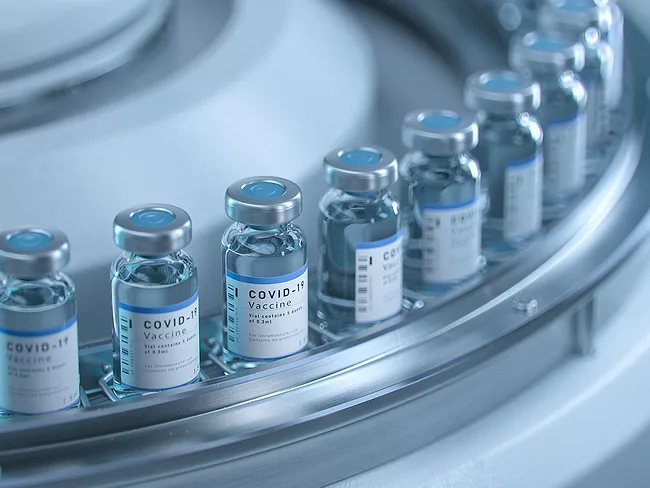
Landing on the right COVID-19 vaccine formulation for the coming season is becoming more complicated against a backdrop of low vaccination rates, young children with little to no immunization, declining surveillance data and a new SARS-COV-2 lineage slowly emerging.
What would normally be a routine meeting of the FDA’s Vaccines and Related Biological Products Advisory Committee May 28 may be more carefully watched given the overall turmoil surrounding vaccines in the U.S. The only task before the adcom is to recommend the COVID-19 vaccine formula for the upcoming season. That conversation will include looking at the effectiveness of the four FDA-approved vaccines currently in use in the U.S.
Researchers from Recludix Pharma Inc. reported preclinical efficacy data on REX-8756 (SAR-448755), a first-in-class orthosteric STAT6 inhibitor in models of atopic dermatitis (AD). Targeting STAT6, the key downstream mediator, offers a more selective strategy that could reproduce biologic efficacy while reducing off-target effects.
Sanofi SA has synthesized new cyclopropane-aryl and vinyloxy-aryl compounds acting as transcriptional coactivator YAP1/transcriptional enhancer factor (TEAD) and/or WW domain-containing transcription regulator protein 1 (WWTR1; TAZ)/TEAD interaction inhibitors potentially useful for the treatment of cancer.