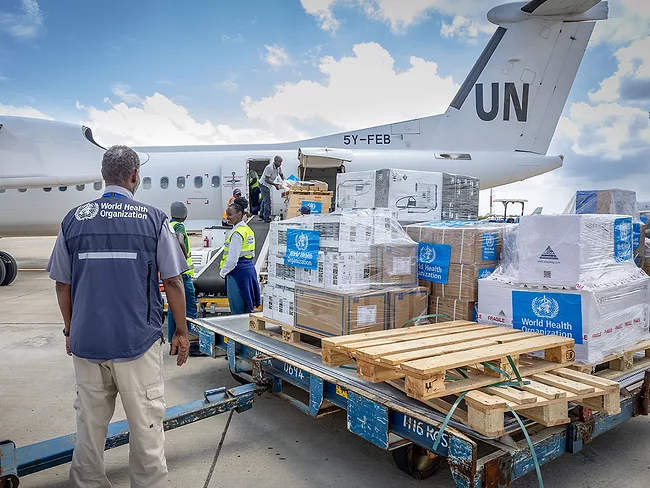
It is not surprising that a large Ebola outbreak would be considered a public health emergency of international concern. But the current PHEIC is notable for the speed with which it was declared, speaking to the urgency of the situation. World Health Organization Director-General Tedros Adhanom Ghebreyesus declared the outbreak a PHEIC on Sunday, May 17, without first convening an emergency committee. That step is unprecedented.
It is not surprising that a large Ebola outbreak would be considered a public health emergency of international concern. But the current PHEIC is notable for the speed with which it was declared, speaking to the urgency of the situation. World Health Organization Director-General Tedros Adhanom Ghebreyesus declared the outbreak a PHEIC on Sunday, May 17, without first convening an emergency committee. That step is unprecedented.
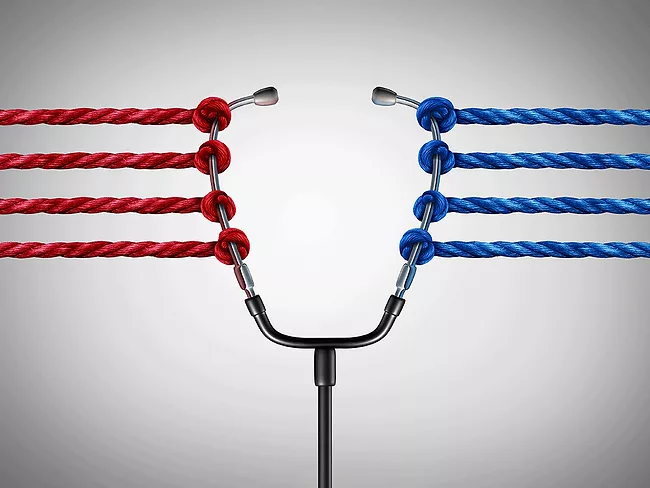
Of all the issues that could be on the table at the talks between U.S. President Donald Trump and China President Xi Jinping, the life sciences sector is the “sweet spot” for collaboration between the two countries in a way that would benefit the world, Sen. Thom Tillis, R-N.C., said in a Brookings Institution webinar in advance of the two-day summit that starts May 14.
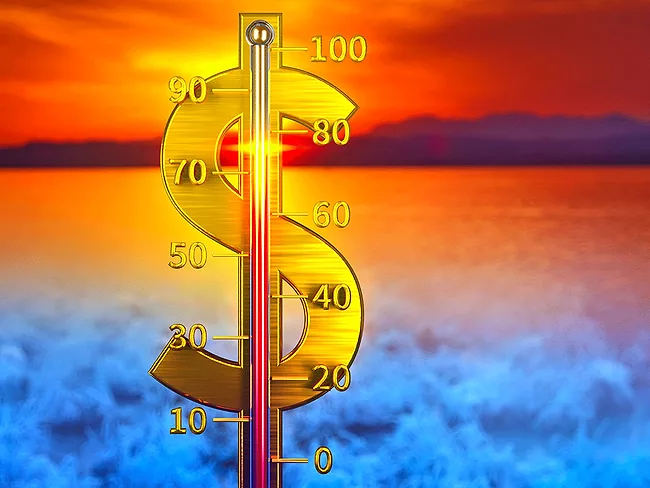
Med-tech M&A value through the first four months of 2026 reached $62.01 billion, the highest total for the period since 2022’s $73.58 billion and a dramatic step up from 2025’s $20.03 billion and 2024’s $5.74 billion over the same period.
On the heels of the ouster of Marty Makary as the U.S. FDA commissioner and the serial leadership vacancies at the CDC and the FDA’s drugs and biologics centers, the government’s adherence to science took another blow May 16 when Sen. Bill Cassidy, R-La., lost the Louisiana primary, ending his bid for re-election.
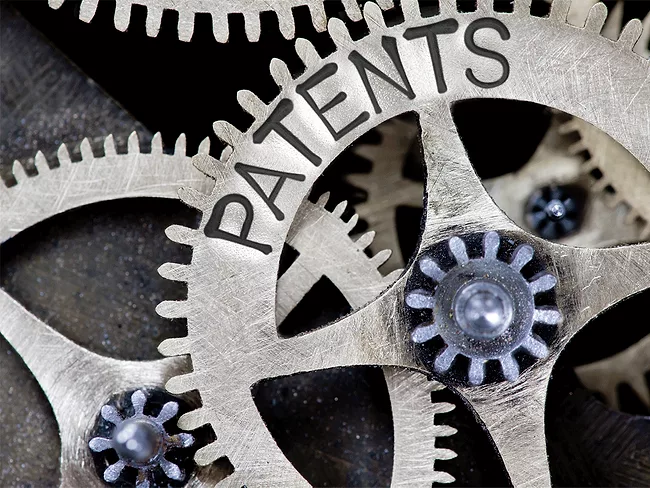
The U.S. Patent and Trademark Office (USPTO) is driving home its message that inter partes reviews (IPRs) are not to be used in conjunction with court action presenting “inconsistent positions” as a litigation strategy.
Of all the issues that could be on the table at the talks between U.S. President Donald Trump and China President Xi Jinping, the life sciences sector is the “sweet spot” for collaboration between the two countries in a way that would benefit the world, Sen. Thom Tillis, R-N.C., said in a Brookings Institution webinar in advance of the two-day summit that starts May 14.
Med-tech financing activity in the first four months of 2026 reached $10.05 billion, similar to 2025’s $10.31 billion and 2022’s $10.62 billion. While below the peak years of 2019-2021, when financings were above $15 billion in the time period, total value is still above the levels seen in 2023-2024. April saw $1.51 billion raised, compared to $2.44 billion in March, $4.55 billion in February and $1.52 billion in January.
Med-tech financing activity in the first four months of 2026 reached $10.05 billion, similar to 2025’s $10.31 billion and 2022’s $10.62 billion. While below the peak years of 2019-2021, when financings were above $15 billion in the time period, total value is still above the levels seen in 2023-2024. April saw $1.51 billion raised, compared to $2.44 billion in March, $4.55 billion in February and $1.52 billion in January.
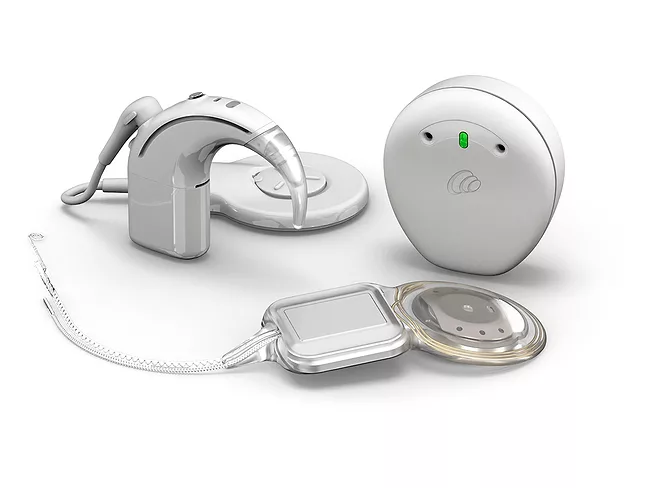
Shares in Aussie hearing implant maker Cochlear Ltd. plummeted nearly 39% April 22 after the company slashed fiscal 2026 earnings guidance and warned that weaker-than-expected demand in developed markets was exposing a more cyclical and discretionary side to its business than investors had assumed.
 RSS
RSS