BioWorld. Link to homepage.

Clarivate
  • BioWorld
  • BioWorld Science
  • BioWorld Asia
  • Data Snapshots
    • Biopharma
    • Medical technology
    • Infographics: Dynamic digital data analysis
    • Index insights
    • NME Digest
  • Special reports
    • Infographics: Dynamic digital data analysis
    • Trump administration impacts
    • Med-tech outlook 2026
    • Under threat: mRNA vaccine research
    • BioWorld at 35
    • Biopharma M&A scorecard
    • Bioworld 2025 review
    • BioWorld MedTech 2025 review
    • BioWorld Science 2025 review
    • Women's health
    • China's GLP-1 landscape
    • PFA re-energizes afib market
    • China CAR T
    • Alzheimer's disease
    • Coronavirus
    • More reports can be found here

BioWorld. Link to homepage.

  • Sign In
  • Sign Out
  • My Account
Subscribe
BioWorld - Saturday, May 2, 2026
Home » Topics » Science, BioWorld

Science, BioWorld
Science, BioWorld RSS Feed RSS

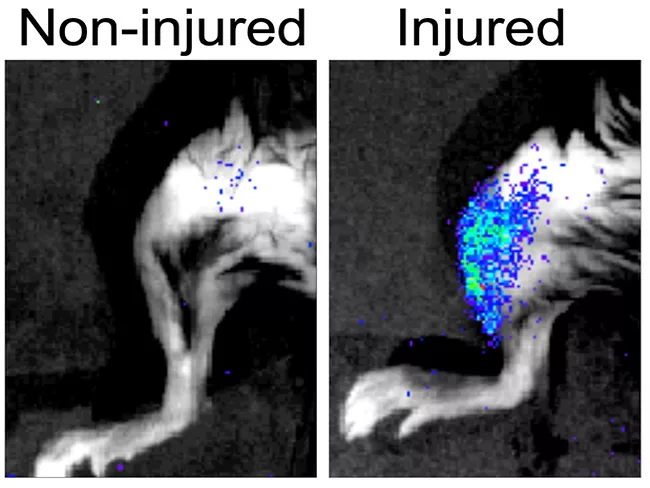
Comparison of senescent cells in regenerating muscle.
Musculoskeletal

Senescent cells are toxic to their neighbors, prevent muscle regeneration

Dec. 22, 2022
By Mar de Miguel
The first in vivo cell atlas of senescent tissue in skeletal muscle has identified the damaging properties of these cells and explained why they block muscle regeneration. According to a study at Pompeu Fabra University led by scientists from Altos Labs Inc., cell damage caused the senescence of the cells, which secreted toxic substances into the surrounding microenvironment, causing fibrosis and preventing tissue regeneration.
Read More
Reindeer in snow
Dermatologic

Path to scarless healing could be among the gifts reindeer bring

Dec. 14, 2022
By Anette Breindl
Unlike amphibians, mammals do not regenerate appendages. Except when they do. “If you amputate one of the branches off of the antler [of a reindeer], it will also regenerate,” Jeff Biernaskie told BioWorld. Even without amputation, the antlers of both male and female reindeer regenerate annually, including their skin. That regeneration is “the only large mammal model of true skin regeneration,” he said.
Read More
Fat targeting illustration
Endocrine/Metabolic

Nanomaterial allows location-specific fat targeting

Dec. 7, 2022
By Anette Breindl
The positively charged nanoparticle polyamidoamine generation 3 (P-G3) can be specifically targeted to either visceral or subcutaneous fat, and affects both types of fat in different ways, researchers from Columbia University reported in two papers recently published. The studies, published online in Nature Nanotechnology on Dec. 1, 2022, and in Biomaterials on Nov. 28, 2022, are both “a conceptual advance” and “quite amenable to translation,” co-corresponding author Kam Leong told BioWorld.
Read More
Illustration of the spike glycoprotein structure of SARS-CoV and linoleic acid molecules.
Infection

Conserved binding pocket is net positive for deadly coronavirus strains

Dec. 5, 2022
By Anette Breindl
Investigators at the University of Bristol and Biognos AB have identified a structural feature that distinguished the deadly coronavirus strains from harmless, common cold-causing variants. The findings, which were published in the Nov. 23, 2022, issue of Science Advances, could form the basis of universal COVID antivirals, putting an end to the endless race to deal with new variants that has so far been a necessity.
Read More
Neurons and amyloid plaques

Amyloid plaques recast as cause of neural network dysfunction

Nov. 30, 2022
By Anette Breindl
Researchers have identified a link between amyloid plaques and dysfunctional neuronal conduction in animal models of Alzheimer’s disease (AD). Their study, which was published in the Dec. 1, 2022, issue of Nature, suggests new ways to think about AD, as well as badly needed potential alternatives to plaque removal to fight the disease.
Read More
Scanning electron micrograph of a macrophage.
Cancer

Innate immunity can drive radiation-induced abscopal effect

Nov. 23, 2022
By Anette Breindl
A combination of radiation therapy and CD47 blockade induced an abscopal effect in animal studies even in animals that lacked T cells, researchers reported in the Nov. 21, 2022, online issue of Nature Cancer. The findings are “the first demonstration of T-cell-independent abscopal response,” co-corresponding author Edward Graves told BioWorld. “We’re not trying to say that all abscopal responses are macrophage-mediated. There are plenty that require T cells,” Graves clarified. But “there is another avenue of abscopal responses that has not been reported. ... All the abscopal literature is about stimulating an adaptive response.”
Read More
Respiratory infection
Infection

Long lung COVID gives broader insights into fibrotic lung disease

Nov. 18, 2022
By Nuala Moran
An in-depth investigation of the underlying causes of pulmonary symptoms that in some cases persist for months following recovery from the acute stage of COVID-19 has found a distinctive proinflammatory signature in the plasma and airways of affected patients.
Read More
Dinosaur illustration

In assessing shared genetic risk, love can look like pleiotropy

Nov. 17, 2022
By Anette Breindl
Social scientists are well aware of the consequences of what’s called assortative mating – that is, the fact that marriages tend to occur between people who are similar in things such as interests, social status, education and wealth. Biologists, on the other hand, have tended to ignore it.
Read More
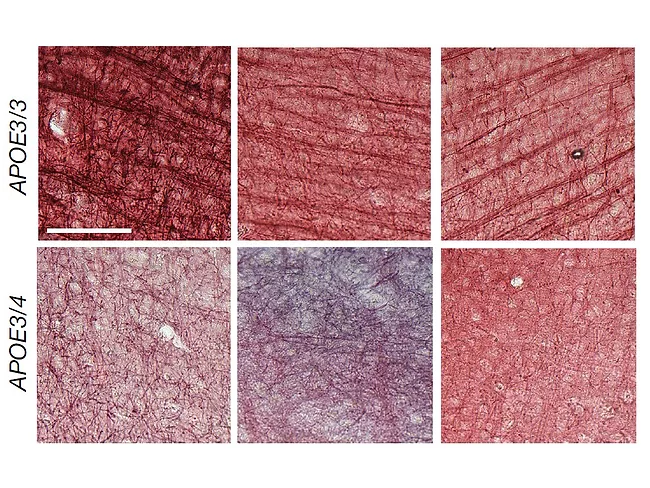
Brain samples of people with APOE3/4 vs. APOE3/3
Neurology/Psychiatric

APOE4 allele reduces myelination in Alzheimer’s disease

Nov. 16, 2022
By Mar de Miguel
Carrying the apolipoprotein E4 allele (APOE4), and not the APOE3 variant, is the strongest risk factor for developing Alzheimer’s disease (AD). But the underlying mechanism has remained elusive. Now, researchers at MIT and Mount Sinai have found that in brains carrying the APOE4 allele, lipid and cholesterol processes were dysregulated in oligodendrocytes and that this effect reduced myelination.
Read More
Mitochondria long way from the nucleus and in need of closer sources of proteins
Neurology/Psychiatric

Neuroscience 2022: ‘Strawberries’, ‘cabbages,’ fats in neuronal mitochondria

Nov. 15, 2022
By Mar de Miguel
Neurons are specialized cells with a high metabolic demand to fulfill their function, survive or keep a healthy half-life. In this sense, the anabolism and catabolism of proteins and lipids could be associated to different neurodegenerative diseases. At the 2022 annual meeting of the Society for Neuroscience, scientists reported the latest discoveries on neuron metabolic needs at a session on 'Powering Thoughts: The Regulation of Neuronal Energy Metabolism and Mitochondria.'
Read More
Previous 1 2 … 36 37 38 39 40 41 42 43 44 … 87 88 Next

Popular Stories

  • News in brief

    BioWorld Asia
    BioWorld Asia briefs for April 28, 2026
  • Chinabio 2026 partnering

    Chinese biotechs gain leverage as partners in dealmaking

    BioWorld
    China’s biotech ecosystem has crossed an inflection point, and Chinese biotechs are gaining leverage in dealmaking, executives from multinational companies said...
  • AI generated image for researcher developing antisense oligonucleotides

    Bio Korea 2026 kicks off with spotlight on oligonucleotides

    BioWorld
    Three decades of trial-and-error, and the resulting safety data, in the oligonucleotide-based therapeutic space have paved way for the present-day innovations and...
  • Neurons

    AA meeting of minds as PTC, Novartis push votoplam in HD

    BioWorld
    What PTC Therapeutics Inc.’s latest data with votoplam might mean in the Huntington’s disease (HD) landscape became grist for Wall Street after the firm unveiled...
  • University of Western Australia patents 5-HT2A/B modulators

    BioWorld Science
    University of Western Australia has identified new lysergic acid diethylamide (LSD) analogues acting as 5-HT2A and 5-HT2B modulators reported to be useful for the...
  • BioWorld
    • Today's news
    • Analysis and data insight
    • Clinical
    • Data Snapshots
    • Deals and M&A
    • Financings
    • Medical technology
    • Newco news
    • Opinion
    • Regulatory
  • BioWorld Science
    • Today's news
    • Biomarkers
    • Cancer
    • Conferences
    • Endocrine/metabolic
    • Immune
    • Infection
    • Neurology/psychiatric
    • NME Digest
    • Patents
  • BioWorld Asia
    • Today's news
    • Analysis and data insight
    • Australia
    • China
    • Clinical
    • Deals and M&A
    • Financings
    • Newco news
    • Regulatory
    • Science
  • More
    • About
    • Advertise with BioWorld
    • Archives
    • Article reprints and permissions
    • Contact us
    • Cookie policy
    • Copyright notice
    • Data methodology
    • Infographics: Dynamic digital data analysis
    • Index insights
    • Podcasts
    • Privacy policy
    • Share your news with BioWorld
    • Staff
    • Terms of use
    • Topic alerts
Follow Us

Copyright ©2026. All Rights Reserved. Design, CMS, Hosting & Web Development :: ePublishing