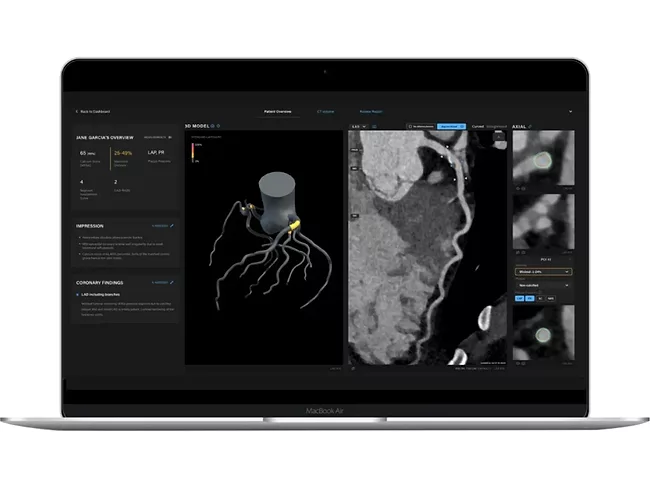
The U.S. FDA has cleared Artrya Ltd.’s 510(k) for its Salix coronary plaque (SCP) module that is a bolt-on module to the company’s Salix coronary anatomy platform.
Researchers at the Massachusetts Institute of Technology have developed a generative AI model that was able to generate novel antibiotic structures from either chemical fragments or de novo, starting from ammonia, methane, water or no starting point at all. In a study that was published online in Cell, the team tested two dozen of more than 10 million structures that were proposed as potential antibiotics by the model.
Australia’s Therapeutic Goods Administration recently reported that it has concerns about the use of digital scribes, stating that any such software that analyzes or interprets clinical conversations may qualify as a regulated medical product.
AI and machine learning products have proven complicated for regulatory authorities across the globe, but entities in the business of conducting health technology assessments also have their hands full according to several sources.
The continuing proliferation of U.S. state privacy law drew the attention of developers of med-tech wearables for some time, but a recent Senate hearing delivered the news to Congress that a failure to preempt it will slow digital health innovation to a crawl.
The U.K. government revealed its much anticipated 10-year plan to get the National Health Service back on its feet and fit for the future. It is betting on five technologies – data, AI, Genomics, wearables and robotics – to drive the change needed to transform the health care system.
The U.K. Medicines and Healthcare Products Regulatory Agency opened a second round in its AI airlock program although this round, like the first round, will be limited to four applicants.
South Korea’s Ministry of Food and Drug Safety on June 9 approved Vuno Inc’s AI-based Med-DeepECG Kidney software as a non-invasive method to screen for kidney dysfunction.
The European Commission is seeking feedback from stakeholders on the oversight of high-risk AI products, one objective of which is to develop a series of guidelines for classification of high-risk AI systems – a consideration of great interest to med-tech firms doing business in the EU.
Aiatella Oy secured €2 million (US$2.28 million) in funding for its AI-powered cardiovascular imaging technology. The funds will be used to conduct clinical trials and develop the company’s ultrasound-based preventative screening tool, which detects and quantifies carotid artery narrowing in minutes.
 RSS
RSS