Bacterial abortive infection is a defense mechanism by which an infected bacterial cell enters dormancy or dies to limit phage replication and protect the clonal population. Recent studies observed that CRISPR RNA-guided adaptive immune systems that target RNA also cause abortive-infection phenotypes by activating indiscriminate nucleases.
CRISPR, or clustered regularly interspaced palindromic repeats, is transforming biomedical research, and making rapid inroads into the clinic, with its ability to easily target specific DNA and RNA sequences. CRISPR itself is made of RNA. It recognizes target sequences and delivers CRISPR-associated (Cas) proteins, nucleases that cut the target sequence. In two papers published online in Nature on Jan. 4, 2023, researchers have demonstrated that a recently discovered type of Cas protein, Cas12a2, can degrade double-stranded DNA when its associated CRISPR guide RNA recognizes its target sequence.
Ice, juice, the exact measure of liquor, a few drops of Angostura... What goes into a good New Year’s Eve cocktail? According to researchers working on vaccines for the most elusive viruses, it will be time soon to toast next-generation vaccines. If 2020 was the year of the COVID-19 pandemic, and in 2021 the year of mRNA vaccinations, 2022 brought polyvalent designs of antigens, evaluated highly neutralizing antibodies, and fine-tuned mRNA technology against SARS-CoV-2, HIV and the flu.
Wave Life Sciences Ltd. and GSK plc have entered into a strategic collaboration to advance oligonucleotide therapeutics, including Wave's preclinical RNA editing program targeting α1-antitrypsin deficiency (AATD), WVE-006. The discovery collaboration has an initial 4-year research term. The first part of the arrangement is a discovery collaboration that enables GSK to advance up to eight programs and Wave to advance up to three programs, leveraging Wave's PRISM oligonucleotide platform and GSK's expertise in genetics and genomics.
Scientists from the Icahn School of Medicine at Mount Sinai have found a sexual dimorphism of depression based on the different expression of a molecule that could be developed as a therapeutic strategy. “There is a big sex difference in depression. Women are much more likely to have depression than men. They tend to have different subsets of symptoms. They tend to respond better to different antidepressants, and the depression tends to be more severe,” Orna Issler, the first author of the study and a postdoctoral researcher at the Nash Family Department of Neuroscience, Friedman Brain Institute, Icahn School of Medicine at Mount Sinai, told BioWorld. Their project, directed by Eric Nestler, a professor of neuroscience and director of the Friedman Brain Institute at the Icahn School of Medicine at Mount Sinai, had the aim to understand the biology of these sex differences of depression and to find therapeutic targets for it.
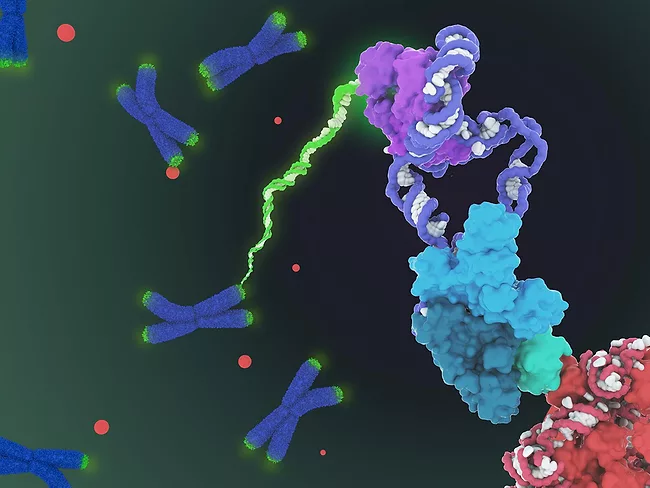
Arizona State University scientists have discovered an unprecedented pathway in a fungus to produce telomerase RNA (TER) from a protein-encoding messenger RNA (mRNA). Unlike in animals and other fungi, this fungal TER is transcribed by RNA polymerase III, lacks a protective 5′ cap and it is processed from the 3′-untranslated region of an mRNA transcript. This telomerase has two essential structural domains that keep it active. For now, scientists have only observed this process in the fungus Ustilago maydis, or Mexican truffle. “In animals, and even in Ascomycota, which is another fungal phylum, the telomerase RNA is transcribed by RNA polymerase II as an independent gene. This is the only case among all different kingdoms in eukaryotes that the telomerase RNA is processed from the mRNA molecule. It is a very unusual biogenesis pathway.” Julian Chen told BioWorld.
Wave Life Sciences Ltd. has highlighted progress with WVE-006, its preclinical Aimer (A-to-I RNA base editing) oligonucleotide candidate for the treatment of alpha-1 antitrypsin deficiency (AATD).
A first-of-its-kind blood test that can detect whether cancer is absent, imminent, or present in different stages is on its way to the market. This is a claim made by brothers Ashish Tripathi and Anish Tripathi, who lead Singapore-based molecular diagnostic company Tzar Labs Pte. Ltd. and Mumbai-based Epigeneres Biotechnology Pvt. Ltd., respectively.

 RSS
RSS