Pfizer Inc. and Biontech SE have initiated a phase I study to evaluate the safety, tolerability and immunogenicity of BNT-162b4, a next-generation COVID-19 vaccine candidate that aims to enhance SARS-CoV-2 T-cell responses and potentially broaden protection against COVID-19.
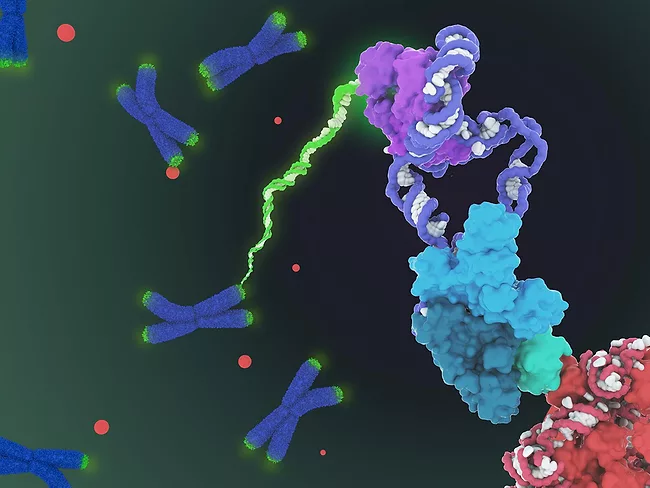
Arizona State University scientists have discovered an unprecedented pathway in a fungus to produce telomerase RNA (TER) from a protein-encoding messenger RNA (mRNA). Unlike in animals and other fungi, this fungal TER is transcribed by RNA polymerase III, lacks a protective 5′ cap and it is processed from the 3′-untranslated region of an mRNA transcript. This telomerase has two essential structural domains that keep it active. For now, scientists have only observed this process in the fungus Ustilago maydis, or Mexican truffle. “In animals, and even in Ascomycota, which is another fungal phylum, the telomerase RNA is transcribed by RNA polymerase II as an independent gene. This is the only case among all different kingdoms in eukaryotes that the telomerase RNA is processed from the mRNA molecule. It is a very unusual biogenesis pathway.” Julian Chen told BioWorld.
Although U.S. President Joe Biden suggested in September that the pandemic is over, health officials insist there is still much to do in preparation for an endemic stage of the SARS-CoV-2 virus. The number of weekly COVID-19 confirmed cases both globally and in the U.S. is similar with each of the last two years, but deaths from the virus are at some of the lowest levels since the pandemic began. Still, the virus will continue to evolve and circulate, and the biopharma industry will need to develop new booster vaccines, antivirals and monoclonal antibodies, among other candidates, to prepare for upcoming battles.
Valneva SE’s share price plummeted May 16 after the European Commission decided to terminate an advance purchase agreement for millions of doses of its COVID-19 vaccine candidate VLA-2001 because of delays in development. The company’s shares (Paris:VLA) fell more 19% to €9.65 (US$10.07) after it said it would reconsider its financial guidance for 2022.
Pharma CEOs have pushed back strongly against intellectual property (IP) waivers for COVID-19 vaccines and therapies, saying that pricing is not the reason why middle- and low-income countries have not received pharmaceutical countermeasures against the pandemic. Senior execs from Pfizer Inc., Eli Lilly and Co., and Roche Holding AG, also expressed concerns about the latest funding package from the U.S. government, which at $10 billion is less than half that originally requested by the White House.
HONG KONG – India’s conditional approval on Jan. 3 of a COVID-19 vaccine developed domestically by Bharat Biotech International Ltd. but still in phase III trials has sparked concerns about its safety. The Drugs Controller General of India (DCGI) gave emergency authorization to the product, Covaxin, along with the Astrazeneca plc and Oxford University vaccine Covishield. The DCGI said the conditional approval granting “restricted use in emergency situation” for Covaxin was done in “clinical trial mode” to account for the fact that the shot is still being tested. But the rush to approve it has created controversy and confusion.
Moderna has announced that the primary efficacy analysis of the phase III COVE study of mRNA-1273 conducted on 196 cases has confirmed the high efficacy observed at the first interim analysis (ClinicalTrials.gov Identifier NCT04470427).
The U.S. Biomedical Advanced Research and Development Authority (BARDA) commitment of up to $483 million to accelerate Moderna Inc.’s mRNA vaccine candidate, mRNA-1273, in efforts to fight coronavirus (SARS-CoV-2) would enable the company to supply millions of doses per month in 2020 and tens of millions per month in 2021 if the vaccine candidate is successful in the clinic.
CYBERSPACE – Continuing improvements in HIV treatment and progress toward a cure notwithstanding, an effective vaccine will be necessary to gain the upper hand in the decades-long fight against the pandemic.

 RSS
RSS