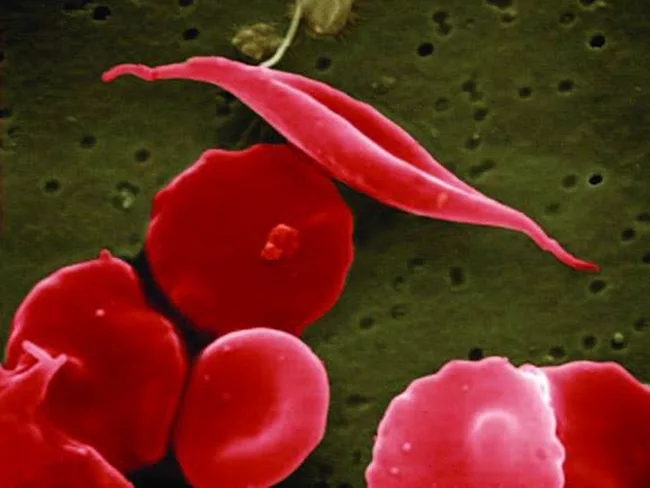
At the European Hematology Association’s annual meeting in Vienna last week, companies reported impressive progress for the treatment of sickle cell disease.
Analysts have already started tagging Cogent Biosciences Inc.’s bezuclastinib as potentially best in class, after the company presented impressive, though early stage, data at the European Hematology Association Congress in Vienna demonstrating promising efficacy and a possibly differentiating safety profile for the selective KIT D816V inhibitor in advanced systemic mastocytosis.
A paper published March 22 in the journal Chest highlighted research that found patients with interstitial lung disease (ILD) who had poor quality of life specifically related to cough were more likely to be hospitalized for respiratory issues, need a lung transplant and die. The findings in 1,447 patients matter because they back previous investigations and provide a way of predicting the advance of ILD, of which idiopathic pulmonary fibrosis (IPF) is a prominent type. A handful of companies are working on drugs to tackle cough in IPF, often an early symptom of the disease.
Hua Medicine Ltd. presented findings from two phase III trials of its first-in-class dual-acting glucokinase activator dorzagliatin that show the drug significantly improved early phase insulin secretion and glucose sensitivity in patients with type 2 diabetes, thereby restoring glucose homeostasis to treat the underlying cause of diabetes.
Pointing to an anomalously high placebo response rate at eastern European trial sites in its Forward phase III trial testing fostamatinib in warm autoimmune hemolytic anemia (wAIHA), Rigel Pharmaceuticals Inc. executives remained confident there could be a path forward for the SYK inhibitor in treating the rare blood disorder. The disappointing top-line data, however, sent company shares (NASDAQ:RIGL) falling more than 60% June 8 to close at 70 cents, a penny above its same day 52-week low.
Based on a preliminary data analysis of its second and newest COVID-19 booster candidate, Moderna Inc. said it plans to ask the U.S. FDA to approve mRNA-1273.214 ahead of potential shipping in late summer 2022. The vaccine contains mRNA-1273 (Spikevax) and a vaccine candidate targeting omicron. New phase II/III results show the candidate hitting all the study’s primary endpoints when compared to Moderna’s original vaccine, mRNA-1273.
Wall Street took in stride mixed FDA briefing documents with regard to the upcoming adcom review of Bluebird Bio Inc.’s two gene therapy prospects, and shares of the company (NASDAQ:BLUE) closed at $3.61, up 63 cents, or 21%.
Shanghai Henlius Biotech Inc.’s anti-PD-1 monoclonal antibody serplulimab has generated positive data in a phase III trial as a first-line treatment for extensive-stage small-cell lung cancer (ES-SCLC).
Following a negative phase II/III study of an investigational treatment for major depressive disorder, Praxis Precision Medicines Inc. is dropping staff from the payroll and refocusing the company’s resources on tremor and epilepsy. The Aria study of PRAX-114, a positive allosteric modulator extrasynaptic GABA receptor, missed its primary endpoint, statistical significance as measured on the Hamilton Depression Rating Scale. It also missed the study’s secondary endpoints.
Five-year survival rates for people with metastatic colorectal cancer haven’t budged much in recent decades but new data presented at the American Society of Clinical Oncology’s annual conference pushed the boundary enough to be notable.
 RSS
RSS