Acutus Medical Inc. appears to have solved one of the more vexing problems in cardiology, the sheer persistence of persistent atrial fibrillation despite treatment. In a study recently published in Heart Rhythm, the Carlsbad, Calif.-based company demonstrated that 73% of patients undergoing ablation using the new pulmonary vein isolation plus core-to-boundary guided approach experienced acute termination of AF after one procedure, compared to 10% of patients undergoing ablation with the traditional posterior wall isolation approach.
Medtronic plc reported positive interim results on the first 171 patients implanted with Evolut transaortic valve replacement (TAVR) devices in its OPTIMIZE PRO clinical trial. The postmarket, prospective, multicenter study is assessing procedural outcomes, including pacemaker rate, associated with in-procedure techniques and post-procedure TAVR care pathways when using the self-expanding, supra-annular Evolut Pro and Pro+ TAVR systems in patients with symptomatic severe aortic stenosis.
TORONTO – Perimeter Medical Imaging Inc. has been awarded an FDA breakthrough device designation for a machine learning medical platform it said drives ultra-high-resolution, real-time imaging of breast cancer. Data collected from multiple pathology labs in Texas this past year were fed through the optical coherence tomography (OCT) imaging system which now is at the stage where its Imgassist artificial intelligence (AI)-based algorithms can be tested.
Atheart Medical Inc. came on the market with splash, simultaneously announcing the company’s formation and its launch of a U.S. investigational device exemption (IDE) trial for the Resept ASD occluder, a device designed to close atrial septal defects. Resept features a metal-free, bioresorbable frame to reduce the risks associated with the long-term presence of metal in the heart.
Location, location, location. Not only is that the mantra for real estate, it often is seen as an answer to diversifying clinical trials. But having a trial site in or near an underserved community is no guarantee of a diverse study population, as health care disparities can be a more pervasive issue than location. That was one of the lessons learned from the development of Celltrans Inc.’s donislecel at the University of Illinois-Chicago.
Agnovos Healthcare LLC, a company using regenerative medicine to treat localized effects of bone disease, has received the FDA’s nod for an IDE clinical trial to assess its AGN1 local osteo-enhancement procedure (LOEP) small-volume (SV) kit in patients with vertebral compression fractures (VCFs). The investigational device is intended to treat stable but painful VCFs via a minimally invasive procedure. The kit, which comes in the form of two single-use trays, contains a calcium-based, resorbable, triphasic implant material that is designed to align the pace of resorption with bone formation, providing treated vertebrae with immediate and durable protection.
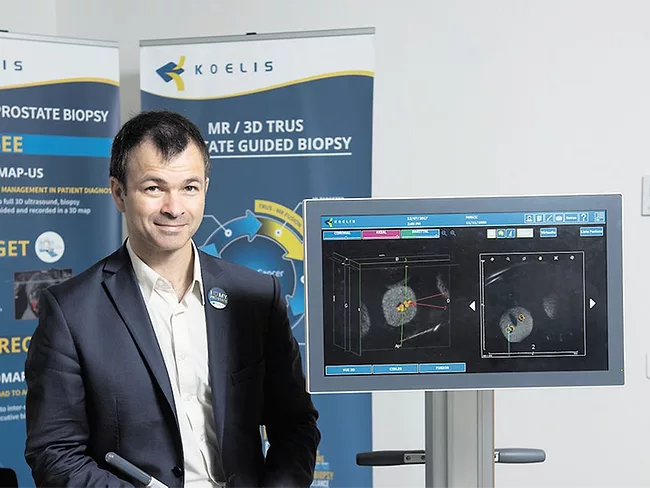
Koelis SAS reported the first successful procedures for its platform in 3D fusion imaging-guided focal ablation of prostate cancer at the Clinique Nantes Atlantis in Saint-Herblain, France. These first procedures take place against the background of a multicenter prospective clinical trial starting on the Koelis platform. This includes eight European urology centers, of which six are in France, with data being stored in a dedicated registry.
The FDA granted an investigational device exemption (IDE) to Hancock Jaffe Laboratories Inc. for Venovalve, clearing the way for the company to begin a pivotal trial of the implantable valve in patients with chronic venous insufficiency (CVI) of the deep veins of the leg. The company’s first patent covering the device was issued by the U.S. Patent and Trademark Office on April 7.
Better Therapeutics Inc. has commenced a real-world evidence study with Steward Health Care to assess the long-term impact of its BT-001 digital therapeutic in the treatment of type 2 diabetes. The investigational prescription solution delivers cognitive behavioral therapy to patients with uncontrolled type 2 diabetes.
LONDON – A large scale prospective study has shown that increased blood plasma viscosity is correlated with disease severity and the likelihood of progression to organ failure, in patients who are hospitalized with COVID-19 infections. Researchers at Addenbrooke’s Hospital in Cambridge, U.K. suggest this could be an easy but sensitive way to quickly triage patients admitted to hospital with symptoms of COVID-19.
 RSS
RSS