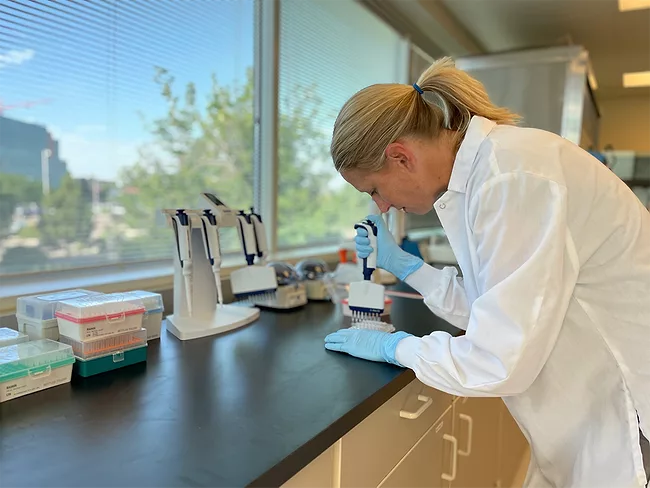
LONDON – An attempt to develop an alternative sampling method to replace unpleasant nasopharyngeal swabbing in COVID-19 diagnosis has failed, with researchers at Owlstone Medical Ltd. finding the number of viral particles that can be collected from the breath of hospitalized patients is below the limit of detection. Owlstone is a specialist in collecting and analyzing breath samples to look for volatile organic compounds that are biomarkers of disease, such as lung cancer and asthma.
Foresight Diagnostics Inc. has developed a circulating tumor DNA (ctDNA) detection platform for detecting minimal residual disease (MRD) in B-cell lymphomas, a form of non-Hodgkin lymphoma and the most common lymphoma in the U.S., accounting for about 85% of all cases. Now, it has published data showing its phased variant enrichment detection sequencing (PhasED-Seq) nearly doubled the identification of patients with aggressive lymphoma who were not cured by standard therapy and need new treatment options.
PARIS – Aleva Neurotherapeutics SA reported the first successful implantation of its Directstim directional deep brain stimulation (DBS) system into a patient suffering from Parkinson’s disease. The procedure involving this new generation of active brain device was performed by neurosurgeon Stephan Sobottka, from the Clinic for Neurosurgery at the University Hospital Carl Gustav Carus in Dresden, Germany.
Orexo AB enrolled the first patient in a pivotal trial of its digital therapeutic Modia plus sublingual buprenorphine/naloxone for treatment of opioid use disorder (OUD). Orexo’s Zubsolv, the combination of buprenorphine and naloxone used in the study, has been employed to help U.S. patients with OUD since 2013.
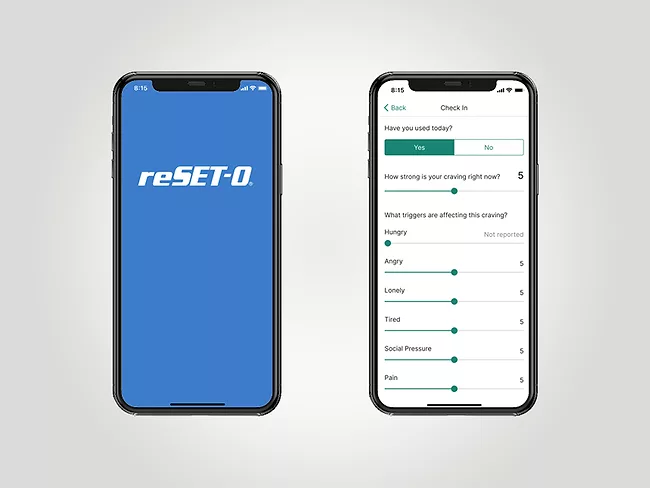
Pear Therapeutics Inc. released nine-month, real-world data showing long-term reduction in costly health care utilization categories, including inpatient stays and emergency department visits, in patients with opioid use disorder (OUD) who utilize its Reset-O prescription digital therapeutic. The findings suggest that Reset-O could help to stabilize patient outcomes long-term when used in conjunction with outpatient treatment.
Approval could come next year for Furoscix from Scpharmaceuticals Inc. (Scpharma), a solution of the standard-of-care heart failure diuretic furosemide formulated to a neutral pH and designed for outpatient use.
All the primary endpoints were met in Hepion Pharmaceuticals Inc.’s phase IIa trial of CRV-431 for treating nonalcoholic steatohepatitis (NASH). The market, however, wasn’t celebrating as the Edison, N.J.-based company’s stock (NASDAQ:HEPA) sagged 15.27% on July 13 to close at $1.72 per share.
Diagnostics startup Geneoscopy Inc. has enrolled the first patients its pivotal CRC-PREVENT clinical trial. The interventional study will assess the safety and efficacy of the company’s noninvasive, at-home, multifactor RNA screening test for the prevention of colorectal cancer.
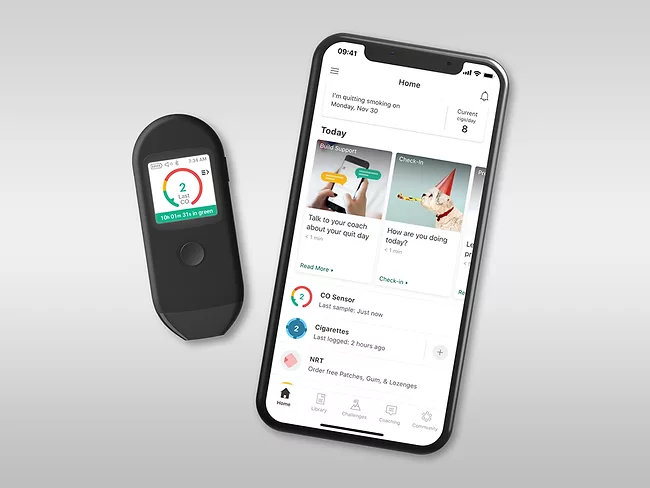
Looking to increase adoption among more tobacco users, Carrot Inc. expanded the indications for use of its smoking cessation breathalyzer with a new FDA 510(k) clearance to include the claims related to a recent study in the labeling and promotion of the sensor. The clinical trial demonstrated the Bluetooth-enabled sensor’s ability to increase a person’s motivation to quit.
In infectious disease research, most of the research into genetic determinants of susceptibility to infection and disease severity are focused on the host. For COVID-19, for example, the delta variant’s infectivity, and how likely infection is to lead to severe disease, is the focus of an intense research agenda. But host genetics, too, contribute to the consequences of infections. An ongoing study into the host genetics of SARS-CoV-2 infection has identified 13 such factors that affected either the likelihood of contracting SARS-CoV-2, or the severity of disease, gleaned from the data of 50,000 infected persons and 2 million controls.
 RSS
RSS