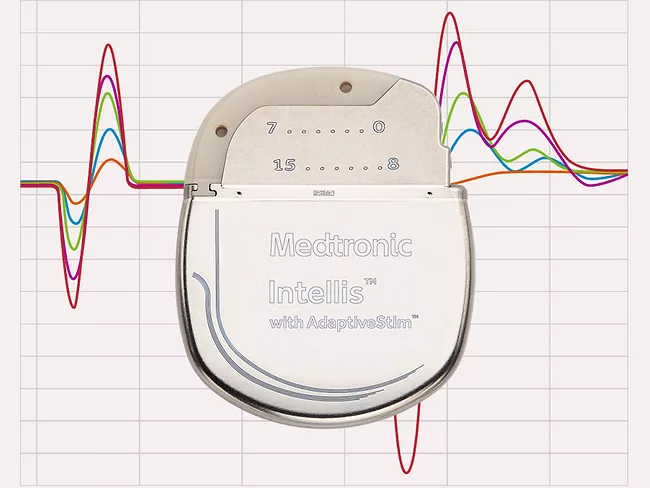
Medtronic plc is looking to increase market share in pain stimulation with its differential target multiplexed (DTM) therapy, a recharge-free device and its next big disrupter, evoked compound action potential (ECAP). The company is currently developing a closed-loop SCS system for chronic pain following failed back surgery based on ECAP and DTM algorithms.
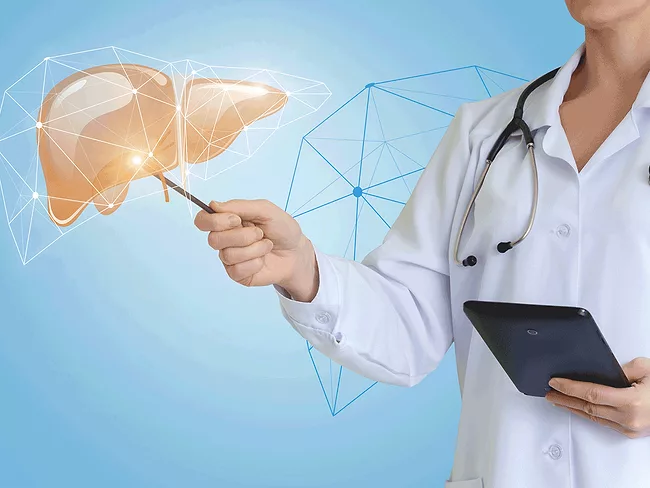
In what is claimed as the first co-authored research between regulatory scientists at the U.S. FDA and a commercial manufacturer of organ-on-a-chip devices, CN Bio's Physiomimix system is shown to perform better than the current standard in vitro liver toxicity tests. In addition to maintaining its function for longer than 2D hepatocyte cultures or 3D spheroids, Physiomimix was found to reproducibly assess toxicity, metabolism and intracellular accumulation of drugs.
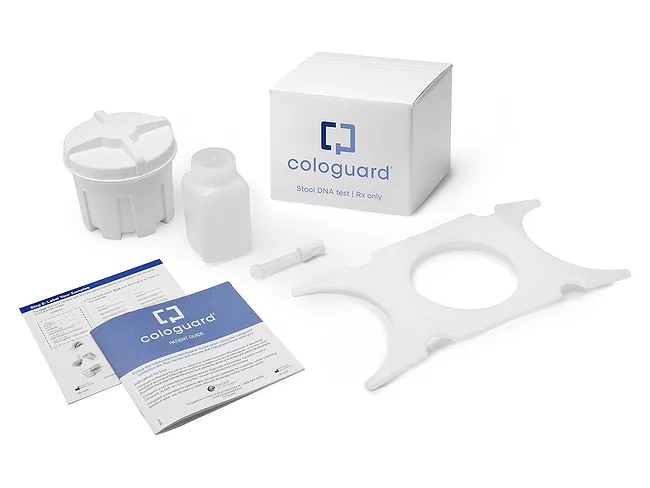
The U.S. Preventive Services Task Force (USPSTF) appears on the verge of expanding colorectal cancer screening to individuals ages 45 to 49, based on its latest draft recommendations. If it does, Exact Sciences Corp. is ready. A study in Cancer Prevention Research demonstrated that the Madison, Wis.-based company's Cologuard multitarget stool DNA test had better than 95% specificity in individuals with nonadvanced precancerous lesions or negative findings on colonoscopy.
Opticyte Inc., a medical device startup, is planning the first clinical trial of its cellular oxygen monitor, a new device that could help emergency physicians diagnose sepsis faster and prevent organ failure. The prospective, observational trial is set to launch in mid-2021.
Medtronic plc reported that the first patient has been enrolled in the Adaptive DBS Algorithm for Personalized Therapy in Parkinson's Disease (ADAPT-PD) study its trial evaluating the safety and efficacy of adaptive deep brain stimulation (aDBS) in patients with Parkinson's disease (PD). This type of stimulation is an investigational feature of the Percept PC device that could be enabled if approved.
Glaukos Corp. reported 12-month results from the pivotal IDE trial of its Istent Infinite trabecular micro-bypass system, showing substantial reduction in mean diurnal intraocular pressure (IOP) in patients with open-angle glaucoma uncontrolled by prior surgery or medication. The company is targeting U.S. FDA approval of the device for standalone moderate-to-severe glaucoma in late 2021.
Neuros Medical Inc., a company developing neuromodulation technology to treat intractable post-amputation pain, has raised $38.5 million in a series BB financing. The funds will be used to complete enrollment in its pivotal QUEST clinical trial and to submit a premarket approval application to the U.S. FDA. New investors Amzak Health and Sectoral Asset Management co-led the round.
With uncertainty continuing to surround the ongoing pandemic, Biointellisense Inc. has revealed that it is teaming up with the American College of Cardiology (ACC) to advance remote patient monitoring programs for cardiac care. In addition, the ACC plans to offer the company's Biobutton COVID-19 Screening Solution at the 70th Annual Scientific Session & Expo, scheduled for May 15-17 in Atlanta.
Much of the noise surrounding transcatheter aortic valve replacement (TAVR) vs. its surgical counterpart has to do with residual paravalvular leak. However, a new paper in the Journal of the American College of Cardiology (JACC) seems to have overwritten that consideration. The underlying registry study indicates that procedural success and outcomes at one year are superior in TAVR to in SAVR – yet another piece of evidence that seemingly tips the scales even more toward TAVR devices.
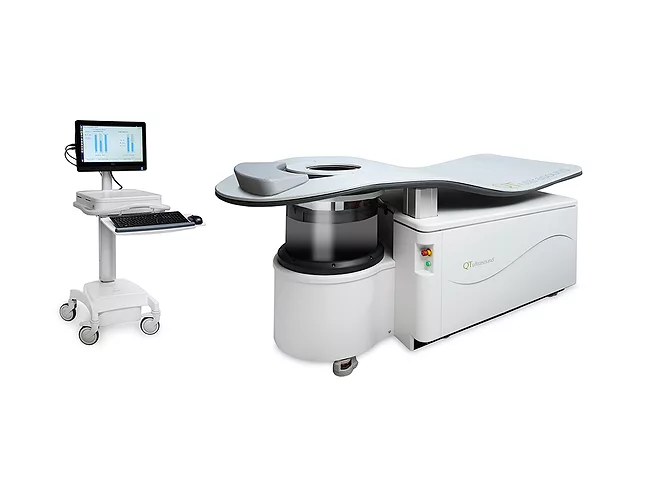
A new imaging technology that uses transmission ultrasound to provide a 3D image of breast tissue outperformed traditional digital mammography in a recent retrospective analysis. The study findings could set the stage for the U.S. FDA to clear the technology for breast cancer screening in young, high-risk women.
 RSS
RSS