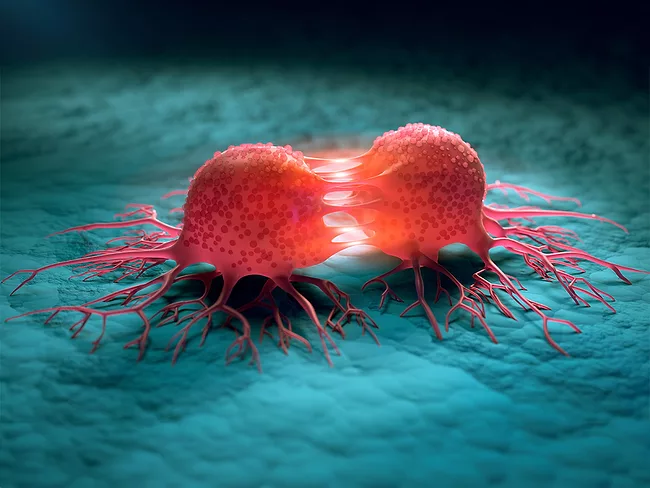
Leading advances in cancer research, the 2025 AACR-NCI-EORTC International Conference on Molecular Targets and Cancer Therapeutics highlighted some of the field’s most promising innovations. Parabilis Medicines Inc. and Tango Therapeutics Inc. presented their work on potential therapeutic targets that may signal significant shifts in the future of cancer treatment.
Revolution Medicines Inc. has developed and presented data for their KRAS codon 13-targeting compound, RMC-8839, for treating non-small-cell lung cancers.
Forx Therapeutics AG presented data on their PARG inhibitor – FORX-428 – for the treatment of cancer. FORX-428 is a highly potent, selective and orally bioavailable PARG inhibitor that showed strong and reversible binding to the catalytic domain of the human PARG enzyme.
Convalife Pharmaceuticals Co. Ltd. has presented data for their bispecific antibody CVL-006, which targets both PD-1 and VEGF-A. CVL-006 blocks both the PD-1-driven immune pathway plus VEGF-A-driven angiogenesis, thus conferring a dual mechanism for superior antitumoral activity.
Cancer of the uterus is the most common gynecological malignancy in the U.S., with over 60,000 diagnoses per year, where incidence and mortality have increased through the years. About 30%-40% of patients with high-grade disease harbor mutations in the PPP2R1A gene, which encodes the primary subunit of protein phosphatase 2A, with hotspots being P179R and S256F.
At this year’s AACR-NCI-EORTC conference, several presentations brought to light new ways to tackle the treatment of genomically unstable cancers. Genomically unstable cancers can be treated by exploiting their repair dependencies, inducing catastrophic DNA damage, or harnessing immune responses to instability.
Preclinical results were recently presented from studies conducted by Fulcrum Therapeutics Inc. evaluating FTX-6274, a novel, orally bioavailable embryonic ectoderm development (EED) inhibitor that targets the PRC2 complex, in models of castration-resistant prostate cancer.
Mutant KRAS is a well-known oncogenic driver and has remained undruggable for many decades. The development of pan-KRAS inhibitors that target a broad range of mutations is a promising approach to cancer treatment.
At the ongoing AACR-NCI-EORTC International Conference on Molecular Targets and Cancer Therapeutics 2025 in Boston, Bridgebio Oncology Therapeutics Inc. (BBOT) presented data on BBO-11818, a potent and selective KRAS inhibitor with activity against several KRAS mutants both in active (ON) and inactive (OFF) forms.
During the first poster session of the 2025 AACR-NCI-EORTC International Conference on Molecular Targets and Cancer Therapeutics, held in Boston, several presentations highlighted novel strategies that move beyond traditional antibody-drug conjugate (ADC) payloads and targets.
 RSS
RSS