BioWorld. Link to homepage.

Clarivate
  • BioWorld
  • BioWorld Science
  • BioWorld Asia
  • Data Snapshots
    • Biopharma
    • Medical technology
    • Infographics: Dynamic digital data analysis
    • Index insights
    • NME Digest
  • Special reports
    • Infographics: Dynamic digital data analysis
    • Ebola outbreak
    • Hantavirus
    • Trump administration impacts
    • Med-tech outlook 2026
    • Under threat: mRNA vaccine research
    • BioWorld at 35
    • Biopharma M&A scorecard
    • Bioworld 2025 review
    • BioWorld MedTech 2025 review
    • BioWorld Science 2025 review
    • Women's health
    • China's GLP-1 landscape
    • PFA re-energizes afib market
    • China CAR T
    • Alzheimer's disease
    • Coronavirus
    • More reports can be found here

BioWorld. Link to homepage.

  • Sign In
  • Sign Out
  • My Account
Subscribe
BioWorld - Thursday, May 28, 2026
Home » Topics » Conferences

Conferences
Conferences RSS Feed RSS

Cross section of brainstem
Infection

AAAS 2024: Chemo brain, other conditions provide lens for long COVID

Feb. 19, 2024
By Nuala Moran
The biological processes giving rise to the central nervous system symptoms of long COVID remain a mystery. But multiple studies suggest they do not appear to be a result of a direct viral infection of brain tissue. The latest such research, which appeared online in Nature Neuroscience on Feb. 16, 2024, demonstrated that local immune response in brain tissues persisted long after SARS-CoV-2 virus had disappeared.
Read More
Drug R&D concept image.
Endocrine/Metabolic

Pompe disease murine model harboring GAA c.1826dupA resembles infantile-onset disease

Feb. 16, 2024
Pompe disease is caused by a deficiency in the lysosomal enzyme acid α-glucosidase (GAA) that leads to accumulation of glycogen in the lysosomes, mainly seen in skeletal and cardiac muscles. Researchers from Duke University have developed a new murine model of Pompe disease, which recapitulates human infantile-onset disease. This model harbors the c.1826dupA mutation in the murine Gaa gene, which resembles the human GAA c.1826dupA (p.Y609*) mutation seen in infantile-onset Pompe disease.
Read More
Neurology/Psychiatric

New mouse model of COVID-19-induced cerebrovascular embolic complications

Feb. 15, 2024
Researchers from Mercer University have presented a middle cerebral artery/ferric chloride (MCA/FeCl3) thromboembolic mouse model of COVID-19-induced stroke and cerebrovascular complications.
Read More
A lysosome (foreground) is enlarged by an accumulation of the fatty substance glucocerebroside, a characteristic of Gaucher disease
Endocrine/Metabolic

Murine model recapitulates human Gaucher disease type 1

Feb. 15, 2024
Researchers from the Yale University School of Medicine have developed a novel murine model of Gaucher disease type I with the aim to investigate the impact of GBA1 deficiency on hematopoiesis and the immune system, in order to elucidate potential therapeutic targets.
Read More
Endocrine/Metabolic

Autologous B-cell therapy WFX-001 corrects systemic α-GAL enzyme deficiency in vivo

Feb. 14, 2024
Walking Fish Therapeutics Inc. presented a new first-in-class autologous B-cell therapy being developed for the treatment of Fabry disease.
Read More
Neurology/Psychiatric

VST Bio presents data on novel anti-syndecan-2 antibody

Feb. 14, 2024
It has been shown that vascular endothelial growth factor A (VEGF-A) induces blood-brain barrier disruption and vasogenic edema and it is up-regulated in stroke. When bound to its receptor, VEGF promotes angiogenesis and neuroprotection, in addition to inducing vasogenic edema. VST Bio Ltd. and Yale University have presented data on their monoclonal antibody against syndecan-2, named VST-002, that completely blocks VEGF-driven vasogenic edema while preserving neuroprotective effects.
Read More
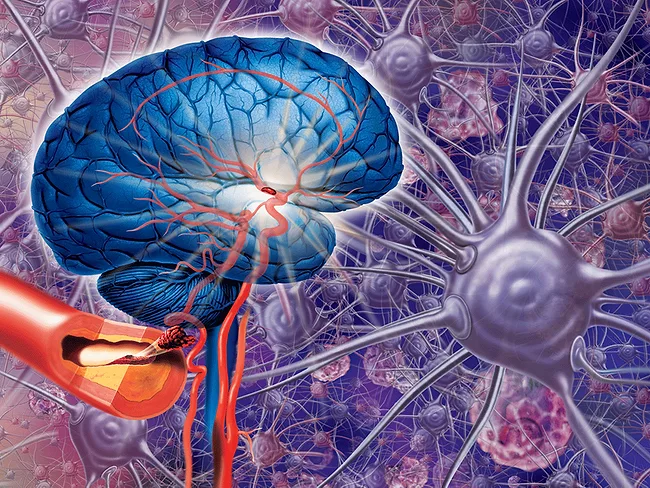
Stroke illustration: brain, artery, neurons
Neurology/Psychiatric

Scientists create new MCAO-induced stroke model in rats

Feb. 13, 2024
Japanese researchers have developed a new rat model of thromboembolic ischemic stroke that did not require arterial ligation of the external carotid artery, which makes the research for thrombolytic agents more complicated.
Read More
Biomarkers

Polymorphism in CX3CR1 may contribute to sensorineural hearing loss

Feb. 13, 2024
It is known that CX3C chemokine receptor 1 (CX3CR1) expressed on macrophages plays a crucial role in inner hair cell ribbon synaptic repair and spiral ganglion neuron survival after synaptopathic noise-induced trauma.
Read More
Biomarkers

New COL3A1 mutation found in case of bleeding of unknown cause

Feb. 12, 2024
Bleeding of unknown cause is a group of rare disorders that are still difficult to accurately diagnose. A case report on a patient with hematoma in the perineal region after her first delivery was presented.
Read More
Illustration of scientists conducting research on a mouse to find the missing puzzle piece
Ear, Nose & Throat

New mouse model of hereditary deafness resulting from common GJB2 mutation

Feb. 12, 2024
The most common genetic cause of hereditary deafness in humans are mutations in the GJB2 gene, especially the 35delG and 235delC mutations. At the recent ARO meeting, researchers from Ear Nose and Throat Hospital of Fudan University presented the creation of a novel mouse model for studying the pathogenic mechanisms of hereditary deafness resulting from these mutations.
Read More
Previous 1 2 … 173 174 175 176 177 178 179 180 181 … 3204 3205 Next

Popular Stories

  • Today's news in brief

    BioWorld
    BioWorld briefs for May 27, 2026.
  • News in brief

    BioWorld Asia
    BioWorld Asia briefs for May 26, 2026
  • Microscopy of a cross-section of mouse skin containing melanoma tumors

    Researchers identify innate immune barrier against melanoma

    BioWorld
    Australian researchers have identified a previously overlooked population of immune cells in the skin that physically restrain melanoma growth by engulfing live...
  • In the clinic for May 26, 2026

    BioWorld
    Clinical updates for biopharma and med tech, including data readouts and publications: 858, A2 Biotherapeutics, AC Immune, Agendia, Agenus, Aktis, Ascentage,...
  • Cavalon Therapeutics and Northwestern patent new Cav1.3 blockers

    BioWorld Science
    Cavalon Therapeutics Inc. and Northwestern University have disclosed new voltage-gated calcium channel Cav1.3 blockers potentially useful for the treatment of...
  • BioWorld
    • Today's news
    • Analysis and data insight
    • Clinical
    • Data Snapshots
    • Deals and M&A
    • Financings
    • Medical technology
    • Newco news
    • Opinion
    • Regulatory
  • BioWorld Science
    • Today's news
    • Biomarkers
    • Cancer
    • Conferences
    • Endocrine/metabolic
    • Immune
    • Infection
    • Neurology/psychiatric
    • NME Digest
    • Patents
  • BioWorld Asia
    • Today's news
    • Analysis and data insight
    • Australia
    • China
    • Clinical
    • Deals and M&A
    • Financings
    • Newco news
    • Regulatory
    • Science
  • More
    • About
    • Advertise with BioWorld
    • Archives
    • Article reprints and permissions
    • Contact us
    • Cookie policy
    • Copyright notice
    • Data methodology
    • Infographics: Dynamic digital data analysis
    • Index insights
    • Podcasts
    • Privacy policy
    • Share your news with BioWorld
    • Staff
    • Terms of use
    • Topic alerts
Follow Us

Copyright ©2026. All Rights Reserved. Design, CMS, Hosting & Web Development :: ePublishing