As congressional scrutiny of the U.S. FDA’s accelerated approval path continues, the agency is focusing research efforts into appropriate disclosure on direct-to-consumer websites about a drug’s accelerated approval and the status of confirmatory trials. Previous research by the FDA’s Office of Prescription Drug Promotion (OPDP) found that 27% of DTC websites providing information about a drug with accelerated approval don’t disclose that the products are on the market through accelerated approval.
Researchers at the Albert Einstein College of Medicine have turned pancreatic cancer’s immunosuppressive properties, and mechanisms, against itself. The team have used the bacterium Listeria monocytogenes as a delivery vehicle for tetanus toxoid protein, a highly immunogenic antigen that is used in childhood tetanus vaccinations. In mouse models of pancreatic cancer, treatment reduced both primary tumors and metastases, and extended survival.
In its drive to rewrite the rules of the tumor microenvironment so it can capture of the holy grail of successfully battling solid tumors by using T cells, Affini-T Therapeutics Inc. has completed an oversubscribed $175 million. The focus is to develop multiple oncogene driver programs for treating solid tumors such as those with mutated KRAS variants into the clinic, pursue complementary technology licenses to strengthen its cell therapy platform and to optimize its discovery engine.
Oric Pharmaceuticals Inc. is quitting development of ORIC-101 after interim analyses of two phase Ib studies concluded that the clinical activity does not justify going forward with the compound. The company was testing ORIC-101, a glucocorticoid receptor antagonist, combined with Abraxane in various solid tumors and paired with Xtandi in metastatic prostate cancer.
Spotlight Therapeutics Inc., a company developing cell-targeted in vivo CRISPR gene editing biologics, has raised $36.5 million in series B financing to support advancement of its first-in-class immuno-oncology program and further applications of its in-house technology platform. The financing round was co-led by new investors GordonMD Global Investments and Epiq Capital Group, with participation from Magnetic Ventures, as well as existing investors GV, Emerson Collective and others.
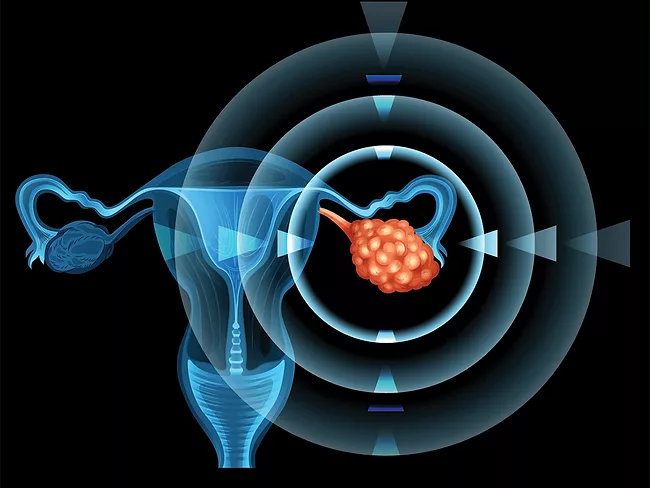
Researchers at the University of Queensland have found a genetic link between endometriosis and ovarian cancer subtypes, enabling them to identify potential drug targets for therapy and increasing the understanding of both diseases.
Wall Street was not as pleased as some might have expected by Immunogen Inc.’s full results from the pivotal study called Soraya testing mirvetuximab soravtansine (mirv) monotherapy in patients with folate receptor (FR) alpha-high, platinum-resistant ovarian cancer (PROC) who have been previously treated with Avastin (bevacizumab, Roche Holding AG). Analysts hailed the results as positive but shares (NASDAQ:IMGN) closed at $4.30, down 96 cents, or 18.25%.
Bristol Myers Squibb Co.’s relatlimab will hit the market as the first U.S. FDA-approved LAG-3 inhibitor, cleared by the agency for use in a fixed-dose combination with Opdivo (nivolumab) to treat adult and pediatric patients with unresectable or metastatic melanoma. The approval, a day ahead of the March 19 FDA target date, adds another type of immune checkpoint inhibitor to the oncology arsenal, which already includes drugs targeting PD-1/PD-L1 and CTLA4.
Volastra Therapeutics Inc., dedicated to taking aim at chromosomal instability (CIN) to design cancer drugs by way of its CINtech platform,, scored a potential $1 billion-plus agreement with Bristol Myers Squibb Co. (BMS) to find synthetic lethal targets as drug candidates.
Shanghai Junshi Biosciences Co. Ltd. and Coherus Biosciences Inc. have disclosed positive data from a phase III trial of the anti-PD-1 antibody toripalimab in combination with chemotherapy in China. Though already approved for several indications, they’re seeking to position it as a first-line treatment of advanced squamous or non-squamous non-small-cell lung cancer (NSCLC). The final data largely confirmed interim findings from the study, first reported in August 2021.
 RSS
RSS