Debiopharm International SA is more interested in developing drugs than marketing them. Bertrand Ducrey, CEO of Debiopharm, said he envisions the drugs the company is stewarding through development as a "living pipeline" that needs to be refreshed as drugs get to late-stage development. So Debiopharm is shipping global rights to xevinapant (Debio-1143) and its follow-on inhibitor of apoptosis proteins antagonist, Debio-4028, to Merck KGaA, of Darmstadt, Germany.
In a move that caught analysts and investors by surprise, the FDA rejected Athenex Inc.’s NDA for Oraxol, its oral version of paclitaxel, for use in metastatic breast cancer, citing safety risks and questioning the reliability of the clinical data supporting the application.
PERTH, Australia – Sydney-based Kazia Therapeutics Ltd. has out-licensed its ovarian cancer drug, Cantrixil (TRX-E-002-1), to Sweden’s Oasmia Pharmaceutical AB in a deal worth up to $46 million.
Oasmia will pay $4 million up front, and development milestones worth up to $42 million and double-digit sales royalties.
The cost of newly FDA approved Pepaxto (melphalan flufenamide) from Oncopeptides AB is designed to put the therapy in the middle of the range compared to other multiple myeloma therapies, CEO Marty Duvall told BioWorld. “There are products well entrenched in that space,” he added.
Roivant Sciences Ltd. is buying Silicon Therapeutics LLC for $450 million in Roivant equity plus regulatory and commercial milestone payments. The combination of Silicon’s computational physics platform for in silico design or optimizing small-molecule drugs with Roivant’s newly unveiled protein degradation platform will be powered by Roivant’s machine learning models.
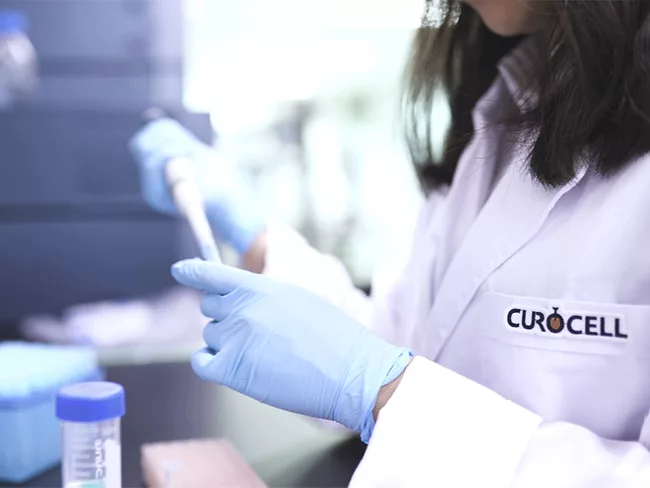
HONG KONG – Daejeon, South Korea-based Curocell Inc. has received the first IND approval for a CAR T therapy in South Korea from the Ministry of Food and Drug Safety (MFDS).
Cancer immunotherapy developer Xilio Therapeutics Inc. has raised $95 million in series C financing to support its efforts to move a duo of tumor-selective candidates into the clinic. IND applications for both its interleukin-2 agonist, XTX-202, and anti-cytotoxic T-lymphocyte-associated protein 4 antibody, XTX-101, are planned for this year.
Scientists, despite their best efforts, have not been able to identify a way to inhibit the oncoprotein Myc. Uropathogenic Escherichia coli, though, has apparently figured it out.
Gilead Sciences Inc. was looking to get into oncology in a big way. Arcus Biosciences Inc. had a pipeline of cancer drugs it didn't want to break up. While a little unusual, the landmark 10-year pact the companies made last year just made sense, company executives explained during a session at Biocom California's Global Life Science Partnering Conference.
Astrazeneca plc officials, during the firm’s Feb. 11 conference call on fourth-quarter earnings, highlighted the oral selective estrogen receptor degrader (SERD) camizestrant in breast cancer (BC), which Cristian Massacesi, head of late-stage oncology development, said bears “best-in-class potential, in terms of providing superior clinical benefit at a well-tolerated dose” of 75 mg once per day.
 RSS
RSS