China’s National Medical Products Administration has cleared China Grand Pharmaceutical and Healthcare Holdings Ltd. to advance radiopharmaceutical agent ITM-11 (177Lu-edotreotide) to phase III trials in gastroenteropancreatic-neuroendocrine tumors
An advocate general (AG) for the E.U. Court of Justice did not mince words in calling out the European Commission for its “very significant extension of the scope of the Merger Regulation and of the commission’s jurisdiction” in reviewing Illumina Inc.’s $7.1 billion acquisition of Grail LLC.
Surgeon, CEO and founder of Hutom Corp., Woo Jin Hyung, is working to level the playing field in the operating room with artificial intelligence (AI) and big data, leveraging digital technology to optimize surgical outcomes.
Validating Fusion Pharmaceuticals Inc.’s radiopharmaceutical technology and manufacturing capabilities, Astrazeneca plc offered to buy the firm for $2 billion up front in cash, plus a contingent value right that could raise the total deal value by another $400 million.
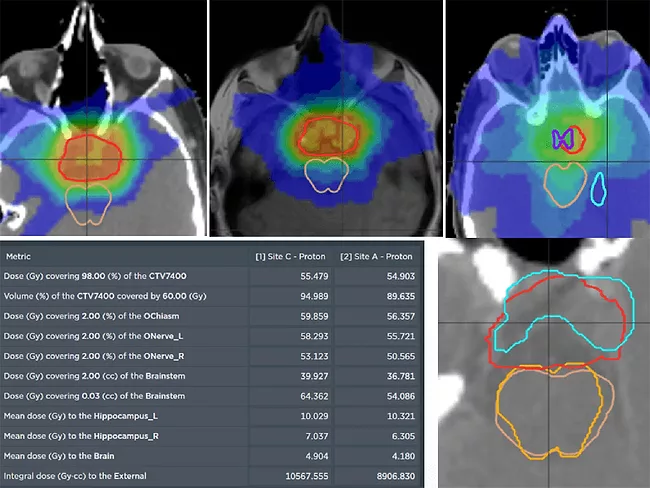
The U.K. National Institute for Health and Care Excellence (NICE) has released a preliminary health technology assessment for three modules of the Proknow series of software systems by Stockholm-based Elekta AB, which may improve the delivery of radiotherapy services across the U.K. However, NICE indicated it wants to see more evidence regarding the impact of these software modules on radiotherapy treatment plans.
Medical Korea 2024 opened to a large audience in Seoul, South Korea for a two-day run to highlight advances in the medical field, including those in radiotherapy.
After spending 20 years at Novartis, Radiopharm Theranostics Ltd. CEO Riccardo Canevari told BioWorld that when he joined Radiopharm he wanted to focus on something different within radiopharmaceuticals where no one was playing. “I believe these new modalities are at the beginning of their potential, much like in the immuno-oncology space years ago. That’s a nice place to be,” he said, but it’s not only about competition, it’s also about understanding what other companies are doing and if there is a disease area or a mechanism of action that is not being explored, he said.
Starpax Biopharma Inc. files for further protection of its anticancer technology that uses magnetically steered bacteria to spread chemotherapy drugs throughout the volume of tumors. Its latest filing describes a method for preparing a subject for a medical intervention with magnetotactic bacteria tethered to treatment, imaging or diagnostic agents.
In a move to build up its dominance in the radiopharma market, Telix Pharmaceuticals Ltd. said it plans to acquire radioisotope production technology firm Artms Inc. and its advanced cyclotron-based isotope production platform, manufacturing plant and stockpile of ultra-pure rare metals.
While members of the U.S. FDA’s Imaging Drugs Advisory Committee weren’t blown away March 5 by the trial performance of Lumicell Inc.’s Lumisight (pegulicianine) in helping breast cancer patients avoid second surgeries due to negative margins following a lumpectomy, they voted 16-2, with one abstention, that the benefits of the imaging drug outweigh its risks, even though those benefits are incremental.
 RSS
RSS