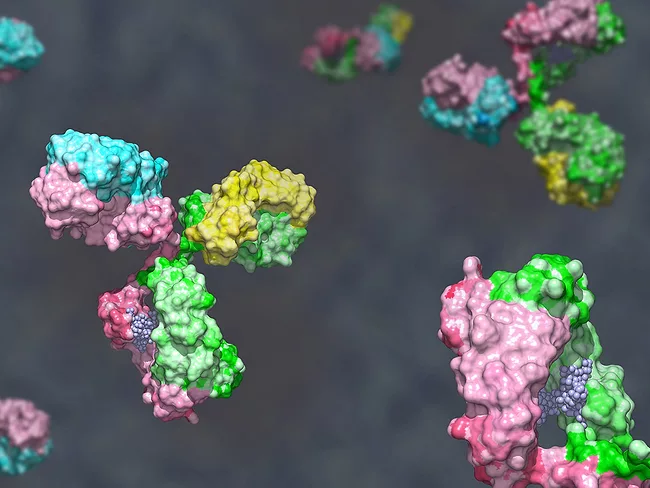
The use of mimicking antibodies that activate death receptors (DRs) to selectively induce cell death in cancer cells has shown limited clinical success so far, primarily due to suboptimal efficacy and safety concerns, particularly hepatotoxicity. Emerging strategies to enhance efficacy include the development of bispecific antibodies that simultaneously target DRs and tumor-specific antigens.
Breast cancer was the second most frequent cause of new cancer cases worldwide in 2024, and up to 20% of cases fall under the subtype of triple-negative breast cancer (TNBC), one of the most aggressive and difficult subtypes to treat.
The transcriptional repressor B-cell lymphoma 6 (BCL6) plays a central role in the development and progression of various B-cell malignancies, particularly diffuse large B-cell lymphoma (DLBCL), where it is associated with poor prognosis and resistance to standard immunochemotherapy.
Targeted protein degradation has yet to notch its first approval. But with more than two dozen agents now in clinical trials, the strategy’s ultimate clinical validation appears to be a matter of time.
Clinical results offered at the recent meeting of the American Urological Association in Las Vegas signal that better treatments may lie ahead for non-muscle invasive bladder cancer.
South Korea’s Ministry of Food and Drug Safety approved 18 biosimilar products in 2024, making it a record year for domestic biosimilar approvals since the agency’s first nod of Celltrion Inc.’s Remsima, a reference product of Remicade (infliximab), in 2012.
Shanghai-based D3 Bio (Wuxi) Co. Ltd. showed positive results for its lead candidate, next-generation KRAS G12C inhibitor, D3S-001, also known as elisrasib, in patients with KRAS G12C mutation cancers, including patients previously treated with first-generation KRAS G12C inhibitors. Presented at the American Association for Cancer Research (AACR 2025) meeting on April 29, the data were simultaneously published in Nature Medicine.
Alphina Therapeutics Inc. has described nicotinamide phosphoribosyltransferase (NAmPRTase; Nampt) inhibitors reported to be useful for the treatment of cancer, and autoimmune, inflammatory and metabolic disorders.
 RSS
RSS