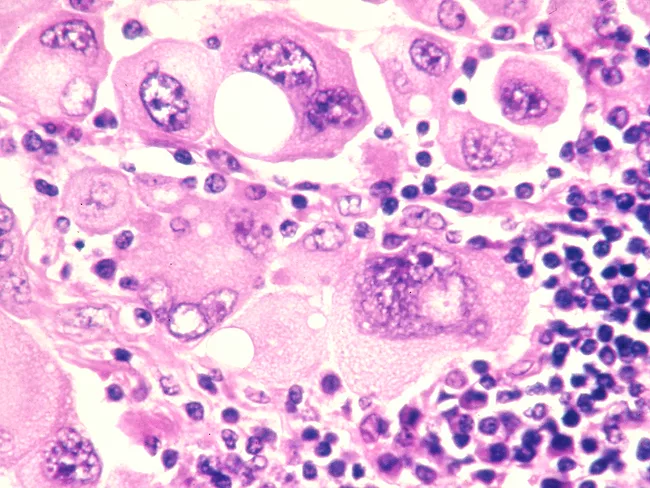
As the company began a rolling NDA submission to the U.S. FDA for its drug combo in low-grade serous ovarian cancer, Verastem Oncology Inc. popped the lid off phase I/II data in pancreatic tumors, but Wall Street seemed uncertain about the news. Boston-based Verastem disclosed upbeat outcomes from the Ramp 205 study testing the RAF/MEK clamp avutometinib when paired with focal adhesion kinase inhibitor defactinib in combination with gemcitabine plus nab-paclitaxel as first-line therapy for metastatic pancreatic cancer.
Cambridge, U.K.-based Astrazeneca plc is looking to Asia, specifically China and Singapore, to build an innovative cancer-focused pipeline filled with antibody-drug conjugates (ADC), monoclonal antibodies (MAbs) and cell therapies.
The U.S. FDA’s May 23 advisory hearing for the Shield test for colorectal cancer by Guardant Health Inc., included the expected debate over whether patients would abandon colonoscopy thanks to the advent of a new blood-based test. While much of that debate was fed by what some saw as the test’s poor performance regarding adenoma, the advisory committee voted 6-3 that the benefits outweigh the risks in a decision the FDA is likely to affirm.
Inversago Pharma Inc. has divulged cannabinoid CB1 receptor antagonists reported to be useful for the treatment of cancer, diabetes, fibrosis, hypertension, irritable bowel syndrome, metabolic syndrome, alopecia and Prader-Willi syndrome.
Artivila Biopharma Co. Ltd. has synthesized macrocyclic compounds acting as cyclin-dependent kinase 9 (CDK9) inhibitors reported to be useful for the treatment of cancer.
Kinesin-like protein KIFC1 plays a role in the clustering of centrosomes in cancer cells and is being investigated in some types of cancer, concretely in melanoma.
Amphista Therapeutics Ltd. has unveiled a new mechanism of action for the degradation of the emerging oncology target BRD9 that is differentiated from cereblon- or VHL-based PROTACs.
Abdera Therapeutics Inc. has received FDA clearance of its IND application for ABD-147, the first δ-like ligand 3 (DLL3)-targeting radiopharmaceutical for the treatment of small-cell lung cancer (SCLC) and large-cell neuroendocrine carcinoma.
Degron Therapeutics Inc. has entered into a collaboration and exclusive license agreement with Takeda Pharmaceutical Co. Ltd. to discover and develop novel molecular glue degraders for multiple targets in oncology, neuroscience and inflammation.
Treatment with indoleamine dioxygenase-1 (IDO1) inhibitors reduced both viremia and B cell transformation in animal models of post-transplant lymphoproliferative disorder (PTLD), while IDO1 up-regulation occurred in patients who would go on to develop PTLD. The findings, which were reported in the May 24, 2024, issue of Science by researchers from the University of Basel and the University Hospital Basel, point to new ways to predict, prevent and treat complications of Epstein-Barr virus (EBV) infection.

 RSS
RSS