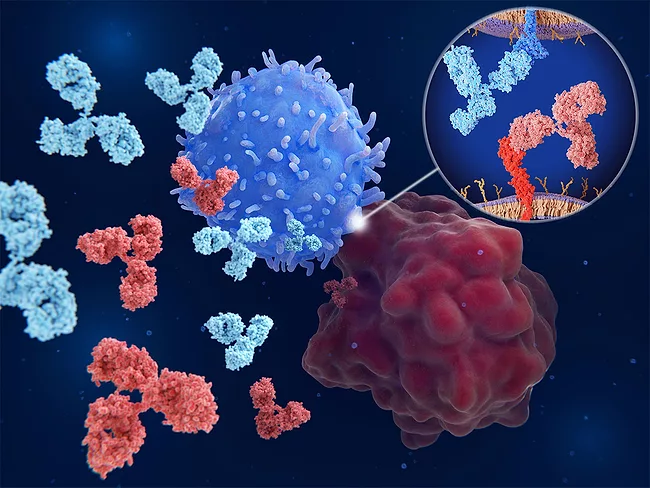
Scientists at Hansoh Bio LLC, Hansoh Pharmaceutical Group Co. Ltd. and Shanghai Hansoh Biomedical Co. Ltd. have disclosed antibody-drug conjugates (ADCs) comprising HER3 (erbB3)-targeting antibodies linked to a cytotoxic drug through a linker.
Researchers from the University of Colorado presented preclinical data for the myeloid leukemia cell differentiation protein Mcl-1 inhibitor S-64315, currently in phase I clinical development for the treatment of hematologic cancers.
Cartography Biosciences Inc. announced it has entered into a multiyear, strategic collaboration agreement with Gilead Sciences Inc. to discover and develop therapies for patients with triple-negative breast cancer and adenocarcinoma.
Bispecific T-cell-engaging antibodies have emerged as therapeutic options for the treatment of cancer, but limitations such as short half-life remain to be addressed. Researchers from Biontech SE reported the preclinical pharmacology and efficacy of BNT-142, a bispecific antibody targeting claudin-6 (CLDN6) and the T-cell marker CD3.
Merck Sharp & Dohme LLC has described antibody-drug conjugates (ADCs) comprising antibodies targeting tumor-associated calcium signal transducer 2 (TACSTD2; TROP2) linked to exatecan through a linker reported to be useful for the treatment of cancer.
Hangzhou Synrx Therapeutics Technology Co. Ltd. has divulged DNA polymerase θ (POLθ, POLQ) inhibitors reported to be useful for the treatment of cancer.
Boehringer Ingelheim Pharma GmbH & Co. KG has identified stimulator of interferon genes protein (STING; TMEM173) agonists reported to be useful for the treatment of cancer, allergy, autoimmune disease, inflammatory disorders and infections.
Shanghai Yidi Biotechnology Co. Ltd. has synthesized peptide-based nitrile compounds acting as dipeptidyl peptidase 1 (DPP-1, cathepsin C) inhibitors reported to be useful for the treatment of cancer, infections, and respiratory, metabolic, cardiovascular, cerebrovascular and autoimmune diseases.
Suzhou Genhouse Bio Co. Ltd. has disclosed transcriptional coactivator YAP1/transcriptional enhancer factor (TEAD) interaction inhibitors reported to be useful for the treatment of fibrosis, skin lesions, tissue repair and regeneration and cancer.
Scientists at the Institute of Cancer Research have generated a proteolysis targeting chimera (PROTAC) that successfully destroyed RIPK1 in cancer cells.

 RSS
RSS