The existence of two approved therapies, Lumakras (sotorasib, Amgen Inc.) and Karzati (adagrasib, Mirati Therapeutics Inc.), has been a triumphant success against KRAS, a protein that was once considered undruggable.
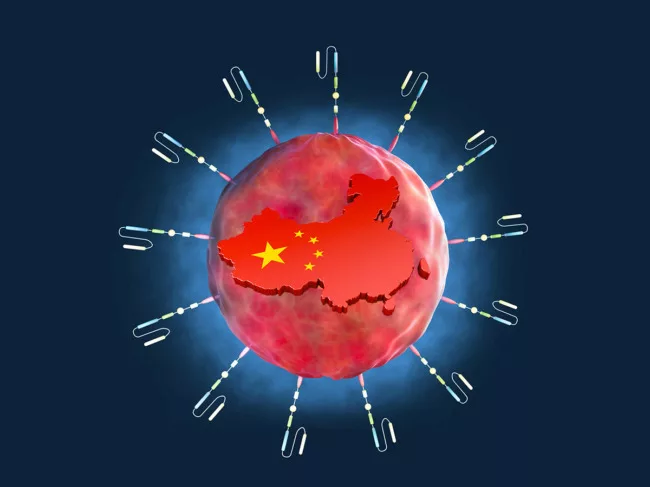
The process of manufacturing autologous T-cell therapies is technically challenging when compared with other oncology drugs, making the overall cost of developing CAR T therapies significantly higher. A challenging reimbursement environment for drugs listed on China’s National Reimbursement Drug List also means that most patients will have to pay out of pocket to access CAR T therapies. Taken together, complex logistics – production, manufacturing and supply chain – and complicated administration requirements are key bottlenecks that inflate the input costs involved in developing these specialized treatment options.
Shanghai De Novo Pharmatech Co. Ltd. has described antibody-immunostimulatory conjugates consisting of an antibody covalently bound to Toll-like receptor 8 (TLR8) agonists through a linker reported to be useful for the treatment of cancer.
Arbutus Biopharma Corp. has divulged programmed cell death protein 1 (PDCD1; PD-1; CD279)/PD-1 ligand 1 (PD-L1; CD274) interaction inhibitors reported to be useful for the treatment of cancer, hepatitis B and hepatitis D infections.
Hanmi Holdings Co. Ltd. has identified serine/threonine-protein kinase/endoribonuclease IRE1 (ERN1) inhibitors described as potentially useful for the treatment of cancer.
Ariel Scientific Innovations Ltd. has synthesized microtubule destabilizers (tubulin polymerization inhibitors) reported to be useful for the treatment of cancer.
Multiple myeloma (MM) is still an uncurable disease. Chimeric antigen receptor (CAR) T cells directed to tumor necrosis factor receptor superfamily member 17, also known as BCMA, have transformed the field, with high response rate and durable remissions, but the access to this therapy is limited by multiple factors.
The FDA has cleared Oncoc4 Inc.’s IND application for ONC-841, a potential first-in-class Siglec-10-blocking antibody for the treatment of solid tumors.
Researchers from Kirilys Therapeutics Inc. presented findings from the preclinical evaluation of KRLS-017, a novel reversible cyclin-dependent kinase 7 (CDK7) inhibitor being developed for the treatment of advanced solid tumors.
 RSS
RSS